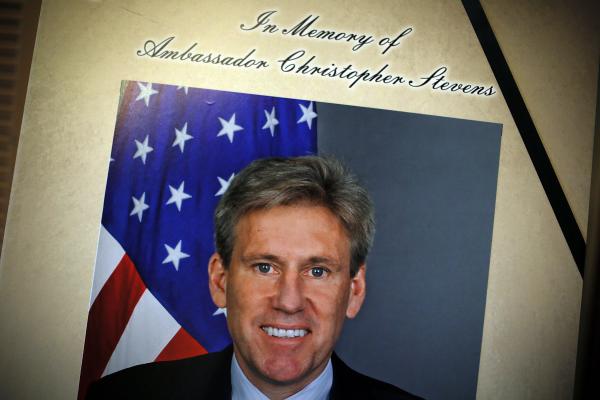
I’ve been reflecting on the recent events in Libya involving the death of Ambassador Chris Stevens, and every time, I arrive at a different feeling about it all.
There’s the obvious tragedy of a life unnecessarily lost. By all accounts, Stevens was a humble, passionate man who had invested his life in the betterment of the infrastructure for the Libyan people. He was not, as some dignitaries or diplomats tend to be, resting on his credentials in an easy gig, waiting for retirement. He was living out what he believed in a terribly volatile corner of the world.

Among my must reads are the Sunday New York Times Book Review and other book reviews I come across in various media outlets. There are too many books being published that I would love to read, but just don’t have the time. So, I rely on reading book reviews as one way of keeping in touch with what’s being written.
Here is my pick of this week’s books.
“On a Farther Shore: The Life and Legacy of Rachel Carson”
By William Souder, Reviewed by Elizabeth Royte
"On the bookshelves of many a contemporary environmental journalist looms at least one canonical text she’s hesitant to read. For this reviewer, it was Rachel Carson’s “Silent Spring,” among the gloomiest books ever written, an unrelenting catalog of crimes committed by man against nature. But after reading William Souder’s engrossing new biography of Carson, “On a Farther Shore,” I returned to the book and discovered its central message to be — depressingly — timeless. Substitute organic pesticides and herbicides with the endocrine-disrupting compounds found in everyday household items or the creep of chemicals used in hydrofracking, and you may experience the same hair-prickling alarm felt by Carson’s readers 50 years ago."
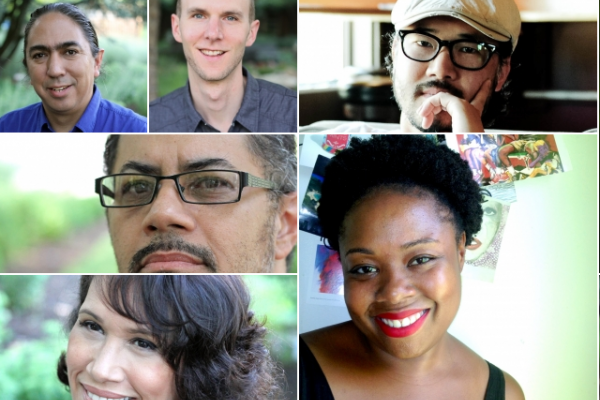
Today, Sojourners is launching a new project called Emerging Voices, and it’s one of the most exciting things I have been involved with for a long time. It aims to mentor, develop, and promote the most dynamic up-and-coming communicators — speakers, preachers, and teachers — who so clearly are called to lead and publicly articulate the biblical call to social justice.
The vision for this project is exciting and something to be celebrated. It also calls to mind a critical observation: Our world often wants saviors, not prophets; new messiahs, not leaders.
We want heroes with superhuman strength who save the day, not mere mortals who speak the truths we typically don’t want to hear. Even the modern day giants of social justice — Dr. Martin Luther King Jr., Dorothy Day, and Mahatma Gandhi, for example —were at best prophets, but never saviors.
It’s easy to slip into the mentality that one person, one voice will rise up in a generation, and that he or she will change the world as we know it. Perhaps we even think, “Maybe I will change the world.”

Congress is due to recess soon, but members are trying to pass a bill attempting to increase the availability of high-skilled visas for the tech industry before adjourning at the end of this week. While different versions of the legislation exist, the fundamental goal is to allocate more visas to foreign-born graduates of U.S. universities who have obtained a master’s or doctorate degrees in science, math, technology or engineering (STEM) fields.

“Sticks and stones can break my bones, but words can never hurt me.”
How many of us grew up with this old adage ringing in our ears? How many of us believe it’s true?
I’ve gone back and forth over the years. I understand that the saying is an invitation to turn our backs on harsh, mean-spirited words thus robbing them of their power, but how many of us are really capable of simply doing that? The truth is words do hurt and sometimes they do more than hurt. Sometimes they are downright destructive and on a large scale.
I think this is what the writer of James is getting at in this morning’s text. Words, the works of our tongues, can be used for good and evil. It is not always easy for us to shape our words and move our tongues in a fashion that serves our faith, our calling as Christians, our work for the reign of God on earth.
One important spiritual discipline, one vital element to our faith formation, then, is learning to tame the tongue. That is, we are challenged to develop custody of our speech in such a way that good news is proclaimed and people are lifted up toward the fulfillment of their creation in the image and likeness of God. Remember, James is especially concerned that we align our words and our work so we both “talk the walk” and “walk the talk.”
If we are offspring of the heavenly parent, if we are made in the likeness of God, how should that shape our speech and control the way we wag our tongues?
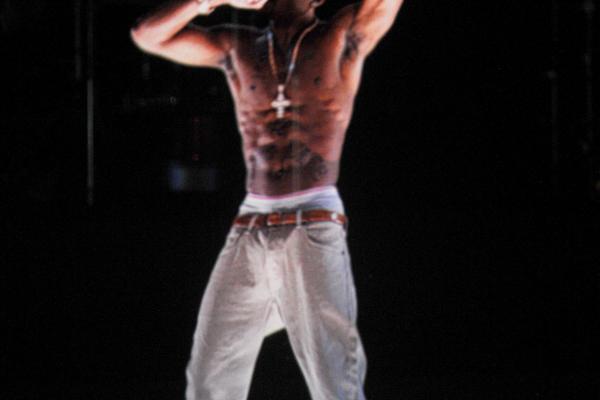
PORTLAND, Ore. — Hip-hop's all the rage at universities and seminaries these days.
Scholars parse its angry and often violent language. They sift out refrains of religious redemption or clever critiques of modern culture. In some traditionally African-American divinity schools, the rise and fall of response and call, old-school black preaching, is giving way to intricately rhyming rap.
Dozens of pop culture books have been written about using hip-hop to evangelize young people, to relate to their lives and bring them into the organized church. But Monica R. Miller, a visiting professor of religion and popular culture at Lewis & Clark College, warns that looking for religion in hip-hop is a risky proposition.
"Seeing isn't believing," she says. Listeners who point to religious words in lyrics and assume their meaning, or those who spend hours trying to discern some artist's systematic theology, may be wasting their time and effort.
Her new book, Religion and Hip Hop, argues that shared vocabulary doesn't equal shared meaning, and religious language sometimes sells rather than saves. In an interview, Miller talks about religion, hip-hop, and whether and how they overlap.
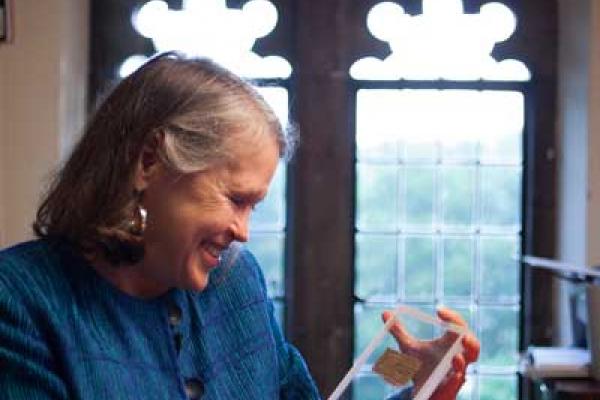
In a surprise announcement that seemed scripted by the novelist Dan Brown, a Harvard professor revealed an ancient scrap of papyrus on Tuesday (Sept. 18) that purports to refer to Jesus' wife.
The so-called "Gospel of Jesus' Wife" presents a dialogue between Jesus and his disciples, said Karen King, a well-respected historian of early Christianity at Harvard Divinity School.
The fourth-century fragment says, "Jesus said to them, 'My wife ...,'" according to King. The rest of the sentence is cut off. The fragment also says "she will be able to be my disciple," according to King.
The discovery that some ancient Christians thought Jesus had a wife could shake up centuries-old Christian traditions, King suggested.
But even King acknowledged that questions remain about the receipt-sized scrap, which contains just 33 words and incomplete sentences. Here are five of the biggest questions.