
For two years, in the rectory where I live, my spouse and I hosted two parents seeking asylum along with their Canadian-born child. When she was a baby, not walking or talking, I used to sing lullabies to radicalize her—songs like the “Canticle of the Turning” (based on the Magnificat) and “Here I Am, Lord.” I would rock her to the beat of these justice-inspired songs, hoping that she would come to know that God is a God of justice.
But eventually, as anyone with a child in their life knows, you get bored of the traditional kid content, and so you begin searching for something unique. YouTube had just the thing I was looking for. The video I showed my 2-year-old housemate was from Rachel Griffin Accurso, who goes by the name Ms. Rachel. In this particular video, Ms. Rachel looks right into the camera and asks the toddler, “Can you say mama?” As I held this child, so innocent, so vulnerable, beside me as she engrossed herself in language and learning, I found myself thinking about the state of the world. How did we get to a point where—for years—we idly stood by and watched a genocide in Palestine livestreamed on our devices? How did we get to a point where anti-Black racism is making an unapologetic comeback? Why are we so hyper-focused on limiting the freedom of trans folks and immigrants when the actual source of our troubles is the Epstein class?
Earlier this week, the Evangelical Press Association voted to change its name, dropping “evangelical” to become the “Christian Communicators Network.” The move follows a 2020 name change from Evangelicals for Social Action, founded by Ron Sider, to Christians for Social Action.
Both groups cited the current American political climate as baggage that had attached to the term in ways that made “evangelical” no longer useful. And public polling finds that evangelicals are the religious group viewed most unfavorably by Americans. It can seem like no one wants evangelicals to be “evangelicals.” Bonnie Kristian, author of In Defense of Evangelicalism: A Response to Its Cultured Despisers, hopes to intercede. Kristian, having written for and served as an editor at Christianity Today, has had a close look at evangelicals and their critics.
In her book, Kristian reads and responds to the work of several journalists and scholars whose work can be critical of evangelicals—Tim Alberta, Kristin Kobes Du Mez, Jemar Tisby, Anthea Butler, Samuel L. Perry, and others. A tightly argued book, she contends that evangelicalism is not worthy of the ire it receives from culture nor is it as harmful (to individuals, communities, or democracy) as scholars say.
Kristian believes these scholars mistake the margins of evangelicalism for the center. At the center, she says, are regular Christians who seek to love God and neighbor and want to live their convictions alongside those neighbors.
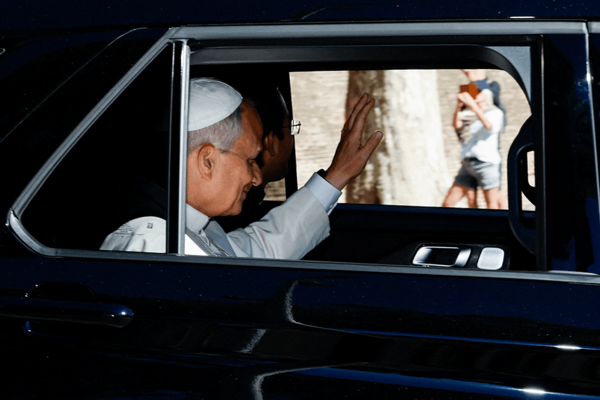
Pope Leo XIV was diagnosed with a common form of lung cancer after doctors removed a lower lobe of his right lung in surgery on Tuesday, the Vatican said in a medical bulletin.
The 71-year-old pontiff has lung adenocarcinoma, with tissue tests conducted during the operation confirming what doctors had suspected from preparatory examinations, the bulletin said.
The pope was admitted to Rome’s Gemelli hospital on Tuesday for surgery to remove a growth on his lung that doctors found in a recent health checkup.

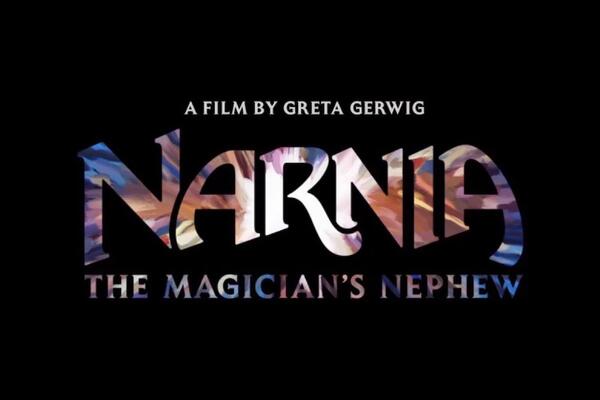
Narnia fans can rest easy. That was my thought upon leaving a sneak peek at Greta Gerwig’s upcoming Narnia adaptation.
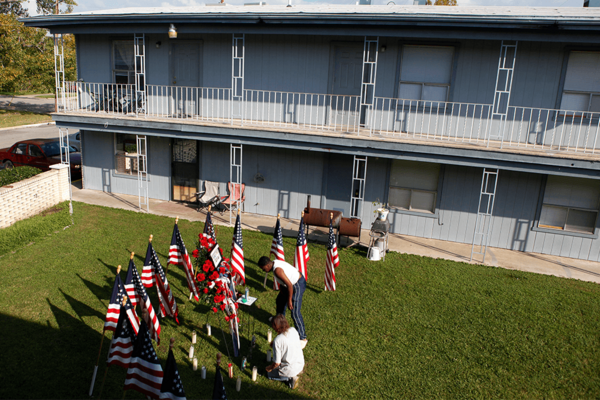
Catholics serving in the U.S. Army should not participate in the firing squad execution of Fort Hood shooter Nidal Hasan that the Pentagon is planning to livestream in December, a prominent U.S. archbishop said on Monday.
In an unusually strongly worded statement, Archbishop Timothy Broglio, who oversees the spiritual care of Catholic members of the U.S. armed forces, raised a series of objections to the unprecedented plan to broadcast the execution of Hasan, who killed 13 people at Fort Hood, Texas, in a 2009 shooting spree.
Broglio said he presided at the funeral of one of Hasan’s victims and lamented the shooting. But the Ohio-born archbishop asked whether the U.S. wanted to “imitate the terrorists of this world and make a public spectacle of barbarically killing our adversaries.”
The daily wisdom our algorithms invite Christians to practice on the Internet: Always judge a book by its cover. Be the first to cast stones. Condemn things we haven’t seen and know little about.
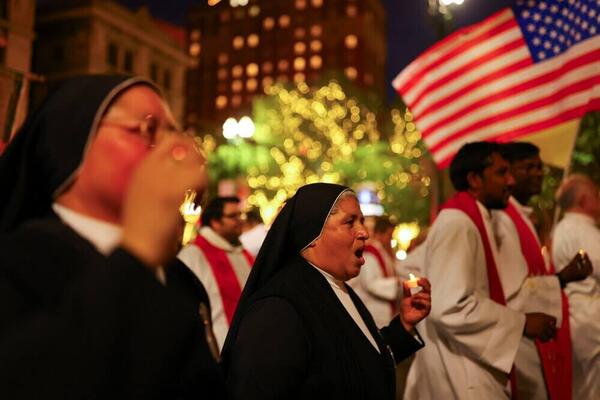
At the beginning of the second Trump administration, a homemade yard sign appeared in my neighborhood. It quoted the German Protestant pastor Martin Niemöller’s “First They Came” poem. Promoting both empathy and political action, Niemöller’s poem has become rightly omnipresent as Trumpism and its Christofascist base are arguably the most successful fascist movement since Nazi Germany. Lesser known than the poem is Niemöller’s journey into the antifascist spirit that inspired it.
Niemöller’s gradual turn against Hitler began only after the church’s autonomy was threatened in the Nazis’ attempt to establish the Reich Church. Before 1934, he voted for the Nazis numerous times, led a Freikorps unit during the Weimar Republic, joyfully greeted Hitler’s rise, and even sent his autobiography to Nazi Minister of Propaganda Joseph Goebbels with a personal note that it was written in the “spirit of the Third Reich.” In his role in the Confessing Church, he was againstHitler, but kept the ultranationalism and antisemitism that led him to support the Nazis in the first place. His imprisonment wasn’t enough to shake off his fascist proclivities—he still volunteered for the war effort from Sachsenhausen concentration camp. It took the defeat of Germany and a direct confrontation with his own complicity after the war, for him to reject fascism.
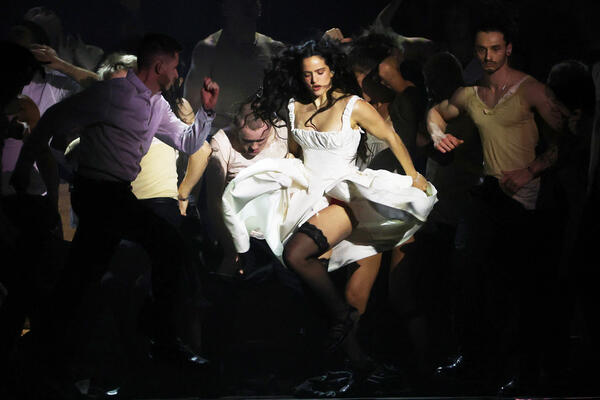
When I published a spiritual memoir based on the teachings of a 16th-century saint named Teresa of Avila, my 13-year-old daughter suggested my next writing project should be something “more people would want to read.”
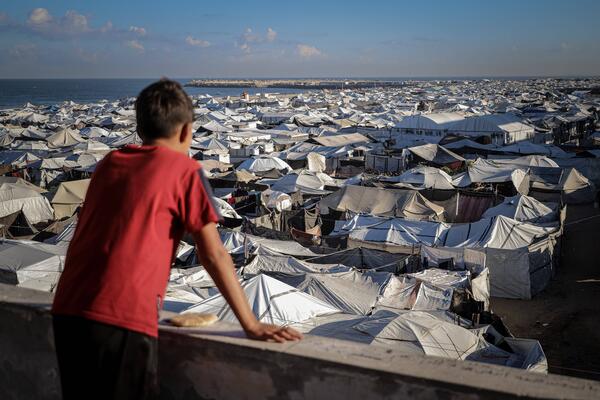
I’m at the point where I’m a bit at a loss for what to say about Palestine. It has been three years since the on Israel on October 7, 2023, when Hamas killed more than 1,100 Israelis and abducted another 251 people.
That date also marks the beginning of the genocide in Gaza, which continues despite the ceasefire. More than 70,000 Palestinians have been killed by the state of Israel. Palestinians are losing faith in nonviolent resistance, and I honestly can’t blame them. Settlers and their allies in government are determined to annex the entire West Bank, and Israeli politicians are openly imagining a world where Palestinians are no longer in Palestine. The word “bleak” does not even begin to describe the situation in Israel/Palestine—a situation that is only made worse by the U.S. continuing to provide military aid to Israel. Perhaps “catastrophe” is a better word.
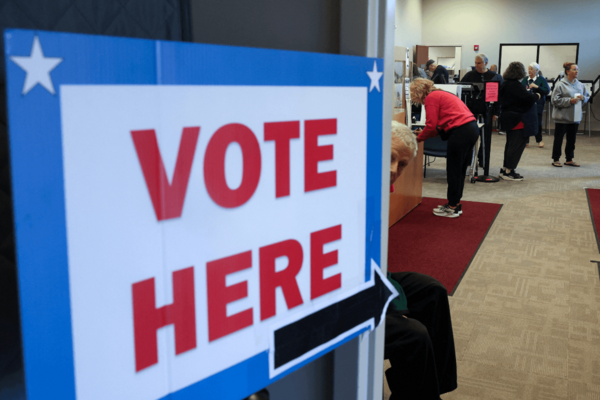
I need to level with you: The 2026 midterms are not a normal election.
Faith groups like Sojourners have long talked about the importance of elections. I have written about elections extensively in the past. But this year is different.
Specifically, there is a great risk that the Trump administration and its allies will attempt to disrupt or deny the election results; these attempts could very well succeed if we don’t act—or if they create enough chaos and fear to deter people from voting. It’s critical that Christians commit to pushing back on these attempts with faith-inspired activism—not just up to Election Day, but all the way through the seating of a new Congress on Jan. 3.