
As the faith leaders said yesterday, we have no choice but to respond when we learn that so many of our brothers and sisters are living in poverty. It makes these presidential candidate videos ones that every Christian should watch before they vote.
We asked the candidates, what will you do to address the highest numbers of people in poverty in America in almost 50 years—numbers that we learned today are still growing? We believe these messages from the Presidential candidates should lift the issues of poverty into the national debate into this election season.
We invite members of the press to watch these videos and to question these candidates even further about their visions and policy choices for overcoming poverty. The poverty numbers that came out yesterday require responsible journalists to make the question of poverty an important part of this election year discussion.
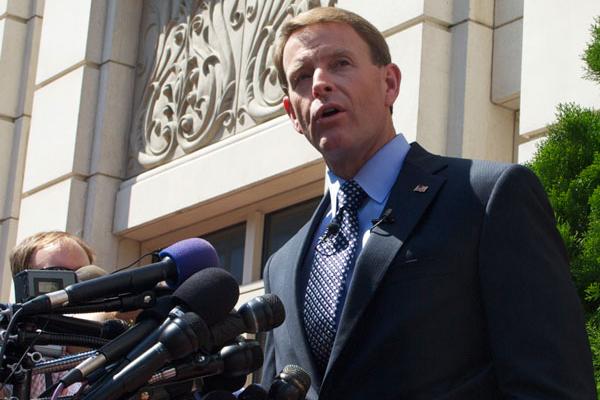
Family Research Council President Tony Perkins said Sept. 12 that conservative Christians are growing more enthusiastic about GOP presidential nominee Mitt Romney, and predicted they would show up at the polls in record numbers in November.
"When it comes to the values of family, values of faith, values of freedom, Mitt Romney is a clear choice, I think, for value voters across this country," Perkins said at a National Press Club luncheon two days before his organization kicks off its annual Values Voter Summit in Washington.
Perkins, a Southern Baptist, said evangelical Christians have "significant theological differences" with Romney, a Mormon, but he said the GOP nominee, if elected, would not be asked to head a national church.
"We don't want a national church. We want religious freedom," he said. "I think someone who has been a part of a persecuted religion is going to be even more sensitive to the issue of religious freedom."
"We the people, in order to form a more perfect union ..."
I heard these words for the first time in a song when I was a kid. I was pouring a glass of orange juice in the kitchen when I heard it. Bugs Bunny had ended. I was waiting for Fat Albert and the Cosby Kids to begin. There was the familiar refrain of Schoolhouse Rock in between those cartoons.
"As your body grows bigger, your mind grows flowered, it's great to learn 'cause knowledge is power!" And there it was—the Preamble to the U.S. Constitution in song. I learned it and never forgot it.
When I became an elementary school teacher, one of my goals was to teach my students to sing the Preamble.
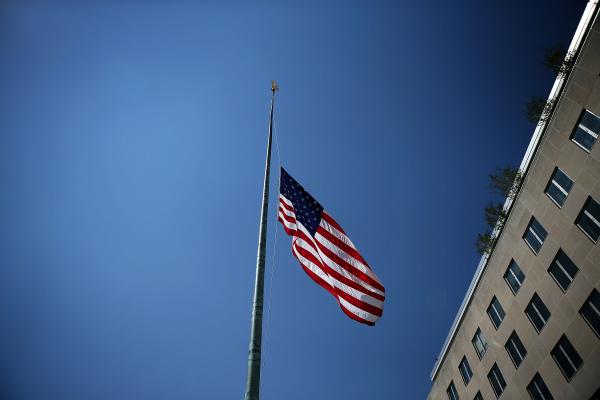
Muslim Americans condemned violence in Egypt and Libya that left four Americans dead, but remain concerned that the deaths could rekindle anti-Muslim sentiment just as post-9/11 resentment was starting to ebb.
U.S. Ambassador to Libya Christopher Stevens and three embassy workers were killed on Tuesday when fundamentalist protestors attacked the U.S. consulate in Benghazi, Libya, in response to a low-budget film that attacks Islam’s Prophet Muhammad, reportedly made by an Israeli real estate developer who lives in California.
Imam Talal Eid, the Islamic chaplain at Brandeis University near Boston and a former member of the U.S. Commission on International Religious Freedom, predicted the violence would lead to “more resentment” against Muslims, who he criticized for not doing enough against terrorism.
A posthumous book of Christopher Hitchens’ essays was published this week with the title Mortality. Seven chapters are previously published essays, and the eighth is a series of notes he wrote in his last days in the hospital. In a review, Christopher Buckley writes that Hitchens’
“… greatest gift of all may have been the gift of friendship. At his memorial service in New York City, 31 people, virtually all of them boldface names, rose to speak in his memory. One selection was from the introduction Christopher wrote for the paperback reissue of “Hitch-22” while gravely ill:”
‘Another element of my memoir — the stupendous importance of love, friendship and solidarity — has been made immensely more vivid to me by recent experience. I can’t hope to convey the full effect of the embraces and avowals, but I can perhaps offer a crumb of counsel. If there is anybody known to you who might benefit from a letter or a visit, do not on any account postpone the writing or the making of it. The difference made will almost certainly be more than you have calculated.’”
When and how one may draw general conclusions from particular evidence is a frequently debated question. One example is museums – do historical museums exist to preserve the evidence and artifacts of a particular experience, or should they attempt to draw generalized lessons from that experience? A thoughtful piece by Edward Rothstein in the New York Times examines how Holocaust museums in Israel are being retooled to educate on what are seen as the “universal lessons.”
Rothstein takes issue, arguing that this
“leaves Holocaust museums intellectually orphaned. What “lessons” are we supposed to take away? The impulse has been to generalize, to say that a Holocaust museum can’t be “just” about the murder of Jews during World War II.
“Why? Is there a problem, say, with an American slavery museum being “just” about American slavery? Why should Holocaust museums deal with notions of tolerance or racism in general, or even genocide in general? Why do we think that the proper lesson comes from generalizing rather than comprehending the particular? The moment we generalize, we strip away details: we lose information and create equivalences that may be fallacious.”
I’m inclined to agree. Some events in history deserve to be remembered and pondered in their own right, not simply as things from which to draw general lessons.
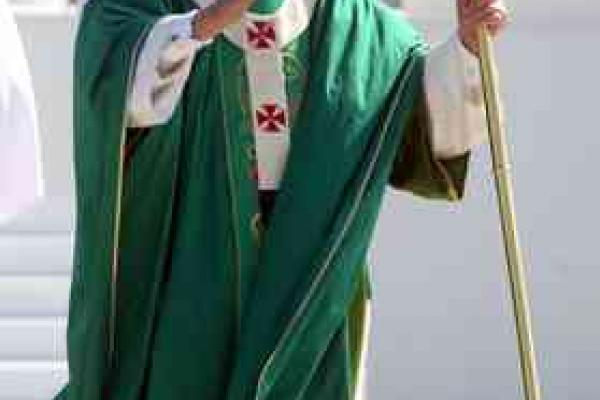
The Vatican confirmed on Wednesday that Pope Benedict XVI's visit to Lebanon will go ahead as planned, despite growing tension in the region after the killing of the U.S. ambassador to Libya by a mob enraged by an anti-Islam film.
The Vatican's chief spokesman, the Rev. Federico Lombardi, said the Vatican was closely monitoring developments in the region but there were no signs of specific security concerns for Benedict's trip so far.
Benedict is scheduled to leave Friday for a three-day visit to Lebanon despite rising instability spilling over from a deadly civil war in neighboring Syr