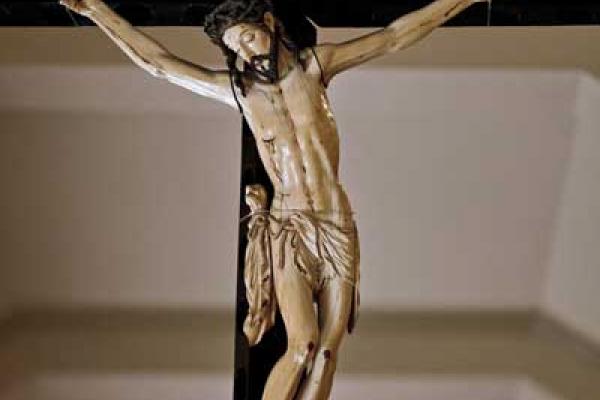
Since the ban on international trade of ivory in 1989, the ivory black market has been on the rise, and a National Geographic investigation found that demand for religious art pieces carved out of the precious material has played a considerable role.
“No matter where I find ivory, religion is close at hand,” said investigative reporter Bryan Christy, whose article, “Ivory Worship,” is included in the new edition of National Geographic magazine, released Sept. 14.
“Elephant poaching levels are currently at their worst in a decade,” Christy wrote. The Convention on International Trade in Endangered Species of Wild Fauna and Flora (CITES) estimates that at least 25,000 elephants were poached in 2011, mostly for their ivory tusks.
Philippine Catholics use ivory to construct crucifixes, figures of the Virgin Mary and other icons. The province of Cebu is particularly known for its ivory renditions of the Santo Nino de Cebu (Holy Child of Cebu), used in worship and celebration.
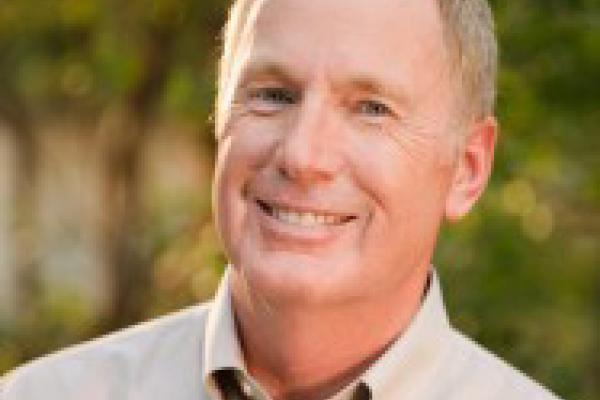
Prolific author Max Lucado talked to Religion News Service about grace, the topic of his 29th book, and answered a range of questions from people who follow RNS on Twitter. Lucado, 57, is the minister of preaching at Oak Hills Church, a nondenominational congregation in San Antonio.
The interview has been edited for length and clarity.
Q: You write that people don’t have a deep understanding of grace. What’s the difference between grace and mercy?
A: My hunch is that most people have settled for a wimpy grace. It’s something that doesn’t change their lives. There is a difference between grace and mercy. Mercy is the decision of God not to punish us. But grace is the decision of God to save and bless us.
Q: @tunde_ogunyinka wants to know: What is the one thing you can’t do without each day?
A. I think the one thing that I cannot do without each day is hope. If you put me in a position where you took all my hope away, I’m not sure I could make it through the day.
Q: @kaykay_ayodeji asked: Which book or writer has inspired your style of writing?
A: Early in my writing I was influenced by a man named Frederick Buechner. Back in the ‘90s I read many of his books and it really influenced my thinking and my writing. He has a slight irreverence that I thought was refreshing but it’s not an irreverence that’s unbiblical. It’s just real appreciation for God’s greatness. It’s like it released him to be a happy writer.
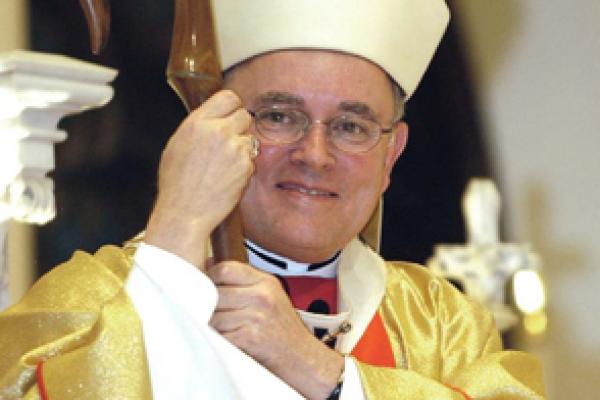
A series of recent developments are renewing questions about the Catholic bishops' alignment with the Republican Party, with much of the attention focusing on comments by Philadelphia Archbishop Charles Chaput, who said he “certainly can’t vote for somebody who’s either pro-choice or pro-abortion.”
In a wide-ranging interview published Sept. 14, Chaput also echoed the views of a number of prominent bishops when he praised Republican vice presidential nominee Paul Ryan for trying to address the “immoral” practice of deficit spending through his libertarian-inflected budget proposals.
"Jesus tells us very clearly that if we don’t help the poor, we’re going to go to hell. Period. There’s just no doubt about it,” Chaput told National Catholic Reporter.
“But Jesus didn’t say the government has to take care of them, or that we have to pay taxes to take care of them. Those are prudential judgments. Anybody who would condemn someone because of their position on taxes is making a leap that I can’t make as a Catholic.”
Chaput stressed that he is a registered independent “because I don’t think the church should be identified with one party or another.” But he said that the Democratic Party’s positions on abortion rights, gay rights, and religious freedom “cause me a great deal of uneasiness.”
He added that economic issues are “prudential judgments” open to a variety of legitimate approaches. Abortion, on the other hand, is “intrinsically evil” and must always be opposed.
That is a talking point voiced by many Catholic conservatives, including Ryan himself. Last Friday, Ryan told the Christian Broadcasting Network that opposition to abortion and same-sex marriage, and support for religious freedom, are all “non-negotiables” for a Catholic politician while “on other issues, of economics and such like that, that’s a matter of prudential judgment.”
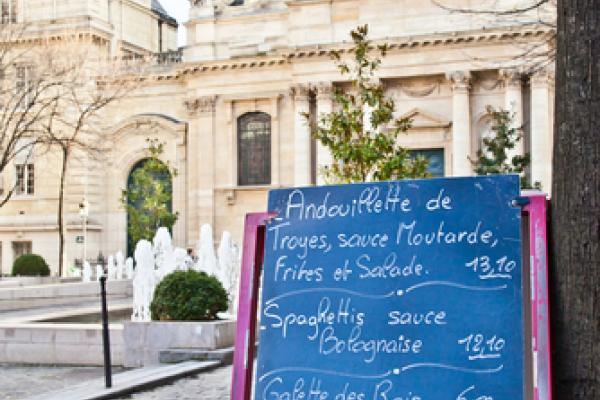
You can tell from its menu whether a restaurant expects to serve tourists, locals or regulars.
At a tourist-centered eatery like those near Times Square, the menu typically is huge: many pages, difficult to scan, sometimes difficult even to hold. There's something for everyone and it's designed to please customers who are strangers.
A restaurant catering to locals will have a much leaner menu, maybe just four or five items in each category. They will all be of a certain type—no words like "Asian fusion" to disguise lack of focus. If the joint is Korean, it will serve Korean.
A third and much rarer type is the restaurant that offers just one multi-course meal each night. Regulars go expecting to be served the chef's whim of the day, not handed a long menu.
When customers are strangers, the owner must imagine what will please a patchwork of German tourists, Chinese tourists, families from Iowa, young techies on the prowl, and marketers in town for a convention.
The better an owner knows the customers, the more focused the menu can be. If not the actual customer, at least the type of person who will come in.
Voting isn't all that different. When politics is local, candidates tend to know their people or at least know their interests, worries and hopes. This is the level at which democracy tends to work best. Leaders know their people, people know their leaders, and known interests are at stake.
Dan Brown, your phone is ringing.
A newly revealed piece of papyrus offers fresh evidence that some early Christians believed Jesus was married, according to a Harvard Divinity School professor.
A fourth-century codex in Coptic quotes Jesus referring to “my wife,” Karen King, a scholar of early Christianity, said on Tuesday. It is the only extant text in which Jesus is explicitly portrayed as betrothed, according to King.
King is calling the receipt-sized slip of papyrus “The Gospel of Jesus’ Wife.” She believes it was originally written in Greek, and later translated into Coptic, an Egyptian language.
The fragment says, "Jesus said to them, 'My wife...,'" according to King. The rest of the sentence is cut off. Another segment says, "As for me, I dwell with her in order to..." The speaker is not named.
The fragment contains just 33 words spread across 14 incomplete lines—less a full-fledged gospel than an ancient crossword puzzle.

The recently revealed video of Gov. Mitt Romney at a fundraising event last May is changing the election conversation. I hope it does, but at an even deeper level than the responses so far.
There are certainly politics there, some necessary factual corrections, and some very deep ironies. But underneath it all is a fundamental question of what our spiritual obligations to one another and, for me, what Jesus' ethic of how to treat our neighbors means for the common good.
Many are speaking to the political implications of Romney's comments, his response, and what electoral implications all this might have. As a religious leader of a non-profit faith-based organization, I will leave election talk to others.

[Editor's Note: This is the first article in an election season blog series called Watch the Vote.]
In today's hyper-politicized climate, all of the hoo-hah about voter suppression can sound like a bunch of partisan pandering on both sides.
If you're just tuning now, it can easily look like Democrats are whining and crafting conspiracy theories over something that really won't matter in the end, anyway — so why waste your breath?
Or, for the even more cynical, sure, it might matter, but there's nothing we can do about it — so again, why waste our breath?
Here's why. Check this out.