EVERY ADVENT I think a lot about motherhood, about childbirth, about pregnancy. I am a mother, though I have never given birth. (My child is adopted.) I don’t think you have to be a mother or a birth giver to resonate with the rich images of this miraculous season. Anyone of any gender, with or without a uterus, with or without kids, can ask themselves, “What wants to get born through me this year? What is God forming in me, in my community, in my world? What does my gut-level creativity have to say about all this beauty and all this pain, and how will I give voice to that vision?”
We can all look for signs of God being born anew. Advent is a Lamaze class, and we are all getting ready. Breathe.
It might feel like you’ve been waiting a really long time. Too long. I know, I know. Breathe. It might feel like a whole lot of labor. Breathe.
It’s probably painful and uncomfortable right now. Breathe. You might not be able to see the good news just yet. Breathe.
No matter what else is going on, the atmosphere is still pregnant with love.
December 6
The Baptism of Forgiveness
Isaiah 40:1-11; Psalm 85:1-2, 8-13; 2 Peter 3:8-15; Mark 1:1-8
LIKE MANY MOTHERS, I closely followed the trial of Lindsay Clancy for the murder of her children. Her attorneys argued an insanity defense, claiming that Lindsay was a loving mother who suffered from postpartum psychosis. The trial raised important questions about maternal mental health and our often inadequate support systems.
Lindsay’s face came to mind when I read the words “Comfort, O comfort my people, says your God. Speak tenderly to Jerusalem, and cry to her that she has served her term, that her penalty is paid, that she has received from the Lord’s hand double for all her sins” (Isaiah 40:1-2).
Deep breath. I know I am wading into painful, complex territory here. I grieve the loss of innocent children and ferociously believe all children deserve protection. I also acknowledge that the conversation about maternal health tends to be much more forgiving of white women than Black mothers. (Take, for example, the case of Latarsha Sanders.)
Still. What stirs inside your body if we say Lindsay Clancy is forgiven, if we say Latarsha Sanders is forgiven? If forgiveness doesn’t feel guttural, I’m not sure we understand the word yet.
I’m reminded that the Hebrew word for compassion derives from the word for “womb.” I am reminded that God doesn’t just care for mothers from afar, with lip service and flower bouquets on Mother’s Day. God allowed God’s self to become vulnerable to mothering. God chose to redeem the world through the birth of a baby to his mother. Surely Mary lost her patience, felt overstimulated and overtaxed by her mini-God in toddler form, and somehow the messiness of motherhood helped to save the world.
Isaiah promises a God who will “gently lead the mother sheep” and “carry them in her bosom.” Maybe, after it wrecks you, forgiveness simply feels like being held.
Advent is a Lamaze class, and we are all getting ready.
December 13
Mary Said
Isaiah 61:1-4, 8-11; Luke 1:46-55; 1 Thessalonians 5:16-24; John 1:6-8, 19-28
WE WERE A group of women preparing a sermon together on Mary’s Magnificat. Regina pointed out this odd detail: The lectionary starts at verse 46b, which means the lectionary cuts off some words in 46a from the passage in Luke.
Those words? “Mary said.”
This revelation sparked a lively conversation among us women regarding the importance of adding Mary’s name back into the reading. We discussed the significance of it being Mary—not a dude, not an angel—who sang this prophecy into existence. We reflected on the way it was Mary’s encounter with Elizabeth—not her encounter with the angel—that sparked this proclamation. How this human-to-human, woman-to-woman interaction was the thing that activated Mary’s prophetic gift and set free her song.
As a result, we shaped our collective sermon around paying homage to the Elizabeths in our lives who helped awaken our voices, specifically our prophetic ones. Elizabeth’s womb recognized Mary’s potential, and Mary responded to being seen. This Advent season, how might we be midwives to each other, midwives to the emerging prophet within, midwives to the good news?
Elizabeth prepared the way for Mary’s prophetic voice. John prepared the way for Jesus. In Isaiah, the Spirit of the Lord prepares the way for the prophet (Isaiah 61:1). I wonder, who prepared the way for you, and have you given thanks? Who restored your capacity to dream (Psalm 126:1)? Who filled your mouth with laughter and your tongue with joy? Who specifically ? Who did God send to see you, to free you, to bind up your broken heart and raise up your former devastations? I wonder, to whom are you being sent? The observance of Advent is not a solo activity. It’s an invitation into interconnectedness and divine midwifery.
December 20
My Body, Given for You
2 Samuel 7:1-16; Psalm 89:1-4, 19-26; Romans 16:25-27; Luke 1:26-38
IN 2 SAMUEL 7, King David is like, “Gosh, now that I’m settled in my house and the Lord has given me rest from my enemies, I should really make God a house.” But God is like, “Nah. I don’t want a house. I follow you wherever you go, but I don’t need your protection.”
God’s rejection of a house-temple-fortress makes sense to me since later God chooses to show up in the world as a baby, which is such a vulnerable choice, especially for a God who could have chosen any other way to make God’s self known. God is not especially concerned with God’s own security.
Mary made a home for God out of her own body, which was also such a vulnerable and risky thing to do compared to building a big, strong temple made of cedar.
Strength is soft, not wooden. Bendable. Fleshy. Human.
God doesn’t ride in on a war horse but gets carried in by the womb of a mother. Young. Fragile. A mother who people would malign and cast aside for being pregnant out of wedlock. God’s courageous arrival depended on Mary’s audacious bravery. God made God’s self vulnerable to Mary as Mary made herself vulnerable to God. There is no competition between them. Just symbiotic interdependence.
David merely wanted to build God a building. Simple. Straightforward. Safe. What God wanted was a body. Risky. Complicated. Messy.
What does it mean to be a Mary in a world full of Davids? To make the vulnerable choice rather than the showy one? To demonstrate strength with softness and courage and openness? To embody hospitality? To pause construction of your image, surrender your ego, and make a home out of who you are?
God enters the vulnerability with us and stays there.
December 27
God’s Adopted Children
Isaiah 61:10-62:3; Psalm 148; Galatians 4:4-7; Luke 2:22-40
ANNA AND SIMEON are the prophets in this one—old, seasoned, wise. Their reactions to the little baby Jesus are equal parts thrilling and foreboding. On the one hand, grand promises: light, salvation, glory, revelation. On the other, a grave prediction: “A sword will pierce your soul.” Like most mothers, Mary’s vulnerability will forever stay tied to her son’s vulnerability. If he suffers, so will she. There is no untangling. Their souls are fused.
Is this what Paul means when he says we have been adopted as children of God? If we suffer, so does God? There is no untangling. Our well-being—or lack thereof—is felt in the body of God? If the earth suffers, so does God? If we laugh or dance or cry or sing, so does God?
In Psalm 148, the earth is full of praise for God. I imagine praise is less like subjects fawning over their king or serfs bowing to a lord. Praise is part of the symbiotic dance—like the baby who laughs when you demonstrate your delight in them or the feet that irresistibly tap to good music. Praise is an expression of the glorious interdependence between Creator and created.
Salvation, then, is not about being rescued from our vulnerabilities. Rather, God enters the vulnerability with us and stays there. God chooses to be bound up in us and all our messiness without leaving or pulling away.
Merry, merry Christmas, dear readers. You are not, have never been, will never be alone. In the worst of times and the best of times, God stays bound to you.
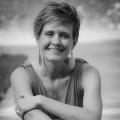
Rev. Kyndall Rae Rothaus is a preacher, spiritual director, co-founder of Nevertheless She Preached, and author of Thy Queendom Come: Breaking Free from the Patriarchy to Save Your Soul.

Did this article have an impact on you? Tell us how! Whether you’re moved to take action, have a question, or want to share a comment (good or bad), we value your feedback!