leonard cohen
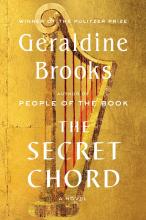
Now I heard there was a secret chord
That David played and it pleased the Lord,
But you don’t really care for music, do you?
It is said that Leonard Cohen’s song “Hallelujah” has been covered more than 300 times by various artists since its 1984 release. Perhaps one of the reasons it has endured is because of the stories it tells about tragic biblical figures such as King David, who was simultaneously murderer and a “man after God’s own heart.”
Inspired by her son, who played an arrangement of “Hallelujah” on the harp for his bar mitzvah, Geraldine Brooks explores the profoundly paradoxical character of David in her novel The Secret Chord (paperback edition out this fall). Brooks’ unwillingness to resolve this paradox invites readers into the story to wrestle with the categories of good and evil and the nature of repentance. After the dust settles, however, readers will find that it is not the depth of David’s repentance but the abuse of power that defines his kingship.
The timeline in Brooks’ novel roughly spans David’s early ascent to power through his death and Shlomo’s coronation (Brooks uses the transliteration of the Hebrew to spell names, for example Shlomo instead of Solomon). Drawing upon the tradition that the histories of 1 and 2 Chronicles were written by the prophet Natan, David’s story is told from the perspective of the prophet. During the first battle that David is not on the battlefield with his men, the frustrated, middle-aged king commissions Natan to write his biography, so that David’s descendants may know “what manner of man” he was. David gives Natan a curious list of people to interview, including individuals that David knows will be severely critical of him, such as his estranged wives and brother. This narrative detail—like many others in the novel—serves as an explanation for scripture’s curiously flawed portrait of Israel’s most powerful king.
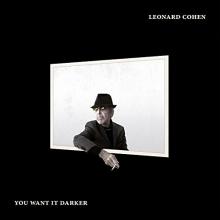
A PERSON HAS a thousand ways of being, not just one but many selves, and Leonard Cohen embraced them all.
He sang the blues with Old World struggle, rasped epic tales and sometimes gospel, strumming Spanish chords on a broken-down guitar. But his final album, You Want It Darker, released a month after his 82nd birthday and only 17 days before he passed away, was like someone transcendently singing the prayer for ascension at his own funeral.
As if chanting a private liturgy, there was no more hunger for a voice. At last Cohen was the praise singer, aged and fatigued, a pilgrim with just one journey left to make. From the opening supplication—“I’m ready, my lord”—to the closing blessing—“It’s over now, the water and the wine”—the album is an uninterrupted prayer unto death.
“Traveling Light,” You Want It Darker’s ecstatic peak, bids au revoir to the self and the soul, the lover and beloved, the human and divine. Even in old age, Cohen is still no preacher, sage, or a saint. “I’m just a fool / A dreamer who / Forgot to dream / Of the me and you / I’m not alone / I’ve met a few / Traveling light / Like we used to do.”
Gone is the seductive blurring of sacred and profane and peeking through the curtain to glimpse the dealer’s latest game. The verses slide into an older and saltier way of singing, a sacred undertow, always there in songs of love and of despair, now amplified by the kind of wordless prayer people once sang from dusk until dawn.
Earlier this year, Tripp Hudgins wrote a piece declaring that all his favorite theologians are dying. He listed David Bowie and Pete Seeger as two theologians whom he felt sang “real theology about a real God” during their lifetimes. Others would later add Prince and Phife Dog and Sharon Jones to their lists of songwriters who spoke lyrics of truth in a broken world and who are no longer with us. Leon Wieselthier described his friend Leonard Cohen as “the lyrical advocate of the finite and the flawed” in a beautiful eulogy in the New York Times just the other week. Could a musically gifted person of any faith be honored with better words than those?

There is a crack in everything; that's how the light gets in. Everything. Everything has cracks and faults and our best intentions to bring peace and love and justice to the world is cracked. Flawed. To do the work of peace, MacDougall reminded us, is to do the work of repentance, lament, praise and ... getting up and doing the work.

On September 21, Leonard Cohen Turned 80. With or Without a Cigarette, It’s Time to Celebrate.
“I hope I stay on the road a little bit longer - but you may not be so enthusiastic when you hear my reason. You see I want to start smoking next year when I'll be 80. It's been a long barren time. I think it’s the right age to recommence.” —Leonard Cohen
I dreamed you were in Florence, singing on some stage. Your back was to the men, the women by your sides. Your melody was tranquil, just humming do-re-me-fa, la-fa-re-me-do. And when there was commotion, some men quarreling behind the scene, you turned and faced them calmly, beseeching, “Gentlemen, let’s sing.”
You have left us these past months, ceased your universal tour. It gives us time to miss you, and wonder what you mean. This week you will be eighty, there’s no question, you are old. Your bones may creak or ache and I’ll guess your heart’s a little tired, but from outside looking in you seem settled in a pretty gentle space.
So in the dream your melodies kept coming, like a river from its source. “You’re doing it,” someone shouted. “It’s exactly what we want!” People were casually swaying until your voice started to get hoarse. “Well, I’m glad you like it,” you croaked joyfully, “I call this solemn mingling my little Florentine Prayer.”
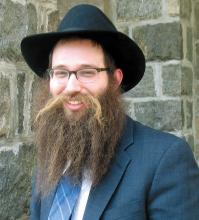
I MEET Yehoshua November in an empty classroom in Touro College in Brooklyn, N.Y., where he teaches. The chairs and desks are piled to one side, like a barricade. We sit in a clearing beside the clutter, talking about his place as the only Hasidic poet—he is a 34-year-old member of the Lubavitch sect—on the American literary landscape, an entity ruled largely by secular academics far removed from the realities and sensibilities of ultra-orthodox Jewish observance and mysticism.
“They are the rabbis of poetry,” November laughs. He laughs so hard he doubles over in his chair. His laughter is as strange as it is infectious. Yet in all of God’s Optimism, his book that was short-listed for the 2010 LA Times Book Prize, there is not a single laugh line. His poems are serious, if lightly held narratives, some parable-like, most down to earth with a longing for heaven.
“Poetry is their vision of spirituality, their own religion, and they don’t want traditional religion brought in,” he says.
Even November’s long, reddish beard seems delighted at their rebellion against traditional religion. An antinomian Hasid and unashamed of it.
When I first read God’s Optimism, the poem I kept going back to was “Baal Teshuvas at the Mikvah” (baal teshuvas are secular Jews who return to religious observance), a poem of solidarity with those intimate others who came to Hasidism through the tunnel of the profane, commonly marked by drug use and sexual looseness, for the sake of spiritual passion held within a net of restrictions.

It doesn’t seem seven years since Leonard Cohen’s last album because the man has spent the middle years of his 70s up to his wrinkles in a whole lot of activity including critically acclaimed concert tours that produced a plethora of CDs and DVDs and a No.1 hit single via the dubious conduit of X Factor winner Alexandra Burke!
The years between 2004's Dear Heather and his latest album Old Ideas have built Cohen’s status to a Zen guru presence. For weeks there has been anticipation about this new record not because the public is imagining some reinvention at the age of 77 but more that he is the closest thing rock music has to a spiritual sage and we are waiting for the wisdom he has to share.
Old Ideas is no disappointment for those looking for spiritual songs.
Art in the streets and in the windows of dirty cars, photography hot spots around the world and how it's bringing healing to victims of sexual abuse, Leonard Cohen, David Lynch, Mitt Romney, and a guide to discovering what type of worshipper you are.