israeli occupation

In the halls of empire, men sit at gleaming tables untouched by war, they speak of peace as though it is theirs to grant. But they have never gathered their children into one room to sleep at night so that if death comes, it takes them together. They have never watched the sky split open with fire, felt the air convulse after the blast, felt the wind howl past — hot, violent, and thick with the dust and scent of obliteration. And yet, they sign their names to ceasefires, shake hands, and expect the world to applaud. They do not blush as they bankroll the demolition of homes, the bombing of hospitals, and the erasure of entire families .
During the first week of February, U.S. President Donald Trump hosted Israeli Prime Minister Benjamin Netanyahu, whois the subject of an International Criminal Court arrest warrant for committing war crimes and crimes against humanity. This meeting took place as the fragile ceasefire agreement between the Israeli occupying forces and the Palestinian militant group, Hamas, hung in the balance. Trump, never one to concern himself with the nuances of international law (or any law, really), originally floated the idea of the U.S. “owning Gaza” on Feb. 4 and then has since doubled down on this colonial fantasy, one so crude and reckless that his own administration scrambled to downplay it.

Amid the fragile ceasefire, the exchange of hostages, and the temporary pause in Israel’s genocidal onslaught against Gazans, nearly six hundred Christians huddle together in one of Gaza’s battered churches, their prayers rising above the rubble as a defiant testament to their faith and resilience. Among them, Gazan Christian George Antone boldly declares, “For us, as Christians, we are not leaving Gaza. We will remain in Gaza and help people in Gaza reconstruct their houses, rebuild the streets. Yes, we will stay in Gaza. We are not leaving.”
Antone’s words stand in stark contrast to the explosive press conference at the White House on Feb. 4, when President Donald Trump brazenly suggested that the United States should “effectively own” Gaza, proposing to turn it into a real estate venture while displacing Palestinians from their homeland and relocating them to neighboring countries.
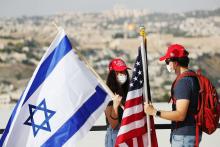
Like many across the world, the events in Israel and Palestine have had me glued to a wide variety of sources in search of live updates. My first reaction was to message my dear friends living in Israel-Palestine to check on them and their families’ safety: Sami, Mohammad, Jehad, Feras, Jack, Miriam, and Naama. My heart is tremendously heavy with the immense loss of precious life that has already unfolded and the dread for the violence still to come. I say this sorrowfully and without an ounce of callousness: This attack by Hamas, though sudden and horrific, did not come as a surprise to me.
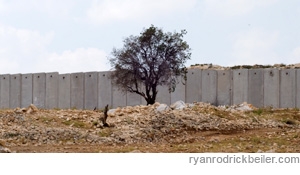 Whenever I give talks on the effects of the Israeli occupation on Palestinian livelihood, the status of nonviolence as a means to resisting the occupation, and how I believe nonviolence is the only way to move forward to resolve the conflict and create a lasting peace between Israelis and Palestinians, one of the first and immediate questions I get from foreign visitors to my office in Bethlehem is, What you said is good, but what about the Muslims? Do they also believe in nonviolence? Do they understand it?" Even if I don't mention religion in my presentation -- and I rarely do -- this question always seems to make its way in our discussions.
Several sources have recommended this commentary by M.J. Rosenberg at Media Matters as a helpful analysis of the new "Obama Peace Plan" for the Middle East.
National Catholic Reporter has an important article about the Kairos Palestine Document endorsed last month by the leaders of 13 Chr