christmas eve

Save for the sun, the nearest star
is more than twenty-five million
million miles away.
What has a single star
shining in Bethlehem
to do with us?

I was 6 years old, growing up in Cleveland. It was Christmas Eve. The traditional Slovak dinner was ready on the stove — mushroom soup and pierogies. My mom, my younger brother, and I were waiting for my dad to get home so we could eat.
The waiting part was no surprise.
My dad was an alcoholic. During the Korean War, he enlisted and was assigned to a paratrooper unit. He was wounded during a mission. My mom said the experience changed him. He brought some demons home with him.

Christmas is a time for celebration, joy, and family. But Christmas is much more than a sentimental holiday.
Christmas is subversive.
The Bible doesn’t tell us the specific date Jesus was born. Later Christians tradition gave us the date of December 25. It was chosen by Pope Julius around the year 350 and Christians have been celebrating Christ’s birth on that day ever since.
But Pope Julius didn’t just randomly pick December 25. He was deliberate. As Marcus Borg and John Dominic Crossan claim in their book The First Christmas, when Pope Julius declared December 25 as the date to celebrate Christ’s birth, he integrated “it with a Roman solstice festival celebrating the ‘Birthday of the Unconquered Sun.’ The Roman birthday of the sun became the Christian birthday of the Son.”
That last sentence isn’t just a cute turn of phrase. It symbolizes the subversive quality of Christmas.
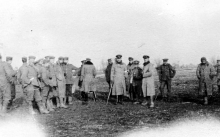
One hundred years ago, during the First World War, the Christmas truce took place between British, German, and French soldiers in the trenches on the Western Front. On Christmas Eve 1914, soldiers from opposing sides, who were stationed there to kill each other, instead got to know one another, shared photos of loved ones, and even had a game of soccer.
This of course made their superiors furious, not just because the troops were disobeying orders, but because it is much harder to harm someone with whom you have formed some sort of relationship. The enemy is to be faceless and nameless.
The same holds true for millions of people living in poverty around the world this Christmas. They are the faceless and nameless ones. In reality though, the enemy that is poverty is not faceless. Poverty is about people; it is not about statistics. Poverty is also not just about a lack of material goods; it is more about a lack of dignity, a lack of a sense that you are important. We are reminded that poverty is always personal because it is about relationship.
We first published this reflection by Jim Wallis in 2002. It has since become our Christmas tradition, kind of our own Charlie Brown Christmas special, if you will. With the ongoing conflicts raging during each passing year, it remains tragically relevant, particularly this year as we think about Afghanistan.
We first published this reflection by Jim Wallis in 2002. It has since become our Christmas tradition, kind of our own Charlie Brown Christmas special, if you will. With the ongoing conflicts raging during each passing year, it remains tragically relevant, particularly this year as we think about Afghanistan.