spiritual power
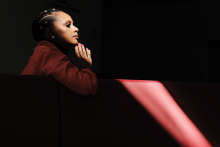
WHEN RAHIEL TESFAMARIAM was 5 years old, she and her mother flew from Eritrea to New York City, arriving in the United States with six-month tourist visas to help prepare for Tesfamariam’s eldest sister’s wedding. After the six months had passed, Tesfamariam’s mother began packing clothes for a return trip to Eritrea, but Tesfamariam adamantly refused to leave. Tesfamariam’s brother recalls being at the airport and watching their mother step to the gate; Rahiel stepped back and said, “Bye, Mommy.” And so it was: Rahiel Tesfamariam remained in the United States in the care of her siblings, out of the shadow of the Eritrean War of Independence, with an expired travel visa.
The rest of her story could be told this way: She became a legal permanent resident of the United States, graduated from Stanford University, became the youngest-ever editor in chief of The Washington Informer, received her Master of Divinity degree from Yale University, and launched Urban Cusp, an online community for Black millennials interested in the intersection between faith, culture, and justice. Tesfamariam worked as a columnist for The Washington Post; led #NotOneDime, a national Black Friday economic boycott during the 2014 Ferguson protests; and was named by Essence magazine as one of its “New Civil Rights Leaders.” She got married. She became a mother. It could be said that Tesfamariam pulled herself up into the American dream.
Tesfamariam’s book Imagine Freedom: Transforming Pain into Political and Spiritual Power (Amistad), released earlier this year, tells that story, but with a difference. Telling only that version, like the American dream itself, would be insufficient. Tesfamariam spoke with Sojourners associate editor Darren Saint-Ulysse in April about how she carries Africa within, political power’s ephemeral nature, and God’s command to free the captives. — The Editors
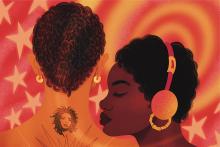
MUSIC IS MY safe space. When all hell is breaking out, I can put in my AirPods and turn on part of the soundtrack of my life and reset. The pandemic created a chronic hell that illuminated oppressive forces that have existed for centuries. Music became even more essential for my survival.
I am a Black clergywoman who is clear that “my emancipation doesn’t fit” many people’s equation. Let me say that another way: My authentic expression of self makes some people uncomfortable. My unapologetic expression of womanist Blackness often sheds light in the shadows of a corrupt world.
I won’t pretend that I have always felt free to be me. It took a pandemic to give space to be reminded by theologian and prophet Lauryn Hill that “deep in my heart, the answer, it was in me.” Hill’s lyrics and very existence compelled me to “[make] up my mind to define my own destiny.”
Some consider Hill to be one of the greatest lyricists of all time. An eight-time Grammy winner (with 19 nominations), she sings, raps, and acts. She is hip-hop royalty. In the ’90s, I wanted to be her. She wore the dopest locked hair style, had the most beautiful brown skin, and expressed her Blackness with boldness and class. She had, and still has, a lyrical flow that men and women couldn’t ignore. She was fly. (Translated as cool, sexy, smart, and stylish.)
Her industry-shaking debut solo album The Miseducation of Lauryn Hill, released in August 1998, will stand the test of time. Hill speaks truth in ways that penetrate the soul. I was a young mother when the album came out. She articulated things that only a Black woman could identify with. She spoke of the tension and beauty of having a child when society was telling her that motherhood and a career couldn’t coexist. She sang and rapped about self-respect, love gained, and love lost. This album is life. This album ministers. This album is sacred.