violence against women
Sojourners is offering an important opportunity for Christian churches to examine their attitudes towards women. Following up on an article by Michelle A. Gonzalez entitled “Breaking the Habits of Machismo,” Gonzalez and Jim Wallis, president of Sojourners, will conduct a live video discussion on Wednesday, Feb. 12 to “discuss what the Bible really says to encourage, affirm, and empower women and girls in their call to be leaders.”
Judging from Gonzalez’s article, this conversation will focus on what it means to affirm that both men and women are created in God’s image. She begins her article with the Common English Bible translation of Genesis 1:27: “God created humanity in God’s own image, in the divine image God created them, male and female God created them.” Though she points to important changes taking place in Christianity today, Gonzalez traces the legacy of Christian thinking on womanhood that has elevated men and devalued women, instilling “habits of machismo” in our churches and our culture that are difficult to break.
But break them we must, Gonzalez argues, if we want to free both our theology and our practice from “male-oriented power structures.” Amen, sister. Because this is about more than equal employment opportunities for women in church administrative structures, of whether we are allowed to “preach, lead from the altar, celebrate communion, administer rites, pastor congregations, or teach.” What’s at stake in this conversation is whether Christians — and I think this is a call to American Christians in particular — whether American Christians are willing to dismantle a long-held justification for violence against women, not just in our country, but around the world. Gonzalez herself points out that patriarchal “attitudes can lead to greater violence against women, such as we see in the increasing exploitation and attacks on young women and how social media is used to perpetuate and document these horrific acts,” but this is her only nod to the issue of gender-based violence. Let’s add to the picture a look at the violence perpetrated by men against female bodies that has become to typify conflict zones around the world.

A new public campaign in India uses powerful images of three Hindu goddesses with bruised faces to raise awareness about violence against women.
The ad campaign is titled “Abused Goddesses” and portrays the beaten faces of three Hindu female deities: Saraswati, Durga and Lakshmi.
“Today more than 68 percent of women in India are victims of domestic violence,” the caption reads. “Tomorrow it seems like no woman shall be spared. Not even the ones we pray to,” the posters say.

Editor’s Note: As we continue reporting on the important topic of sexual abuse and violence, Sojourners has opened up the Sexual Violence and the Church blog series for submissions. This piece is one such submission. If you are interested in submitting a post for the series, please email the Web Editor HERE.
"From the beginning …" began my pastor, rising slowly from his armchair. With his next words, he broke my world apart. From the beginning, he had been attracted to me as a woman. From the beginning, his interest in me had been personal. He told me the reasons why, and then he said these words: "If we were both single, and if I weren't your pastor, we'd be going out to dinner." He paused a long beat. “And we’d see where it went from there."
Were my pastor's words an act of sexual violence?
When we hear the words "sexual violence," we may envision a forcible rape or a sexual act with a person incapable of consent. Many of us would consider unwanted groping or uninvited embraces to be acts of sexual violence. Some of us would include "consensual" sex between persons of different rank, because we understand that power disparity makes meaningful consent impossible. But what about the manipulative behavior that gives rise to the delusion of consent? Was my pastor's not-quite-a-proposition an act of sexual violence? Could a lingering handshake, a compliment on spiritual gifts, or an offer of pastoral support be acts of sexual violence? Most of us would say no. And most of us would be missing the boat.
Consider in the past year alone, America has wrestled over the injustice of forced vaginal probe ultrasounds. We have had our own deep cultural apathy revealed as the media tipped their sympathies toward the jocks that ripped a 16 year-old girl’s life and body through gang rape in Steubenville, Ohio – even as our nation gasped in horror at multiple reports of gang rapes of women in India. And over the past few weeks we have witnessed the unmasking of several U.S. military leaders, who were charged with duties to protect the women in their ranks, as they were revealed to be the very perpetrators themselves.
In Jim Wallis’ latest column, he writes, “It’s time for all people of faith to be outraged” and adds, “And it's time for us in the faith community to acknowledge our complicity in a culture that too often not only remains silent, but also can propagate a false theology of power and dominance.”
Will we do it? Will we take the step? Will we allow this holy wind that has blown the cover off of evil deeds done in the dark to rush through? Will we allow the cleansing waters of God to wash our society clean of practices — both private and public — that twist, maim and crush the image of God in more than half its population? Will we exercise the same courage that it took for those women at the first Pentecost to allow the spirit to move them into the public square and speak — testify, tell the truth, and prophesy? Will we repent from our silence?
Repentance begins in the heart. So, I must ask: “Will I repent of my silence — my safe silence?” Yes.
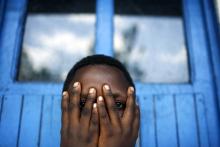
March 8 was designated as International Women’s Day by the United Nations in 1975. While the world has seen significant progress in rights and empowerment for women and girls, sexual and gender-based violence still touches every part of the globe and is tragically widespread in some areas. Women in the Democratic Republic of Congo face shockingly high rates of rape, including reports of mass rapes by soldiers, especially in the conflict-ridden province of Kivu. One Christian hospital, operated by the Free Methodist Church in the Nundu mission, works to treat injured women and heal psychological trauma.
Grace (not her real name) had spent the day working in the fields near her home in Kivu Province in the Democratic Republic of Congo (DRC). The 42-year-old mother was walking home with her two daughters, ages 20 and 16, when they were stopped by a group of 15 uniformed men. All three of the women were raped by the men and left with horrible injuries. They were brought to the Nundu Hospital, operated by the Free Methodist Church, where they received medical and psychological treatment for four weeks.
The Nundu Hospital identified 1754 survivors of sexual violence in 2012, and all but 98 of those were women or girls, according to Dr. Lubunga Eoba Samy, medical coordinator for the Free Methodist Church and coordinator of the hospital’s Sexual and Gender-Based Violence Project. This project aims to reduce the occurrence of sexual violence by promoting human rights, raising awareness and strengthening the capacity of community-based organizations to address the issue. It also includes training of local authorities and improving coordination among local non-governmental organizations.
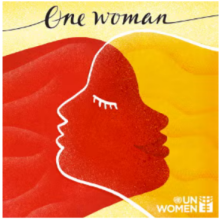
Written for U.N. Women to celebrate International Women’s Day, “One Woman” is sung by acclaimed singers and musicians to celebrate the mission and work to improve women’s lives around the world.
Yesterday, President Obama signed a reauthorization of the 2013 VAWA act. The Senate passed the bill on Feb. 12 and, the House passed the Senate bill on Feb. 28.
The Senate passed the Violence Against Women Act, picking up 16 additional Republican support and passing the bill 78 to 22.
Created in 1994, VAWA exists to help programs and services of domestic violence, dating violence and stalking. While it typically gets reauthorized easily, Congress failed to do so last year because of provisions in the Senate bill that included protection for LGBT, Native American and limited provisions to undocumented immigrants. The VAWA bill that was passed today includes protection for LGBT and Native Americans but protection for undocumented immigrants was not included. A few amendments were added on to the bill which includes a provision targeting human trafficking and a provision to ensure child victims of sex trafficking are eligible for grant assistance.
The bill now heads to the House where it is unclear how they plan to proceed. As Vice President Joe Biden said in a statement,
“Delay isn’t an option when three women are still killed by their husbands of boyfriends every day. Delay isn’t an option when countless women still live in fear of abuse, and when one in five have been victims of rape. This issue should be beyond debate—the House should follow the Senate’s lead and pass the Violence Against Women Act right away.”
No, I didn’t hit my head. I’m not suffering from amnesia. I’m just really confused.
I’m sorry — what year is it again? Running through my handy list o’ headlines, it’s a little bit difficult to tell.
I give you the 10 reasons I don’t believe that it’s really 2012.
The House of Representatives passed on Wednesday a version of the Violence Against Women Act that would limit protections to immigrant, LGBT and American Indian abuse  victims. House Republicans argue that Democrats are politicizing a non-issue, but stating fact is not partisan politics.
The new version of the bill not only deletes new protections that received bipartisan support in the Senate, but also eliminates ones that existed in previous versions of the Act. For instance, the new version could make it more difficult for immigrants married to abusive U.S. citizens come forward for fear of losing their residency.
For CNN, Leith Anderson and Lynne Hybels on the new version of the Violence Against Women Act being debated by Congress:
This week the House of Representatives is considering a proposal to reauthorize the Violence Against Women Act, first enacted in 1994, but in a new version that would significantly undermine the same U visa program that provided Nicole with safety and permanency in the United States. The U.S. government estimates that as many as 17,500 foreign-born victims are illegally trafficked in from abroad each year, and academic estimates suggest that at least 100,000 victims of human trafficking live in the United States today. By force, fraud or coercion, traffickers keep victims enslaved in prostitution or forced labor.
Read their full article here

It's long been known that Ezekiel is — well, let's be honest here — one crazy-arse book of the Bible.
Now that I'm tweeting about it every day and reading it cover to cover for the Twible project, I've come to understand one of the oldest traditions about it: it's not for everyone.
Some of the great rabbis taught that the book of Ezekiel, with its strange visions and explicit sexual language, should not be read by any Torah student under the age of 30.
The symbolism of "30" was likely tied to Ezekiel's own reported age when he began receiving his prophetic visions; perhaps the rabbis felt that if Ezekiel was old enough to see these weird word-pictures, 30-something men were considered mature enough to read about them.
Not so for women.

One in 5 women have been raped in their lifetime and nearly 1 in 4 women have been victims of severe physical violence by an intimate partner.
Mothers, daughters, sisters, wives and partners physically, emotionally and spiritually violated.
This is a moral shame not just on the men who committed these crimes but on ALL men.
It wasn’t until 1920 that the 19th Amendment to the Constitution of the United States was ratified. It reads:
The right of citizens of the United States to vote shall not be denied or abridged by the United States or by any State on account of sex.
Congress shall have power to enforce this article by appropriate legislation.
Men in this country live with a legacy of viewing and treating women as less than human. Our past reveals that we have not always recognized the image of God as fully present in our sisters.
While not every man has committed a crime of violence against women, all men are responsible to make sure such crimes end. The statistics show that rape and assault are not isolated incidents but rather are a consistent and constant part of our society and culture.
It won’t end the crisis, but the Violence Against Women Act (VAWA), is an important tool, giving an avenue of response to women who have been victimized.

According to the Associated Press:
A jury on Sunday found three members of an Afghan family guilty of killing three teenage sisters and another woman in what the judge described as "cold-blooded, shameful murders" resulting from a "twisted concept of honor," ending a case that shocked and riveted Canadians.
Prosecutors said the defendants allegedly killed the three teenage sisters because they dishonored the family by defying its disciplinarian rules on dress, dating, socializing and using the Internet.
The jury took 15 hours to find Mohammad Shafia, 58; his wife Tooba Yahya, 42; and their son Hamed, 21, each guilty of four counts of first-degree murder. First-degree murder carries an automatic life sentence with no chance of parole for 25 years.
After the verdict was read, the three defendants again declared their innocence in the killings of sisters Zainab, 19, Sahar 17, and Geeti, 13, as well as Rona Amir Mohammad, 52, Shafia's childless first wife in a polygamous marriage.
Read a roundup of the ongoing coverage of the Shafia trial and the religious, political and social issues related to the so-called "honor killings" inside the blog...
"Some 70 percent of women experience in their lifetime some form of physical or sexual violence from men -- the majority from husbands, intimate partners or someone they know."