Populism

SEEING THE RISE of right-wing populism globally, several months ago I began to lead scenario-planning and writing about what might happen if Donald Trump won. I played out strategies for how folks might meaningfully respond. Yet when he won, I still found myself deep in shock and sadness. In the days after, I reached out to my community to try to assess and get my feet back underneath me.
Being grounded is difficult when the future is unknown and filled with anxiety. Trump has signaled the kind of president he will be: vengeful, uncontrolled, and unburdened by past norms and current laws. If you’re like me, you’re already tired. The prospect of more drama is daunting.
As a nonviolence trainer working with social movements across the globe, I am blessed to have worked with colleagues living under autocratic regimes to develop resilient activist groups.
My colleagues keep reminding me that good psychology is good social change. For us to be of any use in a Trump world, we must pay attention to our inner states, so we don’t perpetuate the autocrat’s goals of fear, isolation, exhaustion, and constant disorientation. As someone raised by a liberation theologian, I’m reminded of how we lean hard on community and faith in tough times.
In that spirit, I offer some ways to ground ourselves for the times ahead.

A SPECTER IS haunting the neoliberal establishments of Europe and the Americas: populism. And the intelligentsia beholden to those establishments is pitching a hissy fit in response.
You can see it happening via publications such as The Atlantic —with headlines such as “What Populists Do to Democracies” and “How to Be a Populist”—and The Guardian, which has devoted an inordinate amount of its cyberspace to “Team Populism,” a transnational network of academics studying the rise of populist movements and leaders. A search of my university library database shows 1,259 books with the word “populism” in the title published just since 2016. The Guardian even offers a “How Populist Are You?” quiz.
The current populist moment gives the international commentariat a lot to chew on. For starters, there is so much disagreement about what “populism” even means. It’s hard to see how a word regularly applied to Donald Trump and Bernie Sanders can mean much of anything at all. In their work, the Team Populism people try to sort out this left-right mishmash by detaching the phenomenon of populism from its associations with socialism and ethno-nationalism. They consider populism not an ideology for governing but a strategy for attaining and keeping power. According to their June 2018 policy paper: “[Scholars] call something populist if it expresses the belief that politics embodies a struggle between the forces of good, understood as the will of the common people, and the forces of evil, associated with a conspiring elite.”

AUTHORITARIANISM is on the march. The rise of right-wing populism in Hungary, Poland, the Philippines, and now the United States highlights the fragility of democracy. Hungary’s Prime Minister Viktor Orban has propagated anti-immigrant sentiment while cracking down on independent media. Poland’s nationalist party has challenged judicial independence while asserting state control over media. Philippine’s President Rodrigo Duterte has vowed to strip civil liberties and employ violent vigilantism to address drug problems. In the U.S., Donald Trump mobilized a largely white base while railing against societal groups, including Muslims and immigrants, to win the election.
Authoritarian figures elected in democratic contexts often ignore constitutions, gut institutions, consolidate power, and snuff out domestic dissent. Dictators are often vindictive; they put themselves above the law and thrive on fear and popular apathy. Their toolkit includes ridiculing and delegitimizing protesters, pitting societal groups against each other, and coopting potential challengers.
But authoritarian figures have an Achilles’ heel. To stay in power, they depend on the obedience and cooperation of ordinary people. If and when large numbers of people from key sectors of society (workers, bureaucrats, students, business leaders, police) stop giving their skills and resources to the ruler, he or she can no longer rule.
Historically, the most powerful antidote to authoritarian figures has been strategic organizing and collective action. That includes civil resistance, employing tactics such as marches, consumer boycotts, labor strikes, go-slow tactics, and demonstrations. In democracies, civil resistance has often been used alongside institutional approaches (elections, legislation, court cases) to defend and advance political and economic rights.
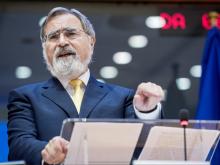
Rabbi Jonathan Sacks made a name for himself as chief rabbi of Great Britain for nearly a quarter-century, a time of great tumult that included the Sept. 11, 2001, attacks, the influx of millions of Muslims into Europe, and the ongoing pressures to absorb and assimilate newcomers into a mostly secular society.
As chief rabbi, from 1991 to 2013, he stressed an appreciation and respect of all faiths, with an emphasis on interfaith work that brings people together, while allowing each faith its own particularity.
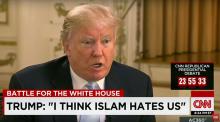
With his anti-Muslim rhetoric and planned travel bans, you’d think President Trump would be a favorite target for Islamic State’s propaganda. The jihadist caliphate in Syria and Iraq must be pulling out all the stops to slam him as the epitome of Islamophobia.
Well, think again. The extremist group that Trump vows to “totally obliterate” has hardly printed or broadcast a word about him since before the November election. The caliphate’s Ministry of Media acts almost as if he didn’t exist.
Romney's Mormonism To Be A Bigger Issue In The General Election, Say Evangelicals (includes comments from Jim Wallis; Oakland Braces For A 'General Strike'; Military Blew $1 Trillion On Weapons Since 9/11; American Voters Like Obama Better This Week, Quinnipiac University National Poll Finds; Cain And Gingrich Up As Romney Stalls And Perry Fades; Obama: I'll Make The Call On Keystone XL Project; Democrats Embrace Populism; Huntsman Takes On Big Oil
