Persecution

At the corner grocery in our Jabal al-Webdah neighborhood of Amman, a Syrian man in his early 20s now runs the meat and cheese counter. Ahmed (not his real name) is one of more than 150,000 Syrians who have fled to Jordan since his country’s violence began in March 2011.
Young males seeking to avoid mandatory military service are one of the largest groups leaving Syria.
Ahmed wires his wages to his family in Syria and calls them each evening to be sure they are still safe. “The situation inside Syria is even worse than reported in the news,” he laments.
A recent UNHCR report notes that, increasingly, Syrians are arriving in Jordan with only the clothes they are wearing and with few economic resources after months of unemployment.

This week, I and many U.S. Christian leaders signed on to a letter, concerning a re-introduced version of Uganda’s Anti-Homosexuality Bill, a bill which perpetuates some alarming and hateful language about the LGBT community in Uganda, and indeed, around the world. When it was originally introduced in 2009, it made homosexuality an act punishable by death. While the most draconian measures have been removed, the bill still calls for life imprisonment for people who are homosexual, and makes even discussions about sexual orientation illegal, stifling any opportunity to build a civil and constructive dialogue. How can we expect to come together to bridge the divides if we cannot even bring ourselves to sit down together and talk? What is even more heartbreaking, so surprising, is that Christian leaders in Uganda continue to support it.
What are we calling for in this letter? It is a simple message, and one that all who profess a Christian faith should be able to agree with:
All human beings have been created in the image and likeness of God, and Christ teaches that we are to love our neighbors as ourselves. All acts of bigotry and hatred betray these foundational truths.
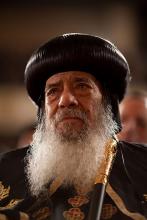
Just days before the country’s first democratic election (set for Nov. 28), 27 Coptic protestors were killed for demonstrating against the military’s recent burning of a Christian community center. And despite drawing global attention, which included anti-violence demonstrations in the U.S., Canada, and Europe, the Global Post reports that, "the demonstrations reflect mounting fears in Egypt’s Coptic community and its Diaspora that after the pro-democracy uprising of earlier this year the predominantly Muslim Egyptian society seems as indifferent to the Christian minority’s concerns as ever. “

For every American student, September starts a new year. September was a time to put away the suntan lotion and refocus on studies -- on more serious pursuits. Gone were the carefree days of summer, and in came the weather that lives perfectly in my memory -- those almost orange leaves, crisp blue skies, and the faint smell of autumn in upstate New York.
I remember it like this 10 years ago. Fourteen and gearing up for a Varsity volleyball season, I had it all. I had only one worry -- that my dad would forget to pick me up from practice, which he never did.
My class had just finished homeroom -- it was my friend's 15th birthday. I don't remember singing, but I'm sure we did. I moved into my world history class, I think we were on the Greeks. And then, it changed. My choir teacher rushed in and frantically told us to turn on the television. We saw the hallways fill with teachers.
I have gotten so used to stories of violence in the news every morning that I confess they don't move me as much as they should, or used to. Today: Three straight days of killing in Karachi with 42 dead; Syrian tanks shelling the city of Hama, where more than 100 people have died since Sunday; U.N. peacekeepers killed by a landmine in Sudan; daily deaths in Libya; bombings in Baghdad and assassinations in Kandahar. It goes on and on.

Around the world, religious freedom is under threat -- but people of faith continue to reach across divides.
A recent U.S. Court of Appeals ruling, and the subsequent fallout here in New York, hits close to home for many of us New Yorkers. The ruling, which came down on June 2, allows for the city of New York to restrict religious groups from meeting in schools
Argentinian singer Mercedes Sosa died yesterday. I don't know much about her life, so you can join me in reading her Wikipedia entry. But what I do know is that she's one of the best-known performers of Leon Gieco's heart-rending anti-war song, "Sólo le Pido a Dios."