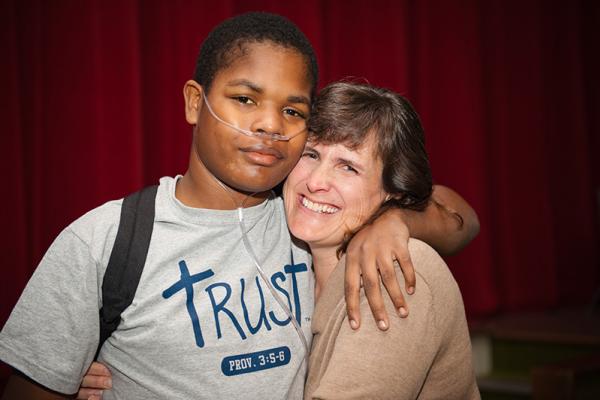
At 5 a.m. on a Friday last August, 20-year-old Joshua Jank’s condition was worsening. Nurses at his hospice home in Fort Wayne, Ind. told his mother to gather anyone who wanted to say a last goodbye.
“Josh spiraled downward very quickly,” Brenda Jank told Sojourners. “In less than two weeks he went from being at home without oxygen to being in the hospice house. He just hit it – a perfect storm.”
It was in the midst of that perfect storm that a movement was born.
“That I may know him, and the power of his resurrection, and the fellowship of his sufferings, being made conformable unto his death; If by any means I might attain the resurrection of the dead.” Philippians 3:10-11
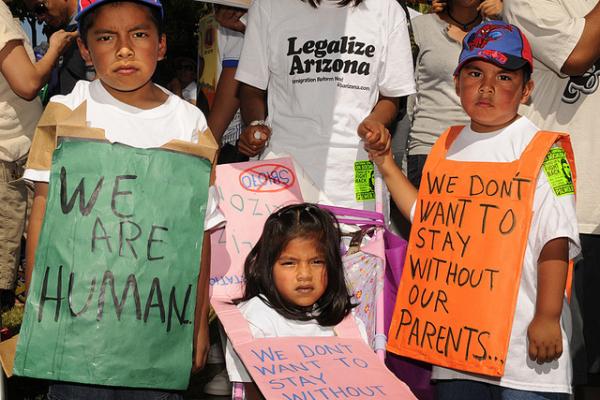
Harsh winters make us more deeply appreciative of spring. Last week, after a particularly intense winter, it finally reached 60 degrees in New York. I, for one, celebrated heartily. Spring is a reminder that winter is not interminable and flowers will bloom again. Almost exactly one year ago, the Senate released a bipartisan bill on immigration reform. Many Christian leaders celebrated the possibility that finally the nearly 11 million men, women, and children would be afforded the opportunity to integrate into this great country. In addition, in January the GOP released a set of principles that set the tone for the genuine possibility for immigration reform. There was a growing consensus that this is the year for immigration reform. Then the news started to change and many prognosticators said, “Immigration reform is dead.”
It is into this public eulogy of immigration reform that the Christian message of Lent and Easter can breathe new life.

Chick-fil-A is finally crossing the road.
Above all: it wants to be a serious player on fast food’s biggest stage.
CEO Dan Cathy’s comments condemning gay marriage in 2012 set off a store picketing and a social media firestorm. Now he has backed away from such public pronouncements that mix personal opinion on social issues with corporate policy.

The bouncers proceeded to look us over exactly one time. No more. No less. Upon making their assessment, we were informed the club didn't cater to our type. I guess a green v-neck shirt, cammo shorts, and sandals didn't appear affluent enough to afford anything the club had to offer. In their defense, their assessment was spot on.
On the trek back to our hotel, at the opposite end of the strip, I had a good deal of time to think about what had transpired. That's when it dawned on me, our churches operate a lot like that night club.
Allow me to explain.
For starters, the church thrives on exclusivity. As an institution, it spends an awful lot of time and energy differentiating between the "in" and the "out."

World Vision found itself testing the evangelical boundaries in March when it announced it would recognize employees’ same-sex marriages. Within 48 hours, it reversed itself.
At its core, the reversal raised a stark question: Can you be an evangelical and support same-sex marriage?
Reverberations from the policy flip-flop continue to unfold. Last week, Jacquelline Fuller, director of corporate giving at Google, resigned from the international relief organization’s board. Faithful America, an online Christian community focused on social justice, had gathered 16,000 signatures calling for Fuller and John Park, another Google employee who sits on the World Vision board, to step down.
Editor's Note: The following story originally appeared HERE in The Australian Financial Review.
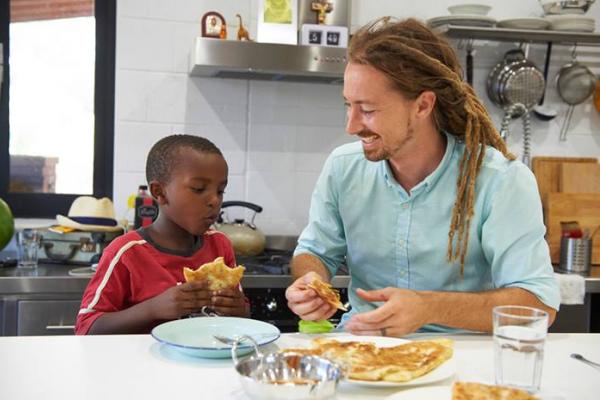
Jarrod McKenna is in trouble. It's not that the dreadlocked Christian activist is at risk of being arrested, as he has been at several anti-war and anti-coal protests. Rather, he has let five-year-old Congolese refugee Zephanta Baganizi eat the leftovers of our very late lunch, shortly before dinner time.
"Have you asked your mum if it's OK?" McKenna asks "Zopho," who is gazing at several pieces of bolani, a vegan flat-bread meal from Afghanistan. Transfixed by the food, Zopho doesn't respond.
"Just a small piece, then."
Zopho grabs the biggest piece. He runs off to his family's apartment, mouth overflowing with fried bread and vegetable filling.
"I'm in trouble," McKenna says.
The interaction between Australian, Congolese and Afghan food, people and culture is not uncommon at a large block at the end of Dudley Street in the outer Perth suburb of Midland.
It is the location of First Home Project; a former methamphetamine lab transformed into three apartments that provide medium-term accommodation at below-market rates for refugees transitioning into their new Australian lives.
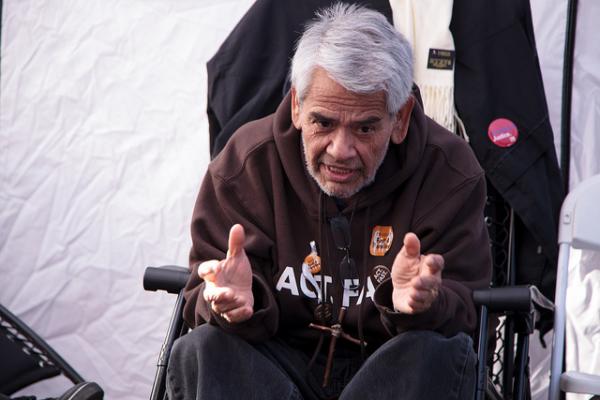
As an immigrant who made the long journey from Zacatecas, Mexico, to the farmlands of California many times as a child, the Lenten story of Jesus’s wandering for 40 days in the desert has always resonated with me very deeply. And the Easter celebration that follows sustains my hope and resolve that the faith community’s long movement to reform our broken immigration system will succeed.
Late last year, I, along with several other immigration advocates and inspiring faith leaders, camped out in a tent on the National Mall in Washington, D.C., to call attention to the moral crisis and human suffering caused by our broken immigration system. We asked ourselves: What are our faith, our words, and our history worth if not translated into action, sacrifice, and redemption?
So, for 30 days we fasted and prayed that leadership in the House of Representatives would follow the Senate’s lead and pass a comprehensive, bipartisan immigration reform bill. The power of prayer surrounded us as we were led in reflection on a daily basis by pastors who serve undocumented families, by immigrants who suffer under our unjust system, and by public officials who came to see our commitment as days without food turned into weeks.
Even though the House refused to act in 2013, we believe that our fast, and the support of thousands of solidarity fasters around the world, helped change the discussion about reform from one of dollars and cents to one about people and families. Our sacrifice and the suffering of our immigrant brothers and sisters will end in victory and redemption.