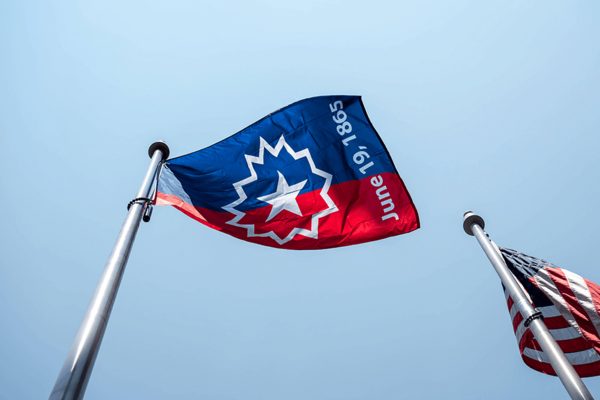
Resounding Love, a diverse interfaith choir, is bringing a message of love and hope to its Juneteenth concert in Seattle.
The group offers the most powerful and uplifting elements of church gospel music to people of many faith backgrounds, the Rev. Angela Farrar Small, director of chaplains, said. Resounding Love’s Juneteenth performance will center on African American identity, culture, history and social justice.
Juneteenth commemorates June 19, 1865, when enslaved African Americans in Texas learned of their freedom, more than two years after the Emancipation Proclamation. Now it’s a federal holiday celebrating the end of slavery in the United States.
African American gospel and spiritual music has brought people together “from the deepest depression to the biggest joys,” Small said.
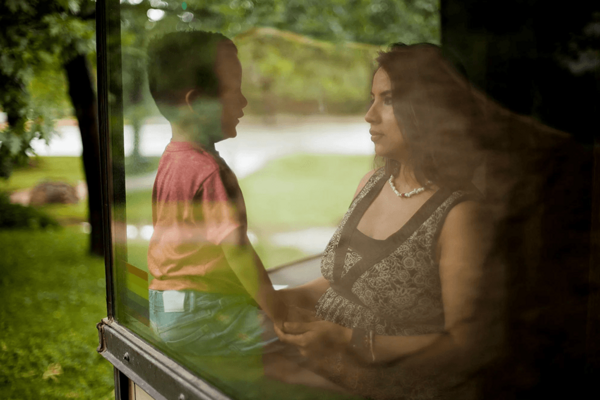
Theo Rigby’s new documentary Si Pudiera Quedarme/If I Could Stay follows sanctuary activists Jeanette Vizguerra and Ingrid Encalada Latorre as they resist deportation to stay with their families and communities. At its heart is a story of courage. Standing in front of a classroom in Denver, Vizguerra explains it like this: “Like all people I am afraid, but I also feel the moral duty to raise my voice as a person, mother, and woman. Because the problems I am facing are happening to thousands of others on the street. And someone has to be the person putting their finger on that problem.”
Sanctuary as a tactic emerged during the Vietnam War, when houses of worship shielded draft resisters from arrest. The 1980s saw the advent of the Sanctuary Movement, which focused on critiquing the Reagan administration and giving Central American asylum seekers platforms to speak about the violence happening in their countries of origin. After the success of that movement, Sanctuary saw a revival in the 2010s. The “New Sanctuary Movement” critiqued our unjust immigration system by housing undocumented immigrants and giving them a platform to share their experiences and build power.
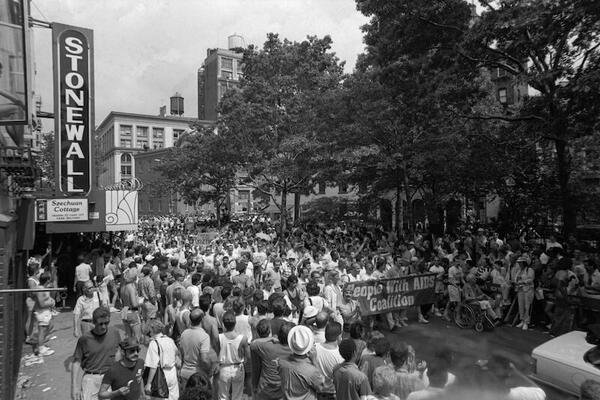
Stonewall is remembered for being the site of a riot. What I remember about that community is care.
By the time the New York Police Department entered the Stonewall Inn in lower Manhattan on June 28, 1969, a community already existed. The rebellion became famous because people fought back, but communities are not built in a single night. The Black and brown queer folk, transgender women, drag queens, sex workers, and young people who gathered at Stonewall had already spent years creating ways to survive. They had learned how to care for one another when families and churches would not and when the police attacked them. Stonewall was not the beginning of their steadfastness. It was the moment the rest of the world was finally forced to see it.
I have been thinking about what the church still has not learned from that historic moment. The church I am addressing here is not a monolith. I understand there are Christians for whom this entire conversation stops at the mention of the LGBTQ+ acronym. I am not writing for them today. I am writing for the rest of us. I am writing for people like me, who are resisting inequitable systems and imagining what liberation can look like for all that God has created.

On my last day of college, I went to my chaplain’s office to ask her a final theological question. “In case this comes up in the next few years and I don’t have a trusted faith leader nearby to ask: What does it mean for Christianity if we learn definitively that aliens are real?”
I wish I could recall her exact response. But I only remember that she was amused—and not worried at all about the existential impact of the extraterrestrial. If I had asked her today, she probably would have directed me to see Steven Spielberg’s latest aliens-are-real epic, Disclosure Day.
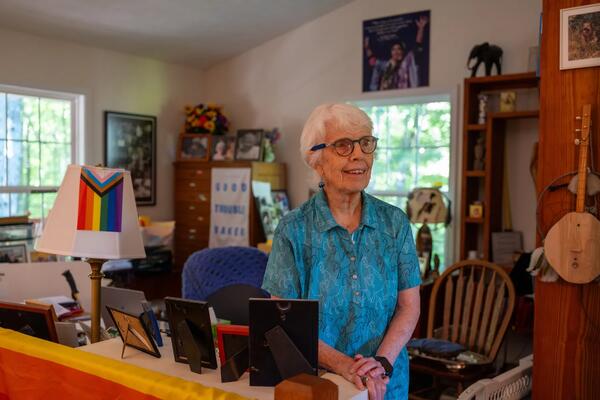
On “Moral Mondays,” a group of locals—sometimes 10, sometimes 100—gather on the town square in Brevard, N.C., holding signs advocating for voting rights, economic justice, and more. Carter Heyward, an Episcopal priest and vice president of the Transylvania NAACP, which organizes the events, will “often come in her collar with a bright stole on,” said Diane Livingston, an NAACP member. “That's how I always picture her, with a clergy collar on.”
Heyward’s clergy collar and her advocacy for a more democratic society did not come easily. She was one of the first women to be ordained in the Episcopal Church in 1974. It was an “irregular” ordination: The 11 women ordained at the predominantly Black Church of the Advocate in Philadelphia, prefiguring the Episcopal Church officially ordaining women in 1976, became known as the Philadelphia Eleven.
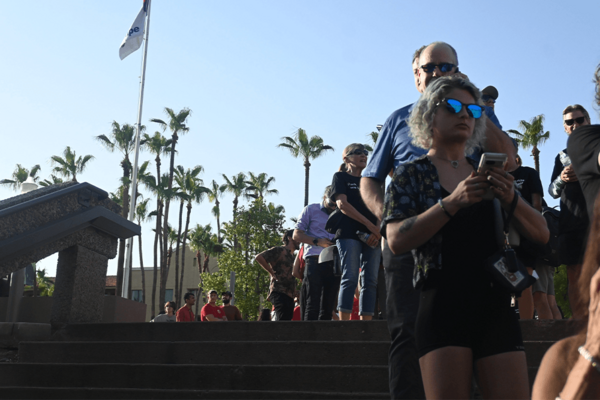
An Orthodox Christian group sued Phoenix over a new law restricting free food distribution and medical care to people in need at parks, continuing a regional battle over how cities should respond to homelessness in public spaces.
Lance Brace, founder of St. Herman’s Table, a ministry of Exaltation of the Holy Cross Orthodox Church, said a Phoenix ordinance passed in early May and set to take effect June 5 criminalizes his evangelism and makes it impossible for him to provide food, water, Bibles and small hygiene products to unhoused people in city parks.
The ministry provides those items with the ultimate goal “to introduce Jesus Christ to the people it serves,” the complaint says.
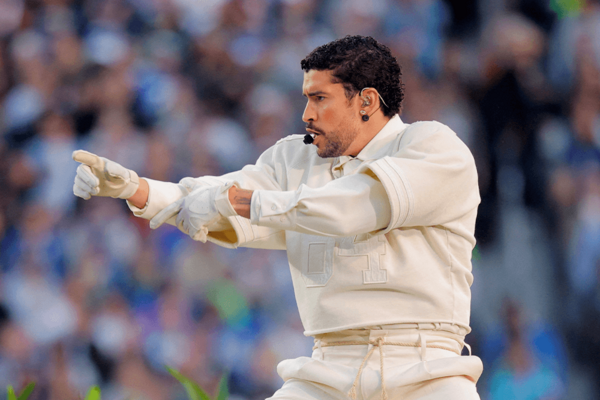
Pope Leo had a brief private meeting with Puerto Rican singer Bad Bunny at Madrid’s Bernabeu stadium on Monday evening as both were touring Spain, the Vatican said on Tuesday, adding that it did not expect to release any photos of the meeting.
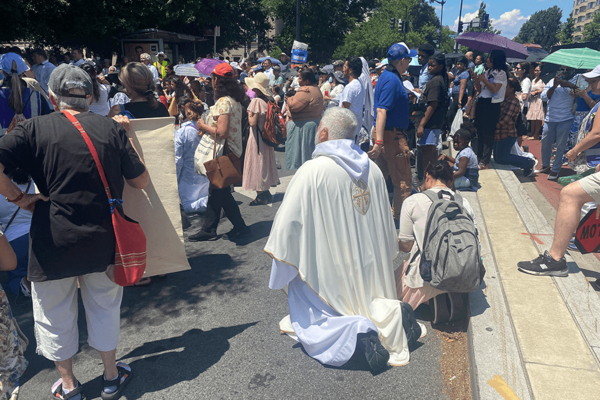
As Catholics from all over the world observed Corpus Christi by processing through the streets to celebrate the Eucharist, about 300 parishioners in Washington, D.C., did the same—with a specific focus on honoring the dignity of immigrants.
Going back to the 13th century, Corpus Christi is the Catholic Church’s celebration of Jesus Christ’s real presence in the Eucharist. For Bishop Evelio Menjivar-Ayala, who led the immigrant-focused procession in Washington and serves as bishop of the Diocese of Wheeling-Charleston in West Virginia, the day is a reminder to stand in solidarity with those who are suffering, especially immigrants who live in fear of deportation.
“The mystery we celebrate today is a mystery of unity,” he told Sojourners on Sunday. “We share one bread, one cup, and then we become the body of Christ … But the Eucharist has to go beyond just receiving Jesus at Mass or adoring Jesus in the blessed sacrament.”

The prediction market is booming. In April alone, it was estimated that Polymarket and Kalshi recorded nearly $24 billion in trades.

Across Latin America, faith-based organizations have a long history of accompanying and serving migrants traveling northward. But as the U.S. grows increasingly aggressive in its immigration enforcement, these ministries find themselves serving migrants flowing south, away from the U.S.