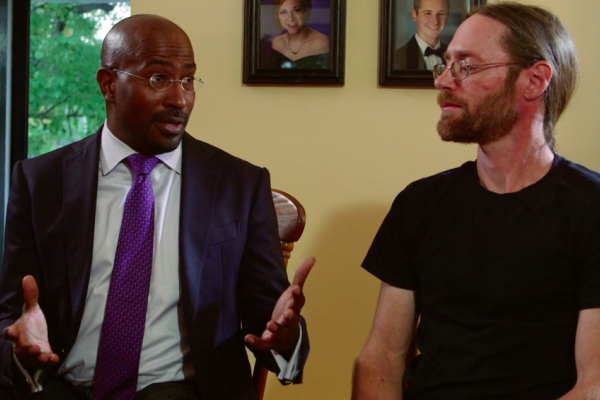
We’re part of a community of people who are using cameras and pens and microphones to explore our differences — and I think that’s what keeps our differences from being explored by knives and bombs and all these other forms of destruction. What you’re doing with a publication, what we're doing with film, it’s all part of the same effort.
That’s where you see democracy at work, and that’s really what we’re rededicating ourselves to.

On July 6, Castile was in the car with Reynolds and Reynolds’ daughter in Falcon Heights, Minn., when Yanez pulled Castile over and fatally shot him. Reynolds broadcast the moments immediately after the shooting on Facebook Live.

On Nov. 15 the Black Lives Matter Global Network released a statement on the election of Donald Trump, reports Mic. The organization stated that what remains true — and was proven by the results of the 2016 U.S. presidential election — is that “when black people and women build power, white people become resentful.”

The dismantling of the Voting Rights Act of 1965 by the Supreme Court and conservative state elected officials may be a major reason behind Donald Trump's 2016 U.S. presidential election win, reports ThinkProgress. This was the nation’s first presidential election since the Voting Rights Act's implementation 50 years ago in which the act didn’t provide full protection to voters of color.
This is the world as it is: a world that a robust doctrine of sin should teach us to expect but which idolatry seduces us into forgetting. The chasing after idols is always foolish, but some have the luxury to indulge such foolishness at no physical cost to themselves. The election of Trump is a wake-up call to remember what those who are black, brown, queer, disabled, or a religious minority can only forget at their peril: that oppression is likely to get worse, but the struggle goes on; that the absurd becomes normalized, but must nevertheless be ridiculed even to the point where ridicule feels absurd; that love is more real than hate, but real love means hating what is evil; that the space between the world as it is and the world as it should be must be grieved in order to find the hope to go on; that a truly good, happy and meaningful life cannot involve leisure built off the domination of others. No form of life can be good if it does not have in its institutional forms and ends justice and generosity for all, and pursues this in such a way as to foster the agency of everyone, especially the vulnerable and dependent.

The alliance between Roman Catholics and evangelical Protestants on a range of issues dear to social conservatives has been one of the biggest storylines in religion and politics in recent decades.
But in the Age of Pope Francis and the Era of President Trump that union may be fraying.
In a tweet posted Nov. 14, Jerry Falwell Jr. — a Baptist and leader of the religious right who was one of Trump’s chief promoters — delivered a pithy and pointed critique of the pontiff.

Though Jews remain the most frequent victims in America of hate crimes based on religion, the number of incidents against Muslims surged in 2015, according to newly released data from the FBI.
Hate crimes against Muslims spiked 67 percent from 2014 to 2015. That represents 257 anti-Muslim incidents.
Robert McCaw, government affairs director at the Council on American-Islamic Relations, said the jump in anti-Muslim incidents continues to rise and even accelerated after the Nov. 8 election.

A week after Donald Trump’s stunning election as president sent the country’s governance lurching to the right, the nation’s Catholic bishops sent a message of their own — at least on immigration — by putting Mexican-born Archbishop Jose Gomez of Los Angeles in line to become the first Latino to lead the American hierarchy.
But the vote at their annual fall meeting in Baltimore on Nov. 15 also suggested that the U.S. Conference of Catholic Bishops is still hesitant to fully endorse the more progressive and pastoral approach to ministry that Pope Francis has been championing since his election in 2013.
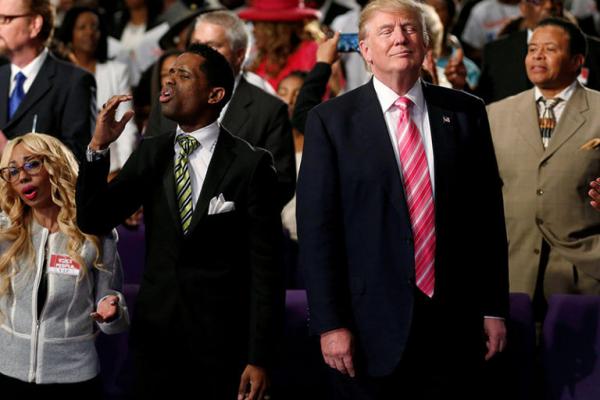
I fear now, as I have feared for months, the impact of his presidency on vulnerable people — including the white and working-class voters in places like my home state of Ohio who lent him their support.
Christians always have disagreements about policy proposals or party platforms during election seasons. But this year, I wonder how white Christians who read the same Scriptures and hold many of the same beliefs that I do could support a man who in word and deed has flaunted the core teachings of our faith.
As members of the left, we find ourselves wanting meaning, now, no less than did those who voted to Make America Great Again. We want a theodicy. We want answers. We want, in a sense, a religious explanation for how to proceed next.
It would be intellectually satisfying to come up with new narratives. It would also be lazy.
As Christians, what we are called to do is sacrifice that. We go on living. That’s it. We donate, if we choose to; we participate, when we can, in acts of goodness and solidarity and defiance; we rage against racism when we see it; when men grope women on subway platforms we follow the women to comfort them, as happened to me earlier this week. We do dull, good things, and we vote. We love, but do not soothe ourselves with the softness of that love. We deconstruct our own narratives, especially when they make us feel good.
We cry out in the wilderness. But we do not expect answers — not yet, and maybe not ever. If we are called to anything, now, it is do the work of living without them.