
WASHINGTON — Debby Levitt's four children are dressing up big time for Purim, one of the more raucous of Jewish holidays, which begins on Wednesday (March 7) this year.
Commemorating Queen Esther's brave and successful efforts to save the Jews of Persia from extermination, Purim calls on Jews to rejoice in costume and to give goodies to neighbors and friends.
Girls often dress up as the beautiful queen, and boys as her valiant cousin Mordecai, who refused to bow down to the evil Haman, who aimed to extinguish all vestiges of Judaism from the kingdom.
The goody baskets — mishloach manot, in Hebrew, or the "sending of portions" — are meant to contradict Haman, who asserts in the biblical book of Esther that Jews were a people riven by strife.
Costumes? Goodies? Sounds like Halloween. But for the Levitts, it's nothing like Halloween.
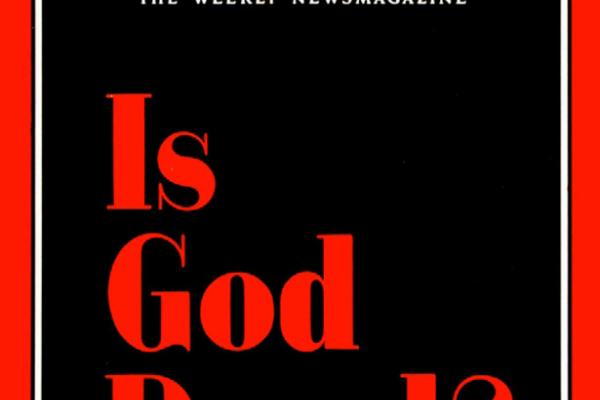
PORTLAND, Ore. — William Hamilton, the retired theologian who declared in the 1960s that God was dead, died Tuesday in his downtown Portland apartment. He was 87.
Hamilton said he'd been haunted by questions about God since he was a teenager. Years later, when his conclusion was published in the April 8, 1966, edition of TIME Magazine, he found himself at the center of a theological storm.
TIME christened the new movement "radical theology," and Hamilton, one of its key figures, received death threats and inspired angry letters to the editor. He lost his endowed chair as a professor of theology at what was then Colgate Rochester Divinity School in 1967.
God, we pray today for all the social workers in the United States and around the world. Give them bountiful strength and wisdom in their work, as many of the people they serve are broken and weary. For them, we pray for healing and restoration. Amen.
"So then you are no longer strangers and aliens, but you are citizens with the saints and also members of the household of God, built upon the foundation of the apostles and prophets, with Christ Jesus himself as the cornerstone. In him the whole structure is joined together and grows into a holy temple in the Lord; in whom you also are built together spiritually into a dwelling-place for God." - Ephesians 2:19-22
"For me it is essential to have the inward peace and serenity of prayer in order to listen to the silence of God, which speaks to us, in our personal lives and in the history of our times, about the power of love." - Adolfo Pérez Esquivel
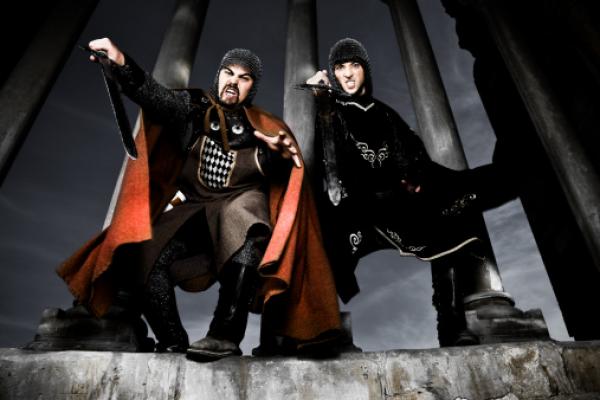
The Democratic sweep of Congress in 2006 and President Obama's election in 2008 convinced many people the religious right had been defeated and discredited. They believed it was time to "move on," a ubiquitous but dangerous phrase that often blinds people to unpleasant realities.
The truth, however, is that the religious right, Christian Reconstructionism and Dominionism have never gone away. And now they're back — "big time," as Dick Cheney might say.
In the 2012 presidential election, the Christocrats are out in force on many fronts: trying to eliminate prenatal care and all forms of contraception; defunding breast cancer screening; opposing civil rights for same-sex couples; contesting evolution and substituting creationism in public schools; denying the reality of global climate change; and discrediting the "lame stream media."
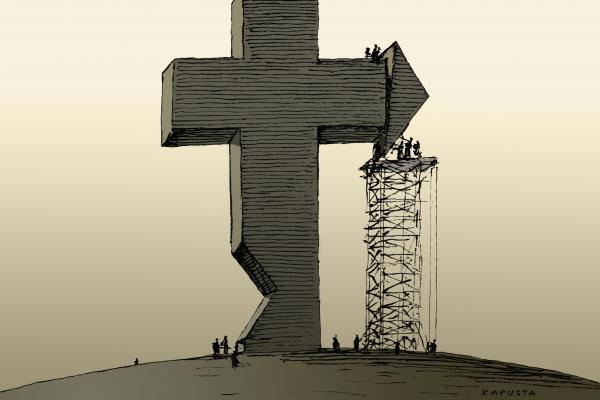
“Church folks are just too political!”
When people are asked why they have decided to leave the church, this has become an increasingly popular response. And, sadly, it is a particularly popular response for those in the 18-29 year old demographic. That we Christians have allowed ourselves to become too political and too partisan is a major contributor to the decline of the church.
Partisanship and its corrosive effects are not a new thing to the culture at large. However, more and more that cultural partisanship is infecting the church and gnawing away at the bonds which are supposed to hold them together. In the process, the church gets hijacked and redeployed for partisan ends, leaving those expecting better from the church disappointed.
Paper airplane throwing your way into the Book of World Records, creative films on Waldo and "clapping butter," jewelry + aviation, Record Store Day, and Bo Obama invites you to the 2012 White House Easter Egg Roll.

I got emails from my mom and uncle about Nana, my last living grandparent. The news isn’t great. She’s struggled with dementia for some years now and hasn’t recognized me the last several times I’ve seen her. But while her mind has been betraying her for a while, it’s her health now that seems to hang in the balance.
Not that it’s a surprise at ninety years old. And it’s also not like we’re particularly close anymore. Aside from living 700 milers away, it’s hard to have much of a relationship with someone who has no idea who you are. But there’s something about knowing she’s close to the end of her life that really freaked me out last night.
When I was a little guy, I had three great grandparents that I remember visiting. They all smelled funny and talked constantly about stuff I didn’t understand, but I got that they were family. I’d visit Pappy and Sweetie, who lived in a trailer home on the Mississippi River; Granny Hagen had her own house for a few years, and then she got moved into one of those silos where people wait to die. Yes, there are some retirement facilities that actually have signs of life in them, but this wasn’t one of them. My mom’s family was pretty poor, and things like retirement and end-of-life planning weren’t a particularly high priority.
Their deaths didn’t bother me too much. I didn’t like seeing my parents sad, but that was about it. I’d miss the candy corns and balloons Pappy always gave me (he called candy corns “duck butters” because when he’d feed them to the ducks, their butts would stick up in the air when they reached down to eat them). But my grandparents were the ones I actually knew as people.
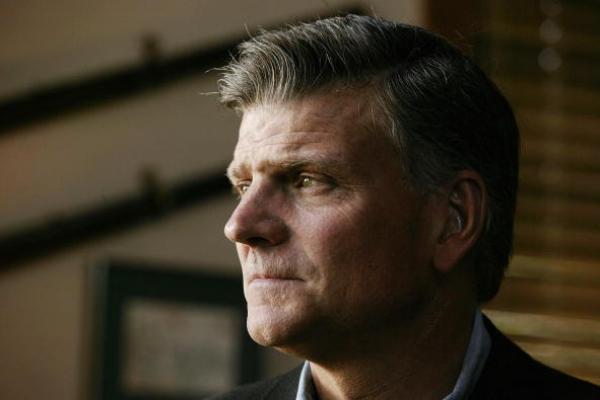
When Franklin Graham expressed doubts about President Obama’s Christian faith during and interview on Morning Joe last week, it reminded me of an uncomfortable dinner I had in the late ‘90s.
I sat down for a pleasant meal in the home of two great friends — one of them a white evangelical faith leader deeply committed to social justice. Well into the evening’s conversation —when we’d dropped all our pretenses and our exchanges moved well past mealtime niceties — one friend asked me something that caught me entirely off guard.
“Do you think Martin Luther King, Jr. was a Christian?” he said.
I was dumbstruck. I had never heard anyone actually ask that question before.
“Yes,” I replied. “What would make you doubt that?”
As he explained, it became clear: My friend wasn’t sure whether Dr. King was a Christian because King’s Christianity didn’t look like my friend’s Christianity.