
One in four young millennials (age 18-24) identify themselves as religiously unaffiliated—up from 11 percent in their childhood. But the distinguishing factor for this age group is that the “unaffiliated” label may stick with them into adulthood and beyond.
“This cohort is so dramatically different—racially, ethnically and religiously—it can’t help but change the character of our country,” Daniel Cox, director of research at Public Religion Research Institute, said at the presentation of the “Millennial Values Survey,” conducted by PRRI and Georgetown University’s Berkley Center for Religion, Peace and World Affairs.
In the past, young adults have tended to lapse in faith during their college years and twenties, only to return with age and family. Robert Jones, PRRI founder and CEO, said that’s not likely to happen as much with this age group.
“We’ve got to come up with some new measures of religion,” Jones said.

W.H. Escalates Budget War — The Fight For 'The Persuadables' — U.N. Chief Says Syria Is Failing To Adhere To Peace Plan — Judge Quits In Trayvon Martin Shooting Case — Jobless Data Suggests Slowdown In Job Creation — Study: 8.3 Million Children Affected By Foreclosure Crisis — Biblical Literalism, Secularism And American Politics (OPINION) — Two-Paycheck Couples, Working Because They Must — Will Obama's New Rules Make Fracking Better For The Planet? — 21st Century Chain Gangs.

In City Journal, Pascal Bruckner has written an interesting essay critiquing "secular elites" and their (our?) predilection for an apocalyptic vision without redemption. He calls it the apocalyptic daze, a love for the cataclysmic and states that it's shaping our politics. Interesting stuff to read as Earth Day approaches. He writes:
My point is not to minimize the dangers that we face. Rather, it is to understand why apocalyptic fear has gripped so many of our leaders, scientists, and intellectuals, who insist on reasoning and arguing as though they were following the scripts of mediocre Hollywood disaster movies.
His is not a critique of the science of environmentalism but one of the rhetoric of the politics surrounding it.
Under a mandate from the budget resolution passed by the House in March, committees are required to cut discretionary programs to avoid the automatic cuts in military spending to take effect in January. The funds cut are to be moved from the nondefense to the defense categories in the budget. Yesterday, the House Agriculture Committee produced its share by cutting $33 billion from the Supplemental Nutrition Assistance Program (SNAP, or food stamps).
Rep. Collin Peterson of Minnesota, the ranking Democrat on the Committee had this response: “You can’t have a serious conversation about getting the budget under control when you take large items like defense off the table, which is really why we are here. Taking a meat-ax to nutrition programs that feed millions of working families in this country in order to avoid defense cuts is not a serious way to achieve deficit reduction.”
The Center on Budget and Policy Priorities estimates that a cut this large would result in 2 million people losing benefits and the remaining 44 million having theirs reduced. So here’s the equation, more hungry people = more weapons for war. It’s clear and direct.
Duane Shank is Senior Policy Advisor at Sojourners. You can follow him on Twitter @DShankDC.
Today is the anniversary of the Warsaw Ghetto uprising in 1943, and the day designated as Holocaust Remembrance Day. Ari Shavit, senior correspondent and editorial board member of Haaretz newspaper has some important reflections on how that remembrance is used and misused.
We are being torn between those who mention Auschwitz so that Israel will be deemed innocent in every situation, and those who distance themselves from Auschwitz so that Israel will always be guilty. As a nation, we have lost the ability to experience the Holocaust both as a universal event with humanitarian significance and as a unique event with Jewish and Israeli significance. …
It is our duty not to speak harshly and not to exploit it. The Holocaust was a terrifying event of insanity. The true imperative to be derived from the Holocaust is the imperative of sanity. Not to be enslaved to the past but also not to be alienated from it. To observe death, and to remember death - and to choose life.
In a world that seems dominated by death – from Afghanistan, Iraq and Syria; to South Sudan and the Congo; this day should allow us to reflect on the 6 million Jews who died in Europe and to redouble our efforts to work for life for the millions dying or threatened with death today.
Duane Shank is Senior Policy Advisor at Sojourners. You can follow him on Twitter @DShankDC.
"I opened my hand and the Infinite ran to the edges of space – and all possibilities are contained therein, all possibilities, even sorrow. In the end, nothing that ever caused one pain will exist. No one will begrudge Me. The Absolute Innocence of all within my Creation takes a while to understand.” - St. Catherine of Siena of Siena from “No One Will Begrudge Me”
Lord, grant that your holy and life-giving spirit may move ever human heart, that barriers which divide us may crumble, suspicions disappear, and hatred cease. Heal our divisions so that we may live in justice and in peace. Amen. Adapted from National Council of Churches in the Philippines
"David said to Abigail, ‘Blessed be the Lord, the God of Israel, who sent you to meet me today! Blessed be your good sense, and blessed be you, who have kept me today from blood-guilt and from avenging myself by my own hand!" - 1 Samuel 25:32-33
College-aged adults are not letting their moral beliefs on social issues filter into their politics.
According to the just released “Millennial Values Survey” by the Public Religion Research Institute and Berkley Center for Religion, Peace and World Affairs at Georgetown University, adults age 18-24 are much less likely than their parents to cite social issues like abortion (22 percent) or same-sex marriage (22 percent) as critical.
While the group is split on social issues personally, it doesn’t factor into its political reality. For example, while 51 percent believe abortion is morally wrong, 59 percent believe access to abortion should be legal. Likewise, 48 percent believe sex between members of the same gender is morally wrong, but 59 percent favor allowing same-sex couples to legally marry.
The gap is also evident in their religious affiliation. The percent of religiously unaffiliated jumped from 11 percent in childhood to 25 percent now.
Their attitudes toward Christianity paint a picture of possible motives behind the shift. Two-thirds say that Christianity can be described as “anti-gay,” and 62 percent believe present-day Christianity is “judgmental.”
The full survey will be released this morning at Georgetown University. Check back with Sojourners for more coverage of the findings.
Sandi Villarreal is Associate Web Editor for Sojourners. Follow Sandi on Twitter @Sandi.
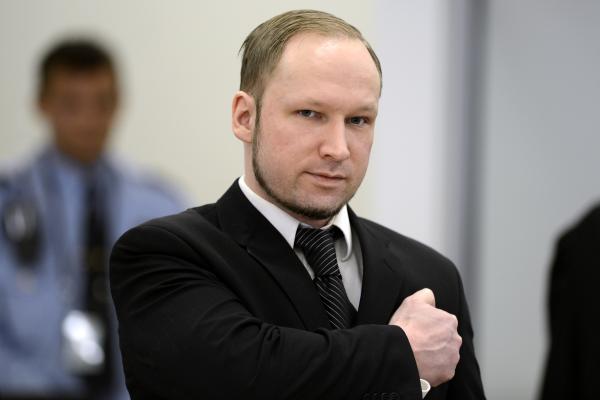
I opened up the NY Times homepage yesterday to find this headline: On Witness Stand, Norwegian Says He Would Kill Again. Remember this guy? The Times says authorities have described Anders Behring Breivik as a “fundamentalist Christian…obsessed with what he saw as the threat of multiculturalism and Muslim immigration to the cultural and patriotic values of his country.”
He killed 77 people, including 68 teenagers, in Norway last summer.
Although Breivik admits to the murders, he doesn’t believe he should be held criminally accountable—he believes his actions were preventive measures, or, “self-defense.”