
Generally, we only know how history will be remembered once it is in the rearview mirror. Something, or some things, jump out and remain indelible in the collective memories of the culture. And in a world defined by sound bytes, sometimes only a few words tell us a lot about that moment in time.
In that spirit, here are my selections for the ten most defining phrases that will stay with us from the past year.

As common language in the U.S. is filled with references to time, it shows how much we value (and sometimes obsess!) over so-called “time management.” For example, many in the U.S. believe time can be "on," "kept," "filled," "saved," "used," "spent," "wasted," "lost," "gained," "planned," "given," "made the most of," or even "killed." We recognize that many fail to manage their time by allowing time to manage them, or as William Penn once remarked, “Time is what we want most, but what we use worst.” And so, as we turn our calendars from 2012 to 2013, we recognize the need to reflect upon our usage and value of time, for too often we place our plans as a higher priority than other people.
As we consider the dawning of a new year, many will reflect upon events of the past, take inventory of the present, and make numerous resolutions for the future. In doing so, we recognize that the Bible is an excellent resource for such undertakings, as it points us toward a faithful and fruitful use of the time God has given to us, as is written in Ecclesiastes 3, “For everything there is a season, and a time for every matter under heaven …”

There are a lot of emergent folk who shun creeds. They have let go of much of their free-range evangelicalism, but the anti-creedal posture still holds a principal place. Still, I am thinking about music and liturgy, spiritual formation (that troublesome word again, formation), and the creeds we keep in our hearts though no agency has "approved them for community use." Instead these creeds are "sanctified by use," if you will. Here's mine.

This week’s episode was recorded in the youth group room at First Christian Church in downtown Portland, Ore. To start things off, Jordan talks about being the Marv Marinovich of comedy by relentlessly pushing his daughter to be funnier while Christian embraces the black magic that is naturopathic medicine.
This week’s guest is Wm. Paul Young, author of the wildly popular novel The Shack, which has sold 18 million copies to date. Paul talks about the creative process, about trusting God rather than trying to please, and the development of his latest book, Crossroads. Basically, it’s just an interesting conversation with a fascinating person who’s also incredibly gracious and humble.

I attended a basketball banquet and a girls team gathered together on the stage. Their coach gave a small speech before she introduced each player. "We didn't win any games this season," she lamented, "but in our hearts we won them all." Wow! What a quote! "In our hearts we won them all." I'll always remember it and hold it in my heart.
Not long after that banquet, I heard a story on National Public Radio about a high school girls basketball team in Texas that lost a game 100-0. I found an article about the game written by Barry Horn for the Dallas Morning News. Horn wrote, "Later on the 100-0 night, Civello [the losing coach] told his girls the life lesson they could take from their loss: 'I told them someday they will be on top in a similar situation and they should remember how they felt when some people were cheering for a team to score a hundred points and shut us out. Hopefully, my girls all learned a lesson in sportsmanship that will last a lifetime.'"

The year has been a busy and chaotic one, to say the least. The nation survived not only a divisive and terribly expensive election but a string of tragic events that left us struggling for answers and hoping for new action.
Busyness can too often dictate my own life and the pace around Sojourners' offices. This is why I so appreciate this special time of Christmas (my favorite season of the year) and the holiday time around the New Year to pause, take stock of the year, and be thankful for the good gifts in my life.
One of those blessings is you.
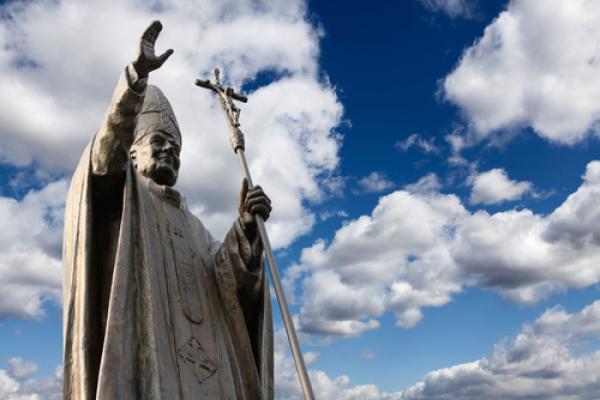
VATICAN CITY — Pope Paul VI, who guided the Catholic Church through a tumultuous period of change in the 1960s and 70s, took a crucial first step toward possible sainthood when Pope Benedict XVI last week recognized his predecessor’s “heroic virtues.”
Paul VI is now considered “venerable” in the Catholic Church, and needs the Vatican to recognize a miracle due to his intercession in order to be beatified, or declared “blessed.” A second miracle would then elevate him to sainthood.
Giovanni Battista Montini (1897-1978) was elected to the papacy with the name of Paul VI in 1963. He oversaw the implementation of the modernizing reforms of the Second Vatican Council (1962-1965).

For many centuries Christmas Day worshippers have been hearing these words as their New Testament reading: “For the grace of God has appeared, bringing salvation to all” (Titus 2:11). Grace, everyone used to know, is foundational to the Christian Gospel.
But this Christmas I’m noticing the surprising version of grace in Les Miserables, already seen by 60 million people as a musical and now as a film. Victor Hugo’s novel may be seen as a story of grace transforming in the life of the common man Jean Valjean and grace rejected in the life of the rigid functionary Javert.
As the story begins, Jean Valjean is being released from 19 winters of imprisonment for having stolen some bread to save his sister’s son from starving. But in the eyes of Javert, Valjean will always be a thief, which is his nature, because he has not learned the meaning of the law. Crushed under this ideological overlay, Valjean sees himself as a slave of the law — in a way remarkably similar to that of St. Paul, who makes grace and law antithetical. The chorus confirms it: “Look down, you will always be a slave.”
In his first job after prison, Valjean is deliberately underpaid. When he objects, the boss says: “Why should you get the same as honest men like me?” (Jesus once told a parable about laborers in a vineyard to open people’s eyes to grace.) Valjean concludes that society has closed every door to him. When he is refused lodging, the innkeeper says: “We’re law-abiding people here. Thanks be to God.” The conservative identification with the law is commonly made in alliance with God, while Victor Hugo seems to understand that the Christian vision identifies grace, not law, with God.
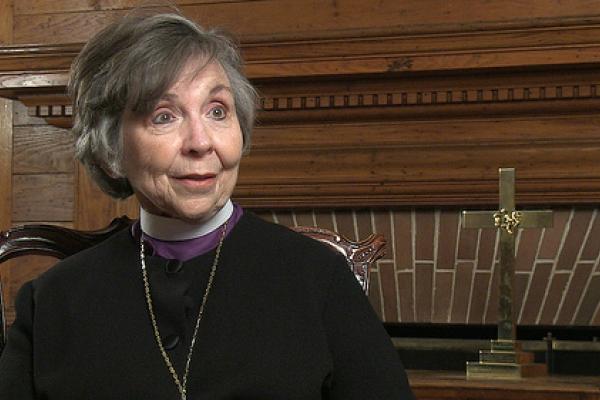
Bishop Jane Dixon, 75, died in her sleep on Christmas Day, according to the Episcopal Diocese of Washington. Dixon was the second woman consecrated as bishop in the Episcopal Church and the third in Anglican Communion.
A champion for justice and equality, Dixon was selected three times byWashingtonian magazine as one of the 100 most influential women in the Washington metropolitan area. In January 2002, she was named a Washingtonian of the Year.
From Mariann Edgar Budde, bishop of Washington:
Called to serve at a time when some refused to accept the authority of a woman bishop, Jane led with courage and conviction, and sometimes at great personal cost. She demonstrated that same bravery and grace when she brought hope and healing to our country by officiating at the National Day of Prayer and Remembrance service at Washington National Cathedral following the tragedy on 9/11.
Jane was a fighter for equality and social justice and this led her to speak at the White House against hate crimes and to stand for inclusiveness within the Episcopal Church.
'Jane is a person who has the courage of her convictions but the grace and humility to know that none of us can equate our ways with God's ways, our thoughts with God's thoughts,' said the late Verna Dozier, Jane’s longtime mentor, in the sermon she preached at Jane’s consecration.
Dixon is survived by her husband of 52 years, David McFarland Dixon, Sr., her three children, and six grandchildren.
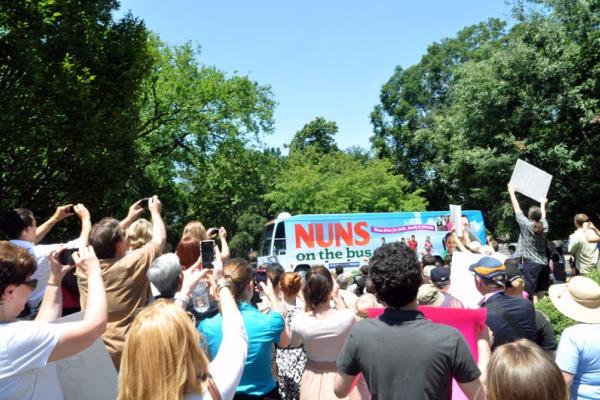
WASHINGTON — From the nuns to the “nones,” religion dominated the headlines throughout 2012. Faith was a persistent theme in the presidential race, and moral and ethical questions surrounded budget debates, mass killings, and an unexpected focus on “religious freedom.”
Here are 10 ways religion made news in 2012:
Suffer the children: Gun violence as a new “pro-life” issue
A shooting rampage that killed 12 and injured more than 50 others inside a crowded movie theater in Aurora, Colo., couldn’t do it. Neither could a gunman who murdered six people at a Sikh temple in Oak Creek, Wis. But a hail of bullets inside Sandy Hook Elementary School in Newtown, Conn. – which took the lives of 20 first-graders, and six adults – was finally able to mobilize religious activists on gun control after years of failing to gain traction.
“Those who consider themselves religious or pro-life must be invited to see that the desire to prevent gun-related deaths is part of the religious defense of the dignity of all life,” wrote the Rev. James Martin, a Jesuit priest and contributing editor at America magazine.