
Sen. Rand Paul’s 13-hour filibuster last week against the administration’s drone policy brought a long-simmering debate to a full public boil. Although some have criticized him for “grandstanding,” the Kentucky Republican did all of us a favor. Issues and questions that had been raised primarily by progressive bloggers and peace groups are now in full public view and debate in the mainstream media.
The New York Times carried front page stories both days this weekend. On Saturday, it highlighted the growing opposition to drones from across the political spectrum, writing that Sen. Paul’s filibuster had hit a “bipartisan nerve,” and:
“… animated a surprisingly diverse swath of political interests that includes mainstream civil liberties groups, Republican and Democratic lawmakers, conservative research groups, liberal activists and right-wing conspiracy theorists.”

Last Friday was International Women’s Day. It was a day of celebrating how far we’ve come, but also a reminder of how far we need to go.
I’m reminded of an experience I had with a member of my youth group a few years ago. We were volunteering for a social service project. A member of the group happened to be named Eve and we thought it was fun to play up the joke. I’d start greeting people, “Hi! I’m Adam,” and then Eve would chime in, “and I’m Eve!”
We always received the strangest looks, which, of course, is why we did it. But this time it was different. A man at the service project actually said,
“Oh. So you’re the one to blame.”
Eve was able to laugh it off and respond with grace, but I was pissed. I instinctively scowled at the man. It was a deep blow to me because, once again, religion was being used to put women down. But this time it was personal. Religion was being used to put down a member of my youth group.
Of course, religion hasn’t always been good to women. Or, maybe it would be better to say that religious men have used religion as a weapon to make women feel inferior. Whenever we blame someone else it’s a sign of our own weakness and insecurities. We don’t have the courage to deal with our own inner turmoil so we blame someone else. This is classic scapegoating and we men have been scapegoating women in this way since the beginning of human history. It’s pathetic. International Women’s Day is a reminder to me that women and men need to work together to end the religious bigotry against women.
My model for this is Jesus, my favorite feminist. [1]
So, in the spirit of International Women’s Day, I offer you the top 4 ways Jesus included women as full members of his posse.

The first reported drone strike in nearly a month is said to have happened Sunday morning in the North Waziristan tribal region of Pakistan. According to The New York Times:
“Two people suspected of being militants were killed Sunday morning in the volatile North Waziristan tribal region by what Pakistani and Taliban officials said was a drone strike. … Two Pakistani officials, one in Peshawar and another in the tribal belt, said that missiles fired from a drone operated by the C.I.A. hit the two people in the village of Degan, about 20 miles from Miram Shah, the main town in North Waziristan.”
The Long War Journal added:
“The CIA-operated, remotely piloted Predators or the more deadly Reapers fired two missiles at a pair of "militants" as they were riding horses in the village of Degan in the Datta Khel area of North Waziristan. The two militants and their horses are reported to have been killed.”

When United Methodist Bishop Minerva G. Carcaño talks about tussling with political bigwigs on the topic of immigration reform, she is poised, yet forceful.
“Immigrants can stay as long as they don’t ask for more than we want to give them, and as long they keep serving our needs at whatever pittance of a pay we want to extend to them,” Carcaño said in an interview in her office here. As the first female Hispanic bishop elected in the nation’s second-largest Protestant denomination, Carcaño has had a lot of practice keeping her cool, especially when it comes to discussing divisive politics.
“When people begin to say that’s not fair, that’s not just, then that ruffles feathers.”
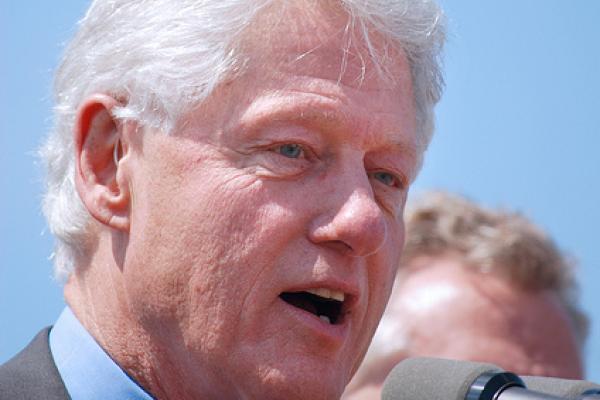
It’s not every day you see an ex-president ask the Supreme Court to strike down a law he signed.
The justices must decide whether the Defense of Marriage Act “is consistent with the principles of a nation that honors freedom, equality and justice above all, and is therefore constitutional,” Clinton writes in The Washington Post.

I grew up in the Canadian north of Watson Lake, Yukon. My elementary years were spent in a public school with children of the Kaska nation. As I became an adult I was pretty proud of my exposure to and knowledge of indigenous people. But it took a return to Canada after a seven-year sojourn away to make me realize that I knew very little. I did not like the discomfort I had as I walked the city centre streets in Winnipeg, Manitoba, home of the largest urban indigenous population in Canada.
It was then I decided I had to learn. Over the last two years I have pushed myself to read and sit and listen.
VATICAN CITY — The conclave to pick a new pope will begin on Tuesday the Vatican said on Friday, resolving an open question that had dogged the cardinals meeting here over the past week.
The cardinals will celebrate a special Mass “pro eligendo Romano Pontifice” — for the election of the Roman Pontiff — in St. Peter’s Basilica on Tuesday morning, and in the afternoon the cardinals will enter into the Conclave, the Vatican said.
The date was set by the cardinals gathered in a late-afternoon session on Friday. They were scheduled to vote on the decision, but there was no word on how many supported the Tuesday start date or how many preferred an earlier or a later date.
In one of his last acts before resigning on Feb. 28, Pope Benedict XVI amended the law regulating papal elections to allow cardinals to move up the beginning of the conclave, which would normally not be able to start until at least 15 days after a pope dies or leaves office.
Because Benedict resigned — the first pope to do so in 600 years — and announced his plans on Feb. 11, the cardinals did not have to focus on a funeral, as they did when John Paul II died in April 2005. They also have had nearly a month to think about a successor.
As a result, many believed the cardinals did not need to wait long after Benedict’s resignation took effect to begin the conclave itself.