
On Sunday evening, the first U.S. drone attack in nearly a month killed at least four people in Pakistan. The attack took place in Datta Khel town, 22 miles west of Miranshah, the main town in the North Waziristan region. According to Agence France-Presse:
Six US drones flew over the area when one of them fired two missiles at a compound in the Manzarkhel area of the town. "The drones kept hovering at the compound for a while and then one drone fired two missiles at the time of sunset," a local security official said. "At least four militants were killed in the strike," said the official.

No one wants to talk about death at the dinner table, at a soccer game, or at a party, says Lizzy Miles, a social worker in Columbus, Ohio.
But sometimes people need to talk about the “taboo” topic and when that happens, they might not be able to find someone who will listen, she says.
“Whenever people hear I’m a hospice worker, they talk to me about death. It doesn’t matter if I’m on an airplane, gambling in Las Vegas, or in a grocery store line,” she said. “I really see firsthand the need to let people talk. It’s my gift to others.”
Her gift sparked the birth of “death cafes” in the U.S., a trend that started in England and is about to take off across America, she said.

Nearly a year after the Vatican announced a makeover of the largest umbrella group for American nuns, Pope Francis has directed that the overhaul of the Leadership Conference of Women Religious continue.
The decision, while not entirely unexpected, could nonetheless bring an end to Francis’ honeymoon with the many American Catholics who had viewed the crackdown on nuns as heavy-handed and unnecessary.
Archbishop Gerhard Ludwig Mueller, who heads the Vatican’s Congregation for the Doctrine of the Faith, met on Monday with the LCWR’s leadership for the first time since Francis’ election on March 13.
According to a Vatican statement, during a recent discussion of the case with Mueller, Francis “reaffirmed the findings” of the Vatican investigation and the “program of reform” for LCWR that was announced on April 18, 2012.
The Islamic political party known as the Muslim Brotherhood has soured American attitudes towards Egypt, arguably America’s most important Arab ally, since its candidate Mohamed Morsi won presidential elections there in June 2012.
That’s according to a poll released Friday by the Arab American Institute in Washington, D.C.
Morsi’s term has been dogged by charges that he opts for authoritarian measures such as martial law. Muslim-Christian clashes have also shadowed his term; there were clashes on April 5 in the town of Khosus that killed four Coptic Christians and one Muslim, and violence also marred the April 7 funeral for the Copts who were killed in that conflict.
According to the Institute’s poll of 2,300 likely voters, only 36 percent of Americans had favorable views of Egypt, down from 66 percent in 1997. At least some of the decline has been attributed to the Muslim Brotherhood, which won Egypt’s parliamentary elections in January 2012, and to Morsi himself, who won the presidency last June by a 52-48 percent margin.

The common good is not only about politics. The common good is about life and how we live it. It is ultimately about how we are all connected. It is about how our love or lack of love affects our families, our neighbors, our communities, our cities, our nation, and our world.
The common good is about personal brokenness. Have we taken the time to let Jesus come in and heal the wounds that distort the image of God within of us — wounds that drive daughters and sons, mothers and fathers to self-destruction? Have we taken the time to let the Great Physician heal the personal wounds that break families and friendships, slicing the central fabric of society? We are all connected.

A new film about Jackie Robinson, titled “42″ — the number he wore during his historic career — tells the triumphant story of how the Civil Rights icon integrated professional baseball by playing for the Brooklyn Dodgers. But there’s a mysterious hole at the center of this otherwise worthy film.
The man who chose Robinson for his role, and masterminded the whole affair, was Dodgers General Manager Branch Rickey, played by Harrison Ford. In their initial meeting, the cigar-chomping Rickey makes it clear that whoever will be the first African-American in major league baseball will be viciously attacked, verbally and physically. So Rickey famously says he’s looking for a man “with guts enough not to fight back.” He needs someone who will resist the temptation to retaliate. Robinson agrees to go along with it.
But where did Rickey get that crazy idea and why did Robinson agree? The film doesn’t tell us, but the answers to these questions lie in the devout Christian faith of both men.
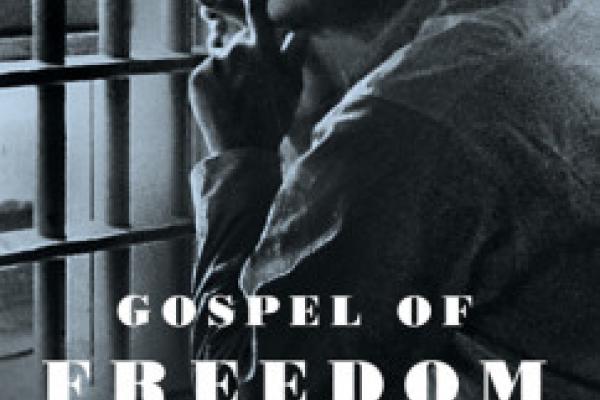
Fifty years after the Rev. Martin Luther King Jr. challenged white church leaders to confront racism, an ecumenical network has responded to his “Letter from Birmingham Jail.”
“We proclaim that, while our context today is different, the call is the same as in 1963 — for followers of Christ to stand together, to work together, and to struggle together for justice,” declared Christian Churches Together in the USA in a 20-page document.
The statement, which is linked to an April 14-15 ecumenical gathering in Birmingham, Ala., includes confessions from church bodies about their silence and slow pace in addressing racial injustice.
“The church must lead rather than follow in the march toward justice,” it says.