
Unfortunately, the script, by writer Colin Bateman often tends toward the bland, with the exception of a couple of pivotal scenes. Both Paisley and McGuinness were big, powerful personalities, with many facets to explore. The script, however, takes what could be a truly interesting exploration of two dynamic characters, and often reduces them to a pair of old men arguing in the back of a car. There are some standout moments where beliefs are challenged and moments of real emotional honesty are reached, but it takes some waiting to get there.

For the brilliant theologians who teach and research at seminaries or divinity schools, part of their work is training the next generation of future pastors for church leadership. Catholic and many Protestant church leaders have received a thorough theological education (though not all). They possess Masters and Doctoral degrees that solidify their ability to grasp the tenets of theology. But for those theologians interested in changing the world for the better, they must offer work that is easily understood by the masses, especially the marginalized population they are seeking to assist.

In Zuckerberg’s mind, the days of institutions like “churches and Little Leagues” are over. Using Facebook’s new artificial intelligence software, the social media giant can organize its users into groups that will serve the same purpose.
While Zuckerberg missed some important purposes a church community serves, he was right about one thing: Christians are leaving their traditional, brick-and-mortar churches — in droves.

Joaquin Navarro-Valls, who transformed the Vatican’s press office into a modern media operation, has died.
The former Vatican spokesman, 80, was a Spaniard and the first layperson and journalist to hold the job, when he was appointed by Pope John Paul II in 1984. Navarro-Valls served as the papal spokesman for 22 years, embracing technology and holding regular, colorful briefings.

I have never been in a church that failed to recognize the missional nature of faith. But I have also never been in a church that sought to systematically uproot the sources of oppression that caused the need for mission in the first place. If being a disciple means following Christ, then it means following him in his life’s work to invert the power structures of the world.

This year, America celebrates 241 years as a nation. And while racial and ethnic oppression has been a defining characteristic of the nation since the first colonists landed on the shores of this land, I hold out hope that because of her youth, America can change course.
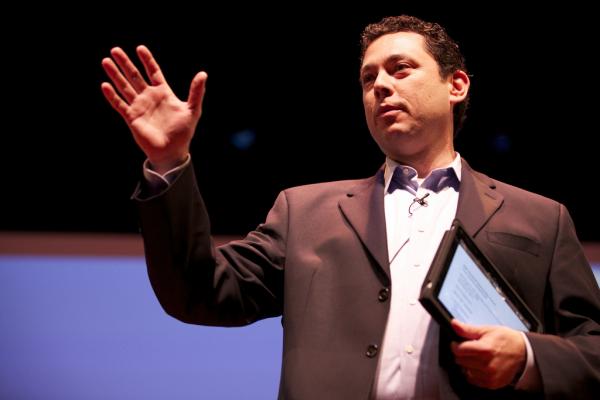
I have spent the majority of my career working for Republican and conservative organizations. Trust me when I say this is not about political party. This is about public service and deeper than that, a heart issue of how we view “entitlements” in this country.
Rep. Jason Chaffetz (R-Utah) officially resigned last week, and we should all rejoice in his decision to step down. Over the course of his eight years in Congress, Chaffetz has become everything citizens should be weary of: A politician who is paid $174,000 plus generous benefits, including a health care subsidy, complains about not having enough money, and proposes taxpayers cover more perks.

On June 3, the United Church of Christ passed a resolution on climate change in which they criticized President Trump’s decision to pull the United States out of the Paris climate accord agreement, reports the Boston Globe.
In approving the resolution, the United Church of Christ may have become the first U.S. Christian denomination to officially stand against President Trump’s decision. The resolution asks for people of faith to also take a stand.
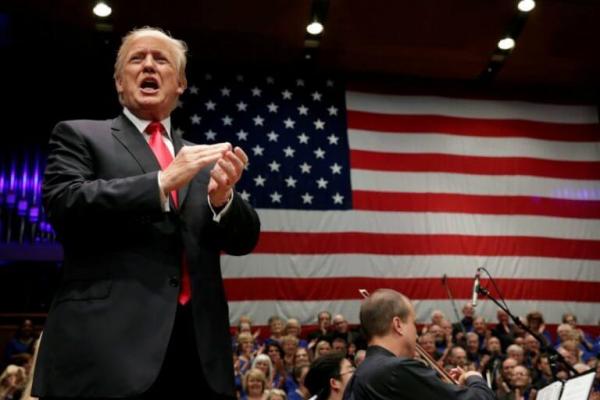
At a Fourth of July concert hosted by First Baptist Church Dallas at the Kennedy Center in Washington, D.C., President Trump pledged never to forget the men and women who have served in the U.S. military — or the people of faith who put him in the White House.
“My administration will always support and defend your religious liberty,” Trump said at the event on July 1. “We don’t want to see God forced out of the public square, driven out of our schools, or pushed out of our civic life.”

Christian universities are a sizable business in the United States — the National Center for Education Statistics counts nearly 600 Christian colleges and universities nationally. Title IX makes it illegal for schools to discriminate on the basis of sex, but private universities can apply for an exemption from parts of the law they claim conflict with their religious beliefs. And while many schools seek religious exemptions from nondiscrimination, particularly on beliefs around LGBTQ individuals, entrenched beliefs at many institutions regarding female leadership continue to affect their students.