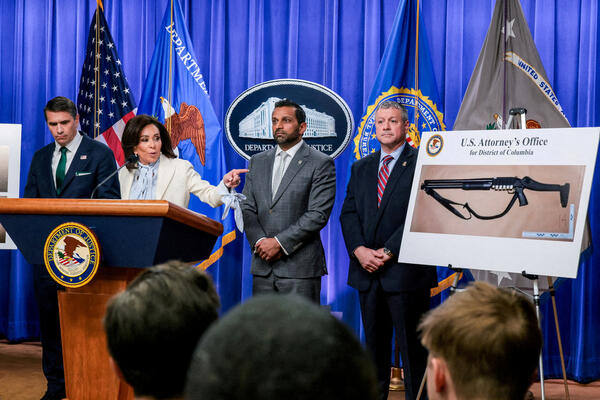
Before allegedly attempting to assassinate the president, Cole Tomas Allen reportedly wrote his motivations and answered objections in a brief, 1,000-word manifesto. The first objection was that Christians ought to turn the other cheek.
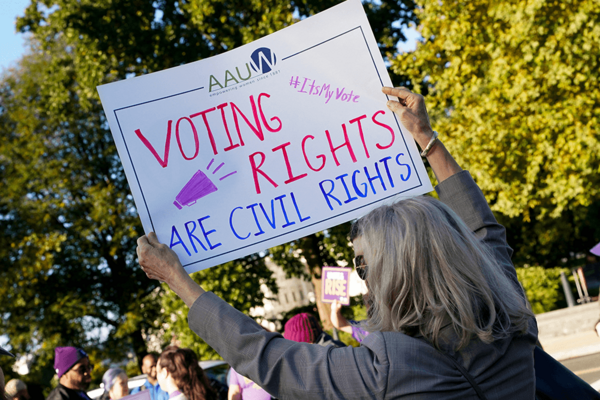
Faith leaders joined civic leaders in raising alarm over a recent Supreme Court ruling that experts say could significantly reshape how states apply one of the country’s core protections for minority voting rights. The Court’s decision in Louisiana v. Callais to block Louisiana from using a racially contested congressional map did not formally overturn Section 2 of the Voting Rights Act, but in her dissent, Justice Elena Kagan warned that the ruling has rendered it “all but a dead letter.”
Civil rights organizations and faith leaders immediately shared the sentiment that the conservative court was continuing to eviscerate the Voting Rights Act of 1965 one section at a time.
“The Supreme Court’s decision falsely claims fidelity to the law while stripping it of its power,” said the National Council of Churches in a written statement. “By invalidating a district created to reflect Louisiana's racial and political diversity, and comply with Section 2 of the Voting Rights Act, the Supreme Court decision silences voices that the Voting Rights Act was designed to uplift. Such an action does not restore our democracy; it wounds it. At a time when the nation should be working to strengthen representation and public trust, this decision moves us backward.”

The Supreme Court has sided with a coalition of anti-abortion crisis pregnancy centers in its fight against the New Jersey Attorney General’s Office, finding a subpoena that state investigators issued for donor information unconstitutionally chilled the centers’ free speech and association rights.
In a unanimous decision issued Wednesday, Justice Neil Gorsuch reversed an appellate court’s ruling that had prevented First Choice Women’s Resource Centers Inc., from airing their constitutional objections to the state’s probe and investigative practices in federal court. Gorsuch’s ruling returns the case to U.S. District Court.
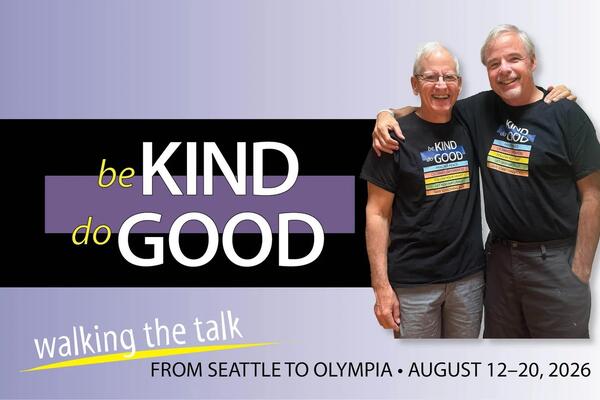
When Jim Hall and Bob Bruce, who have been best friends for over 50 years, heard about the Buddhist monks who walked for peace earlier this year, they had an idea: What if they did a walk of their own, one that focused on building bridges across faith and politics?
The plan quickly took shape, leading to the kindness walk that the duo have planned Aug. 12-20.
The nine-day walk will cross nearly 90 miles and several faith communities between Shoreline and Olympia, Wa.
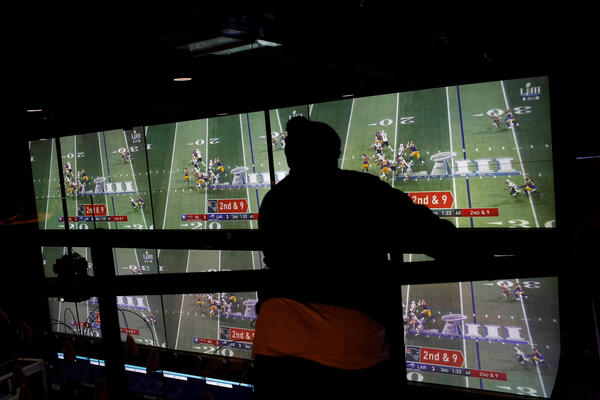
I’ve heard the temptation of Jesus in the wilderness described as a warning against testing God. Maybe. But lately I’ve been thinking that the story is about testing your luck.
Here’s how the scene might look in 2026: The devil isn’t a shadowy figure on a mountaintop. He’s a sleek betting app. A notification lights up the screen: Turn this stone into bread. Massive payout. No one will know. Another notification appears: Jump from the temple. Stick the landing. Viral moment. Your followers will explode. Then there is the final notification, the final temptation: Bow to me just once. Lifetime guarantee. Unlimited upside. In the story, Jesus swipes away the temptation for the massive payout. But today, with the rise of predictive markets and sports gambling, it’s getting hard for us to do the same. It’s harder to resist this modern temptation because, for a lot of people, it now takes something big just to get by.
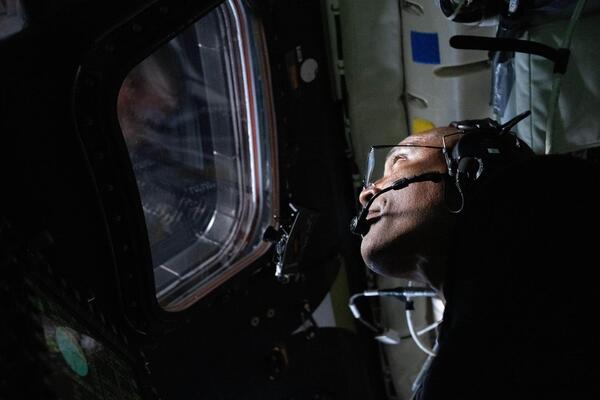
As of this writing, Phil Lord and Christopher Miller’s sci-fi epic, Project Hail Mary, is the third-highest-grossing film this year. For a book adaptation that explores heady sci-fi concepts, that’s no small feat, and it’s clearly struck a chord with viewers. Before NASA’s Artemis II expedition launched, the crew watched a screening of the film.
Space films and space expeditions can both inspire a particular type of awe. I think of the striking photos by the Artemis crew during their expedition, particularly the one where we see Earth partially hidden.

I have never felt so alone as when I was caring daily for my father, who has advanced dementia. It wasn’t that I was actually alone. I had a loving family surrounding me, including my mom and brother; we had weekly care plan meetings where we would try to understand my dad’s patterns, his growing agitation, and what we might do to ease his suffering and sustain our village of care.
But even with that loving collaboration—more than most people have when they are in the throes of caring for loved ones with dementia—we felt deeply isolated from the wider world. A neighbor we’d never met came and knocked on our door one day, chastising my mom for not keeping better track of my wandering dad. The cashier at the local natural food store looked angry as my dad grabbed a day-old muffin and began unwrapping it before we’d paid for it. (He’d lost all sense of the norms regarding paying for things.) Bringing him with me on errands was the only way I could manage it all as a “sandwich generation caregiver” (a popular shorthand for caring for children and aging parents at the same time), and yet I knew that his presence would complicate everything and leave me even more depleted.
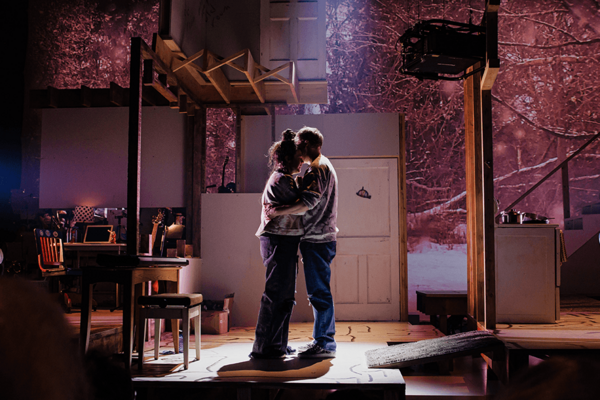
“There’s no opening yourself up to the full depth of joy without also allowing yourself the possibility of destruction.”
I’m talking to folk-punk musician and performer Shaun Bengson on Zoom when he says this. He and his wife Abigail have been performing their latest musical memoir in New York. Entitled My Joy Is Heavy!, the show recalls their experience getting pregnant and then enduring a miscarriage during the COVID-19 pandemic lockdown, all while caring for their young son.

Joe Kent, the former head of the National Counterterrorism Center, resigned on March 17 in an act of protest over the war in Iran. Kent self-identifies as a proponent of the America First ideology. He claimed in a letter posted on X that Israel deceived President Donald Trump into believing that war with Iran was necessary. Trump has said the war in Iran was his choice alone.
Before praising Kent’s actions, it should be noted that his resignation reveals a stark divide within the Republican Party, which has pitted America First advocates against those who believe the U.S. should offer uncompromising support to Israel. Kent’s resignation highlights fault lines that threaten to fracture the Republican Party and the evangelical voting bloc.
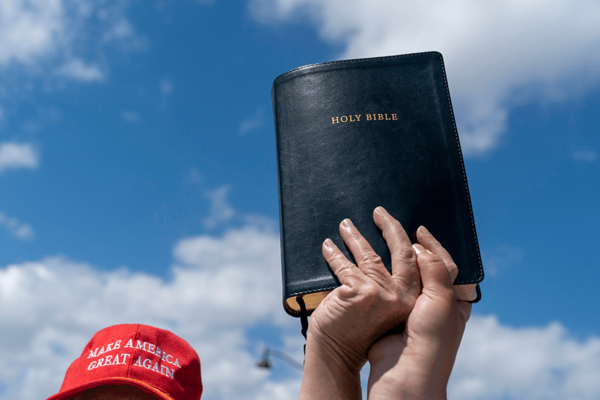
President Donald Trump is one of many high-profile conservatives taking part in a marathon Bible reading this week, with Trump’s reading of 2 Chronicles 7:11-22 airing on Tuesday night.
“America Reads the Bible,” organized by the nonprofit Christians Engaged, began on April 18 and runs through April 25. Trump recorded his reading of the 2 Chronicles passage last week, reading directly into the camera from his seat in the Oval Office. His reading will be livestreamed and aired at the Museum of the Bible.
Incidentally, his recording was made shortly after Trump’s first Truth Social post attacking Pope Leo XIV and his AI-generated image depicting himself as Jesus Christ. Trump, who later deleted the post, claimed he thought it depicted him as a doctor. The post was controversial enough to raise the ire of even stalwart supporters like conservative Christian activists Candance Owens and Sean Feucht.