
With The Chosen leading the way, we seem to be entering a golden age of Bible prestige television. A recent entry is Fox’s The Faithful, a three-part miniseries that retells the ancestral narratives of Genesis with a focus on the perspectives of woman. While the series at times pushes the envelope on melodrama, it also sincerely grapples with the complexities of these biblical stories. The three-part series, which aired its final episode on Easter Sunday, offers explanations for why characters make the choices they do, but it also doesn’t gloss over the troubled relationships and flawed personalities of the biblical text.
Episode 1 begins with a meet-cute. We first encounter Sarai (renamed Sarah after a visit from God midway through the episode) and Abram in a Haran marketplace. Before they were the covenant ancestors of the Israelites, Sarai and Abram were an aspiring romantic couple, at least as viewed through the lens of The Faithful. Sarai asks about a teal shawl at a market stand and looks crestfallen when she hears the price. But after walking away, someone calls her name, and she turns around to see Abram waving the shawl at her and grinning. She wears this shawl throughout the episode and is buried with it at the conclusion.

At the beginning of 2026, President Donald Trump said that his New Year’s resolution was to accomplish “peace on earth.” As he asserted last year with his aggressive campaigning for the Nobel Peace Prize, and the White House dubbing him “THE PEACE PRESIDENT” on X, Trump was convinced that he would be the one to fulfill it with “no new wars.” But just two days after issuing this resolution, Trump had Venezuelan President Nicolás Maduro kidnapped.
It is a pattern that has continued deep into 2026—promises of “peace” followed by bloodshed and violence. In January, Trump announced the Board of Peace, an international effort to “stop generations of hatred and bloodshed.” A month later, a joint U.S.-Israeli airstrike hit an Iranian all-girls elementary school as a result of outdated intel, killing at least 168 people, most of whom were children.
On April 7, Trump threatened the people of Iran if the government refused to reopen the contested Strait of Hormuz, a trade route through which about 20% of the world’s oil passes. “A whole civilization will die tonight, never to be brought back again,” Trump threatened on his social media platform.
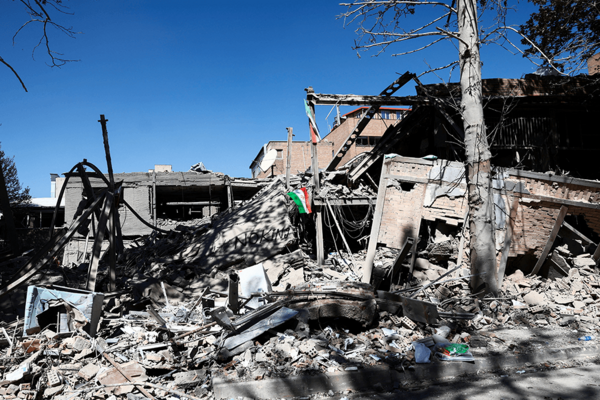
Iran showed no sign of accepting Donald Trump’s ultimatum to open the Strait of Hormuz by the end of Tuesday, while the U.S. president threatened that “a whole civilization will die tonight” unless Tehran reached a last-minute deal.
Trump has given Iran until 8 p.m. in Washington—3:30 a.m. in Tehran—to end its blockade of Gulf oil, or he will destroy every bridge and power plant in Iran. Iran says it would retaliate against U.S. allies in the Gulf, whose desert cities would be uninhabitable without power or water.
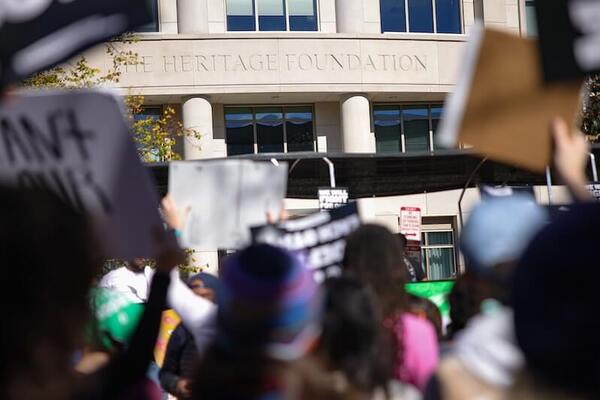
The Heritage Foundation brought you Project 2025 in order to completely transform the U.S. federal government. Now, it’s rolling out a new plan to save the American family.
To ring in 2026, the conservative think tank that provided the blueprints for the administrations of President Ronald Reagan and President Donald Trump released a new 168-page policy plan titled Saving America by Saving the Family. The Heritage Foundation’s plan claims that its goal is to encourage more “fertile” men and women to marry younger and have more children. But curiously, this plan for America’s families recommends programs like marriage boot camps and“community rest” laws, not policies that have been empirically shown to encourage family growth and stability—such as the expansion of paid parental leave and flexible work schedules.
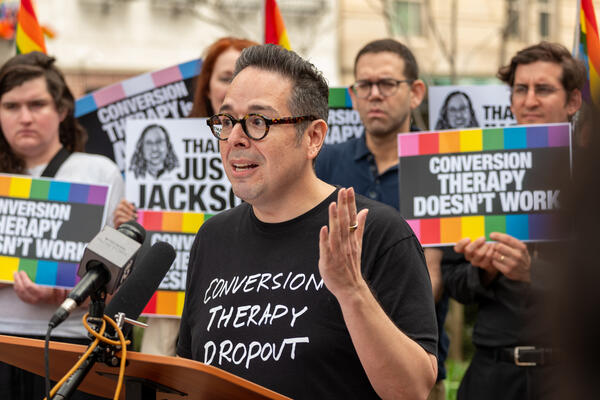
On March 31, the Supreme Court sided with a Christian therapist in Colorado and tossed out the state’s ban on conversion therapy for minors. The therapist, Kaley Chiles, challenged the state’s ban on the grounds that it violated her First Amendment rights. The Court agreed with Chiles by an 8-to-1 vote.
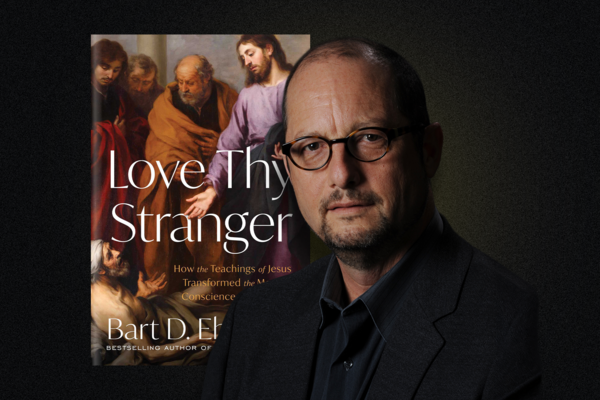
“Stranger danger!” This was a popular thing kids were taught to say in the ’90s. I think that my parents’ motivations for teaching me this phrase were primarily for my protection, but looking back, I think the phrase also portended some of the paranoia that we, as a Western society, have uncritically embraced.
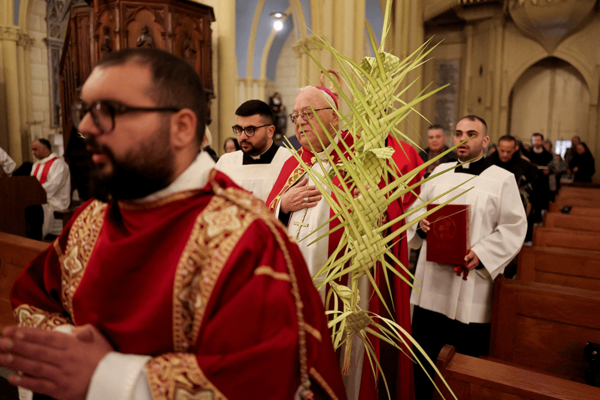
As Christians across the globe remember Jesus’ journey through Holy Week, Israel is taking the unprecedented steps of restricting access to holy sites in Jerusalem.
Israel is blocking access to the Church of the Holy Sepulchre, as well as the Western Wall, and the Al-Aqsa Mosque complex indefinitely after the outset of the U.S.-Israeli war with Iran, impacting typical observance of the Christian Holy Week, Ramadan, and Passover and restricting travel into East Jerusalem.
For Palestinian Christians, it would mark the first time that access to the church—which is known as the site of Jesus’ crucifixion, burial, and resurrection—is blocked over Easter. Historically, thousands of Christians around Jerusalem have traveled to the city and church as part of their Easter celebration.
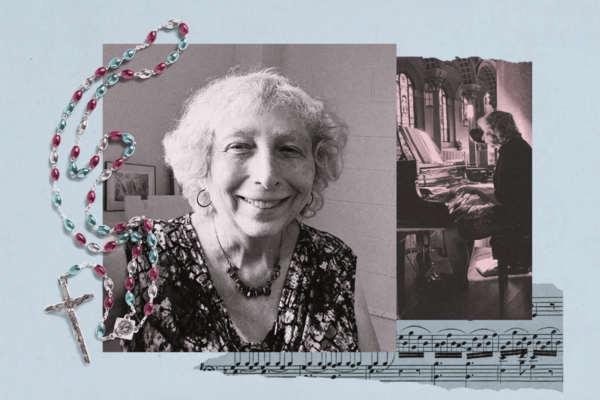
There are congregations that would brand her a sinner. But here at St. Cecilia’s Roman Catholic Church in Boston, Rachel Burckardt gives voice to the angels.
She’s 71, transgender, a civil engineer by day, and a composer of spiritual music by nights and weekends.
While religion has been used for decades to ostracize many transgender people, Burckardt has found that faith drives acceptance in her community. It has been the bedrock on which she has formed her closest friendships, found moral clarity in challenging times and built radically inclusive communities in greater Boston.
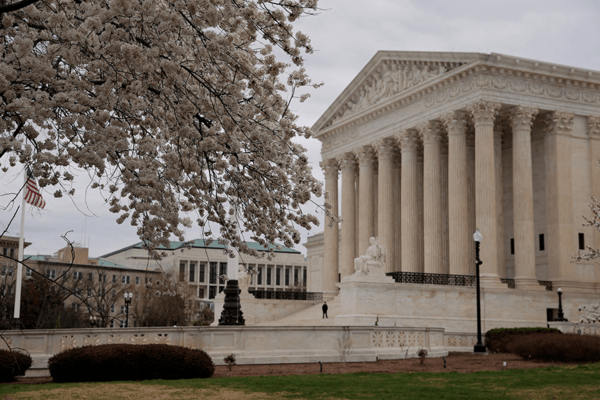
The Supreme Court ruled 8-1 Tuesday that a Colorado ban on conversion therapy for youth violates the free speech rights of a Christian counselor, clearing the way for a practice that goes against the recommendations of every major medical association in the country.
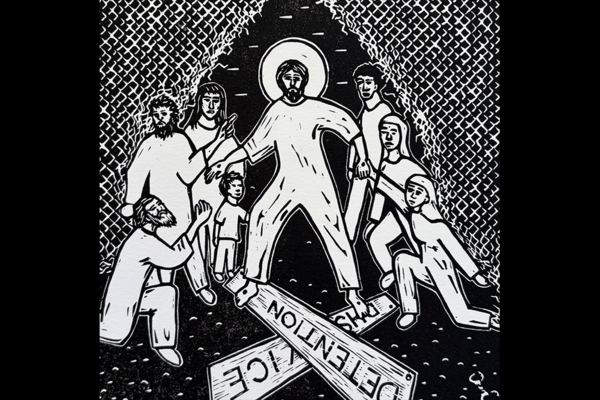
As we journey through Holy Week, I’m meditating less on Jesus on the cross—I see that every day—and am instead meditating on Jesus razing hell.
Israel’s displacement and killing of Palestinians continues; the U.S. continues to escalate the war with Iran; and immigrants are still being hunted down by cowards in masks. Every day we see Christ crucified. What does the hope offered by Jesus, that these forces of evil can be stopped, look like? What are the lessons for us on the road from the crucifixion to the resurrection?