
A 10-year-old boy holding a grenade approaches a group of soldiers. He does not respond to their shouts. One shoots him with his M-16 and the boy crumbles to the ground, dead.
Did he have a choice? It was do or die, kill or be killed. Still he killed a little boy, and those images still haunt him.
This is a classic example of psychological trauma: A person is put in horrific life-threatening situation where they do not feel they have control. That's the situation he found himself in. It was a no-win scenario — kill a little boy or have you and your friends all die.
Soldier suicides have reached epidemic numbers. As the AP reports, More soldiers are taking their own lives than are falling in battle. Add on top of that, the many who suffer from PTSD, and who as a result find themselves estranged from their home, their loved ones, and indeed from themselves.

Among my must reads are the Sunday New York Times Book Review and other book reviews I come across in various media outlets. There are too many books being published that I would love to read, but just don’t have the time. So, I rely on reading book reviews as one way of keeping in touch with what’s being written. Here are my picks from this week’s books.

Midway through his nationwide, one-month Do The Math tour, Bill McKibben — author, environmental activist, and founder of 350.org — attracted a crowd that packed the Warner Theater in downtown Washington, D.C., on Sunday.
Joined both onstage and by video by a diverse group of speakers, including Rev. Lennox Yearwood of the Hip Hop Caucus, author Naomi Klein, and Archbishop Desmund Tutu, McKibben’s Do The Math tour brings to light the stark numbers of our current climate reality, first brought to the public’s attention in his viral article in Rolling Stone this past summer.
The three main numbers are as follows: 2 degrees Celsius is the maximum level of warming our planet can endure before real catastrophe occurs. To stay below 2 degrees C, we cannot burn more than 565 gigatons of carbon dioxide. But the problem is that the fossil fuel industry has 2,795 gigatons in their reserves — five times the safe amount to burn. As is their business plan, to reap the profit from these reserves, the fossil fuel companies plan on burning all of it, “unless we rise up to stop them” states the 350.org website.
It’s not unusual to hear someone rapping about clothes — and how expensive theirs are — on the radio these days. Consider Jay Z and Kanye West’s collaboration “Otis,” where Jay Z belts, “Photo-shoot fresh, looking like wealth / I'm 'bout to call the paparazzi on myself.”
And if you don’t hear about their diamond studded jewelry and designer clothes, some rappers aren’t shy about showing them off in music videos.
But Seattle-based hip hop group Macklemore and Ryan Lewis, who recently hit number one on the iTunes album charts and stopped by D.C.’s 9:30 club on Nov. 13, chose a different approach to the whole clothing concept and, for the most part, hip hop in general.
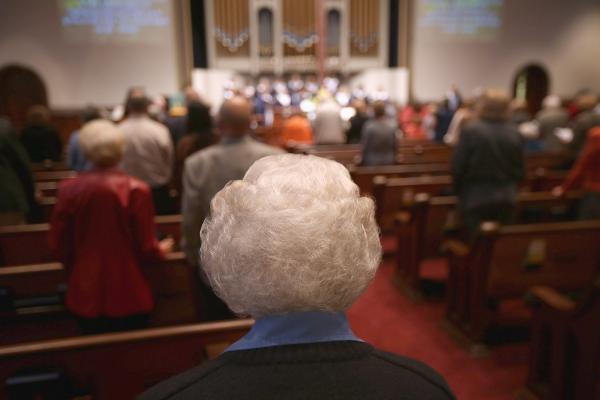
I empathize with people fleeing the local church. Churches can be battlefields instead of harbors, pits of condemnation or politics rather than wells of living water.
But the endless search for something “new” has trumped the life-changing story the body of Christ has nurtured and passed on for 2,000 years. This transforming story is the story the churches enacted weekly in Word and Sacrament before they forgot their original vocation as shelters of truth, life, and light amidst lies, death, and darkness. There were four revealed ways Jesus was present at the center of their public gatherings. These ways have been lost in too many places but are waiting to be rediscovered. More on that in a moment.
A young woman, a house church attendee, told me she longs for solid pastoral guidance, a message prepared weekly by an authoritative teacher, for worship that places Jesus Christ at the exact center of a public space where everyone is welcome, a place where she can bring her disbelieving friends whose lives are not yet transformed by self-sacrificial Love, a place where they can speak openly and honestly about where their lives still remain isolated from a holy God, a place of worship that does not lean on any one person's (or her personal) understanding and articulation of the Gospel but on the collective wisdom of the body of Christ.

Winston Churchill famously said, “Show me a young Conservative and I’ll show you someone with no heart. Show me an old Liberal and I’ll show you someone with no brains.”
Churchill was out of power by the time his countrymen, George Harrison and the Beatles, released “Taxman” on their Revolver album in 1966. New Prime Minister Harold Wilson had introduced a 95-percent supertax on the wealthiest Brits, including the Beatles. Harrison’s song was and remains a perfect Right-wing caricature of the Left. I can almost hear Bill O’Reilly singing an attack on President Obama’s plan to “ask the wealthiest Americans to pay a little more.”
Kenyan church leaders are lining up in opposition to proposed new marriage bills, which they say will weaken marriage by allowing cohabiting couples to register as married.
One bill would bring Christian, Hindu, Muslim, civil, and customary marriages under one law, and another would give spouses and children more rights to property. The twin bills were approved by the cabinet on Nov. 9 and are scheduled to be debated by Parliament before Christmas.
“It is the worst law we have had as churches in Kenya. It compromises the standards of Christian marriage and divorce. Instead of three grounds for divorce, we now have nine,” said the Rev. Wellington Mutiso, the general secretary of the Evangelical Alliance of Kenya.