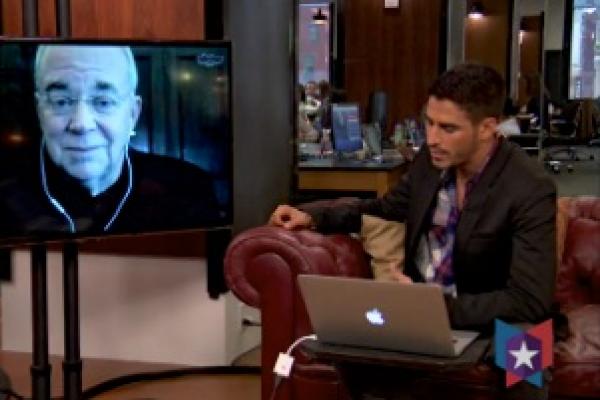
Sojourners' CEO, the Rev. Jim Wallis, was a guest on Arianna Huffington's new online news channel, HuffPo Live, today to talk about the face of poverty in this heated election season and what has changed (or not) since the 2004 presidential election.
"More children than ever are poor," Wallis said. "From a religious point of view, that should be a top election issue. The highest poverty rate in half a century should be a fundamental moral issue."
"More and more of our friends are in poverty," Wallis told HuffPo Live host Ahmed Shihab-Eldin, "in the pews, in our workplaces, because so much is happening to so many people — through no fault of their own — and they are slipping below the poverty level."
There is a whole new wave of "suburban poverty," and many more of us know people who are poor than we did an election cycle ago, he said. There is a new "face" of poverty.
Watch the video of Wallis' appearance inside the blog...
Whether encouraging children to succeed, caring for elders at the end of life, or investing in struggling communities, strong families can make all the difference. Unfortunately, our broken immigration system often negatively affects families, increasing both their emotional stress and financial burden. Too often our laws actually separate family members from each other in ways that create lasting damage.
Recently, the federal government announced a policy change designed to keep families together as they navigate the process of applying for green cards. While this shift will also streamline the process and reduce the complexity of application, the new rules can still be confusing to those seeking help. That is why the Interfaith Immigration Coalition is working to educate the faith community about these developments. On September 10, the Coalition will host a webinar from 4-5 p.m. EDT for faith leaders interested in learning more. Take this opportunity to hear from policy experts, legal advocates, and faith leaders about this important topic.
When: Monday, September 10th from 4- 5 p.m. EDT
Where: Phone
RSVP here.

I love to receive letters. When I was a little boy, I lived on a long, straight street and I could see the mail truck coming from a long way off. After the mailman stopped in front of our house, I ran with hope in my heart down our front walkway, between our two giant maple trees and across the street to our mailbox. Would there be a letter for me? Was someone in the world thinking of me?
One day last year it was not the mailman, but a second-grader on the school playground, who handed a letter to me. I unfolded it.
"Dear Mr. Barton, hi it Odeth from 2th grade I miss you a lot I wanted to know about you so much I am being good I am in 4th grade Do you miss me. I live in __________ I go to school in __________ I hope you will come to my school … can you come visit me in school ask for my name…I am 10 year old I want you to come to my school.
Your best student,
Odeth"
What a wonderful thing, to be remembered by a student.

Bill Fay is a story.
And the British singer-songwriter's new album Life is People — his first in more than 40 years — is a gem of a record that comes out of nowhere and makes an impression beyond great songs and great playing.
About 10 years ago I conjured the idea of a novel: A rock star releases two great records in the late '60s and then leaves the scene. Why? Would an ordinary job be more fulfilling than wealth and celebrity? I wanted to work out those questions in a novel-length story.
Fay just might be that story, but he certainly isn’t fiction.
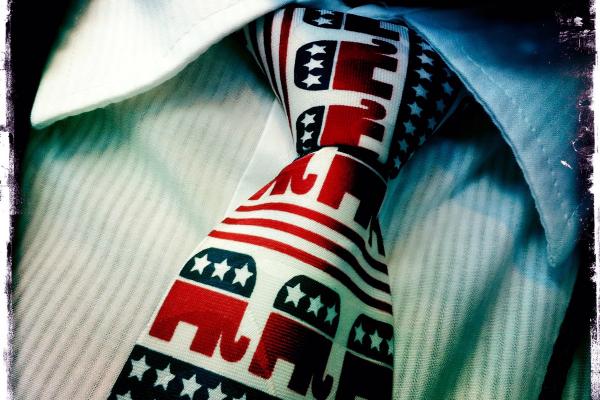
If you blink, you might miss the fact that the religious luminaries offering prayers at the Republican National Convention agree on a surprising topic: the need to welcome immigrants and pass immigration reform.
The views of these religious leaders differ sharply from the Republicans’ own platform. Guided by the likes of Kansas Secretary of State Kris Kobach, the brains behind state-level anti-immigrant laws, the GOP draft platform takes a hardline stance on immigration.
But the Episcopal, evangelical Protestant, Greek Orthodox and Catholic leaders chosen to lead the RNC in prayer beg to differ.
"Christ wishes the Christian Community to be a body that is perfect because we work together towards a single end, and the higher the motive which actuates this collaboration the higher, no doubt, will be the union. Now the end in question is supremely exalted: the continuous sanctification of the Body for the glory of God and the Lamb that was slain [Jesus in the Most Blessed Sacrament]." - St. Katharine Drexel + Sign up to receive our quote of the day via e-mail

Reuters reports that a drone attack in central Yemen yesterday killed two suspected militants:
"Two men thought to be Islamist militants were killed in an apparent U.S. drone attack on a car in central Yemen on Tuesday, the defense ministry said.
A security source and witnesses told Reuters the car was hit on a remote road from Hadramout to Maareb province - a mostly desert southeastern region where militants have taken refuge after being driven from their southern strongholds last month.
It was not clear if there were other casualties in the attack. Washington, which fears the spread of militants in Yemen, has stepped up attacks by unmanned drones this year."
The Yemen Post reported a local website as quoting a security source saying that one of those killed was a Saudi militant, and that a second car managed to get away.
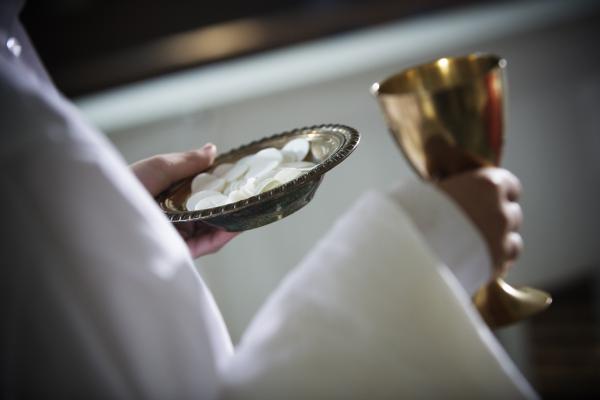
As an ecumenist I listened to (and largely bought) the notion that taking Communion with other Christians in the absence of institutional unity was tantamount to premarital sex, to an intimacy that should not be attempted because we were not — as disagreeing Christians — properly wed to each other yet.
But the more time I spend as a day-to-day trenches brand of pastor living out the faith in the real world, I find this argument holds less and less water.
A reality I have come to grips with after decades of personal ecumenical involvement is the same reality that leaders at the highest levels of churches have been wrestling with for centuries: The age-old pursuit of doctrinal unity under an authoritative “true church” will likely never occur before the Second Coming.
Another reality — a more personal one — has hit me with full force. This division at our Eucharists inflicts pain upon those of tender conscience and deep love for Christ and his bride. They are broken upon the rocks of our divisions and it is a scandal.