Researchers at Stanford University and New York University law schools released a major study on the U.S. use of drones in Pakistan, commissioned by a London-based human rights group Reprieve. The study, Living Under Drones, took nine months to complete, including two trips to Pakistan and more than 130 interviews with victims, witnesses and experts. The Bureau of Investigative Journalism is cited in the report for “the best currently available public aggregate data on drone strikes.”
The four major conclusions of the study, highlighted in its executive summary, are:
“First, while civilian casualties are rarely acknowledged by the US government, there is significant evidence that US drone strikes have injured and killed civilians.
“Second, US drone strike policies cause considerable and under-accounted-for harm to the daily lives of ordinary civilians, beyond death and physical injury. Drones hover twenty-four hours a day over communities in northwest Pakistan, striking homes, vehicles, and public spaces without warning. Their presence terrorizes men, women, and children, giving rise to anxiety and psychological trauma among civilian communities.
“Third, publicly available evidence that the strikes have made the US safer overall is ambiguous at best. The strikes have certainly killed alleged combatants and disrupted armed actor networks. However, serious concerns about the efficacy and counter-productive nature of drone strikes have been raised. The number of “high-level” targets killed as a percentage of total casualties is extremely low—estimated at just 2%.
“Fourth, current US targeted killings and drone strike practices undermine respect for the rule of law and international legal protections and may set dangerous precedents. This report casts doubt on the legality of strikes on individuals or groups not linked to the terrorist attacks of September 11, 2011, and who do not pose imminent threats to the US.”
You can read the entire report, along with data, victim’s stories, and resources.
News stories on the study include BBC, Guardian, Chicago Tribune/Los Angeles Times, and CNN.
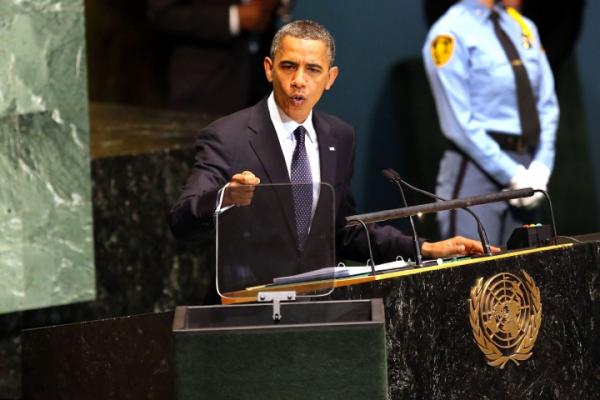
Editor's Note: The following is a transcript of President Barack Obama's remarks to the UN General Assembly in New York City on Tuesday, in which he condemns global violence and extremism, framing the speech around the recent tragedy at the U.S. consulate in Libya.
THE PRESIDENT: Mr. President, Mr. Secretary General, fellow delegates, ladies and gentleman: I would like to begin today by telling you about an American named Chris Stevens.
Chris was born in a town called Grass Valley, California, the son of a lawyer and a musician. As a young man, Chris joined the Peace Corps, and taught English in Morocco. And he came to love and respect the people of North Africa and the Middle East. He would carry that commitment throughout his life. As a diplomat, he worked from Egypt to Syria, from Saudi Arabia to Libya. He was known for walking the streets of the cities where he worked -- tasting the local food, meeting as many people as he could, speaking Arabic, listening with a broad smile.
Chris went to Benghazi in the early days of the Libyan revolution, arriving on a cargo ship. As America’s representative, he helped the Libyan people as they coped with violent conflict, cared for the wounded, and crafted a vision for the future in which the rights of all Libyans would be respected. And after the revolution, he supported the birth of a new democracy, as Libyans held elections, and built new institutions, and began to move forward after decades of dictatorship.
Chris Stevens loved his work. He took pride in the country he served, and he saw dignity in the people that he met. And two weeks ago, he traveled to Benghazi to review plans to establish a new cultural center and modernize a hospital. That’s when America’s compound came under attack. Along with three of his colleagues, Chris was killed in the city that he helped to save. He was 52 years old.

A couple days ago I called my friend Kae so we could talk about this Gospel reading where Jesus takes a child in his arms and teaches the disciples that if they welcome a child in his name they welcome God. And we started talking about the actual reality of children and how difficult small ones can be to manage. Kae told me of this brilliant technique she employs when dealing with toddlers.
She said it really helps her to be patient and compassionate with defiant, emotional, snot-faced toddlers when she just thinks of them like little versions of really drunk friends. Then when they keep falling down and bumping into things and bursting into tears she just treats them like she would a friend who is too drunk to know what they are doing, and who you just try and make sure doesn’t hurt themselves, and who you clean up bodily fluids from, and make sure they drink some water, and then just lovingly change them into their pajamas and tuck them into bed.
Children are really a mess.
In the second attack in three days, a drone attack late Monday in northwest Pakistan killed five militants, including two linked to al Qaeda. DAWN reports
“Two key al Qaeda linked operatives, including an operational commander have been killed in Monday’s US drone strike in North Wazirsitan Agency, official sources said.
“The al Qaeda linked militants killed in the drone strike have been identified as Abu Kasha Al-Iraqi and Saleh Al-Turki, an intelligence source told Dawn.Com.
“Abu Kasha Al-Iraqi, hailing from Iraq, had arrived in North Waziristan Agency in 2001 and had since been one of the key operational commanders of the al Qaeda in North Waziristan tribal region, intelligence officials said.”
The Associated Press and Agence France Presse carried earlier reports of the story, before the identifications were made.
![RNS photo by Carol M. Highsmith [Public domain] via Wikimedia Commons](https://sojo.net/files/styles/large_rectangle_crop/public/blog/thumbRNS-MORMON-NUMBERS050412a_0.jpg "The Salt Lake Temple worship site. RNS photo by Carol M. Highsmith [Public domain] via Wikimedia Commons")
A Mormon blogger who has written critical web essays about Mormon history, temple worship and contemporary issues — including about GOP presidential nominee Mitt Romney — is facing church discipline for “apostasy.”
Initially, the Florida blogger, David Twede, managing editor of mormonthink.com, told news media Sept. 21 that the threatened church action was due to his comments about Romney. Later that day, he denied any political link. Then, on Saturday, he returned to “a feeling in (his) gut” that his Romney remarks triggered the possible discipline.
Twede did get a letter from his Mormon leaders in Orlando, summoning him to a disciplinary council Sept. 30 for “apostasy,” which they attributed to Twede’s writings.
In recent days, the blogger has blasted Romney as part of his critique of Mormonism, its beliefs about the nature of God and its temple ceremonies.
But, Twede told The Salt Lake Tribune on Friday, his LDS leaders never brought up Romney, a Mormon, in their exchange with him. Though not supporting the Republican nominee, Twede apologized to Romney, saying, “I didn’t mean for (the story) to go this way.”

Editor's Note: This is the second article in Lisa Sharon Harper’s election season blog series, Watch the Vote. Read the first HERE.
A few folks got a brilliant idea and brought a bunch of organizations together to declare September 25, 2012 as the first ever National Voter Registration Day! Aka, for the Twitterverse, #925NVRD. Woot, woot!
Maybe, like me, you’ve moved since the last election. Or maybe you’ve just turned 18. Or maybe, somehow, you managed to sleep through the last two elections. Don’t know how you did it, and I’m not judging, but brother, son, sister, daughter, today is the day to get right with the Lord. In times like these no one can afford to sit back and watch this one like a reality show on Bravo TV. Exercise your dominion; register to vote today!
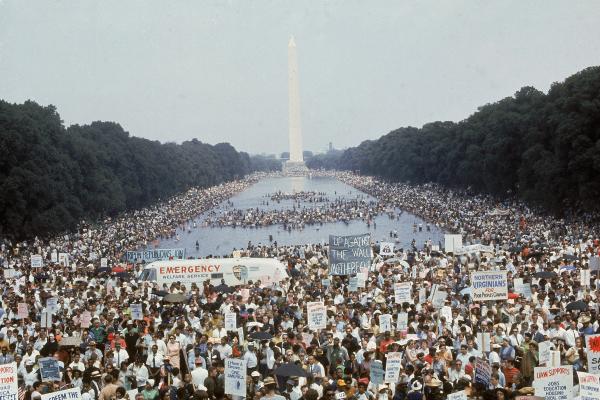
In early 1968, Martin Luther King, Jr., and other civil rights leaders continued plans for a Poor People’s Campaign. It would take place in the spring in Washington, D.C. The poor and those in solidarity with them would take up temporary residence and march peacefully on the Capitol and advocate for substantial anti-poverty legislation from Congress. They would demand jobs, healthcare, and decent housing.
People set up a camp on the Washington Mall and called it Resurrection City. Jesse Jackson gave his famous "I Am Somebody" speech there. But King was assassinated in the weeks leading up to the campaign and Robert Kennedy was assassinated during it. Disheartened and discouraged, people drifted away from the campaign, their dreams deferred.
What if MLK had lived to lead the campaign with his insight and eloquence? What if Bobby Kennedy had lived to support it with his doggedness and political will? Would the United States be a place where 1 out of 5 children, around 15.5 million, are in poverty and where close to 50 million people are without health insurance?