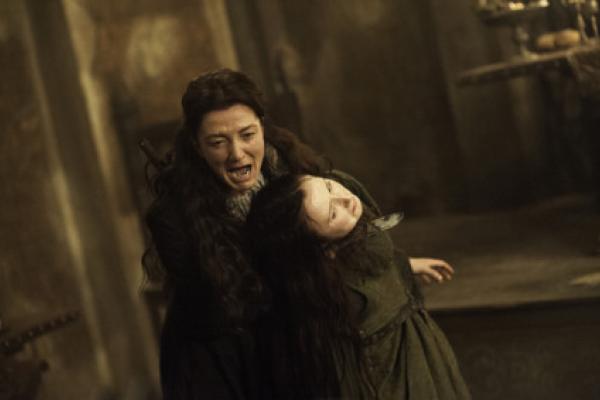
Is there anything morally redeeming about Game of Thrones? Does the hit HBO series even have a moral vision?
The show is certainly entertaining, almost addictively so, and as Game of Thrones wraps up its third season on Sunday, the ratings reflect that popularity: a record of more than 5.5 million viewers have followed the ruthless struggles for power among the teeming clans of Westeros, the medieval-looking world created by fantasy novelist George R.R. Martin.
That success has also guaranteed that the show will be back for a fourth year of mayhem and passion, swords and sorcery, despite this season’s many violent endings. Or, as one tweet put it after the bloody penultimate episode: “Why doesn’t George R.R. Martin use twitter? Because he killed all 140 characters.”
But therein lies the moral problem for some: The appeal of the series seems bound up in the senseless violence and amoral machinations – not to mention the free-wheeling sex – that the writers use to dramatize this brutish world of shifting alliances and dalliances.
That, in turn, has prompted intense debates about whether Christians should watch Games of Thrones at all, or whether the show’s only possible virtue is depicting how the world would look if Christ had never been born – or what it could look like if Christianity disappeared tomorrow.
Thomas Tidwell, the chief of the United States Forest Service, told Congress hotter, dried conditions produced by climate change are causing America's longer wildfire season and increasing the amount of land burned. Since 2000, the forest service has almost doubled its spending on fighting fires from $540 million to $1 billion last year. The Guardian reports:
"Hotter, drier, a longer fire season, and lot more homes that we have to deal with," Tidwell told the Guardian following his appearance. "We are going to continue to have large wildfires."
Read more here.
Anyone who listens to our Homebrewed Christianity CultureCast knows that we love Game of Thrones. The writing is complex and dramatic, and the characters are fascinating. What’s more, after the recent “Red Wedding” episode, we’re all too aware that no character, no matter how important or beloved, is safe.
The series, set in a fictitious medieval Europe, is also dark, exploitive, highly sexualized at times, and one has to stretch to glean any moral redemption from the episodes. As such, there’s a debate swirling online about whether Christians can or should watch such a show. Where’s the Gospel? How can we justify all the sex and bloodshed? Do we watch with the (possibly deluded) hope that things will incline toward virtue, even though the series creator has suggested no such intention?
Or should we just turn it off?
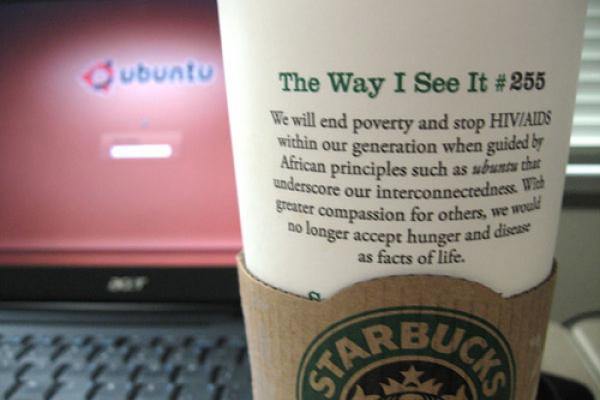
Now, there’s a constituency of evangelicals and Tea Partiers who claim that, since the coffee super-chain Starbucks supports same-sex partner benefits, drinking their coffee (and therefore inadvertently supporting gay rights, I suppose) is anti-Christian. So sorry, followers of Jesus, but that favorite frappuccino you look forward to every afternoon is off the menu. If you don’t want to make Jesus cry, at least.

Editor’s Note: The following poem by Trevor Scott Barton was written while he was living in Africa and reading The Little Flowers of St. Francis of Assisi.
Holding you in the palm of my hand
I see your tiny feet and hope you'll live and walk these stony paths
To the pump to get water.
Blessing you in your meekness and gentleness,
You are Jesus to me today.
Six British Christian peace activists were arrested and detained for 24 hours for protesting at the RAF base from which British drones in Afghanistan are controlled. It is the first anti-drone protest in the U.K. to result in arrests. Ekklesia reports:
Six peace activists, representing the group Disarm the Drones, have become the first in Britain to be arrested and charged for anti-drones related offences. The nonviolent peace activists managed to breach security at Britain’s top security drone control base in Lincoln.
The six, who are Christian peace campaigners, planted a peace garden in RAF Waddington yesterday morning (3 June 2013). They also displayed images of the victims of drone attacks and may have located the precise place where UK attacks are programmed.
Read more here.
In what was largely a formality following last month’s popular elections, Pakistan’s parliament yesterday elected Nawaz Sharif as prime minister. In Mr. Sharif’s first speech, he said that he wanted better relations with the U.S., but included among his priorities an end to drone strikes. According to the Associated Press:
"This daily routine of drone attacks, this chapter shall now be closed," Sharif said to widespread applause in the parliament hall. "We do respect others' sovereignty. It is mandatory on others that they respect our sovereignty."
But he gave few details on how he might end the strikes. Many in Pakistan say the strikes kill large numbers of innocent civilians — something the U.S. denies — and end up breeding more extremism by those seeking retribution with the U.S.
Read more here.
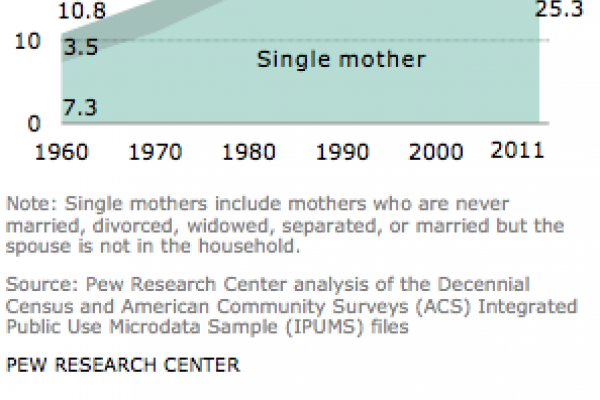
A recent Pew poll revealed a significant shift in American families. Four in 10 of this country’s households now rely primarily on the income of women.
This is both good news and bad. For many women, new opportunities are allowing them to be the primary breadwinners in their families. In some careers, women are chipping away at the very real glass ceiling so many have and continue to face. Our efforts towards equality have made some strides. Some strides.
At the same time, a significant majority of households who rely primarily on women’s incomes are single-mother households living in poverty or near-poverty. Structural barriers lead almost inexorably to more complicated and difficult lives for these families. From health care and food costs to child-care and educational expenses, they face greater challenges because of structural obstacles we so often unwittingly endorse and from which we even benefit.
Some things never change.