Lord, help me to find my delight in you. Make me like a tree planted by streams of water, which yields its fruit in season and whose leaf does not wither. Watch over my path, and protect me from wicked ways. Amen.
Adapted from Psalm 1
"On the last day of the festival, the great day, while Jesus was standing there, he cried out, 'Let anyone who is thirsty come to me, and let the one who believes in me drink. As the scripture has said, Out of the believer’s heart shall flow rivers of living water.’" - John 7:37
"Holiness consists in doing God’s will joyfully. Faithfulness makes saints. The spiritual life is a union with Jesus: the divine and the human giving themselves to each other. The only thing Jesus asks of us is to give ourselves to him, in total poverty and total self-forgetfulness." - Mother Teresa
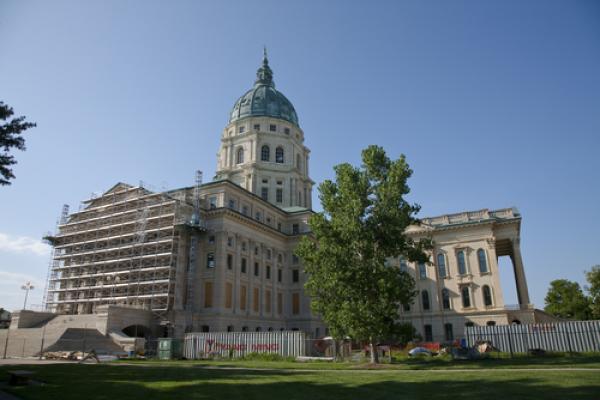
Recently, the Kansas’ legislature and governor enacted a law to ensure state courts and agencies do not consider foreign laws in legal decision-making. While the language is broadly written, the law’s narrow intention is clearly understood. The Kansas legislature has irrationally concluded that Sharia law somehow threatens the state’s well-being and decisive action was needed.
This, of course, is false.
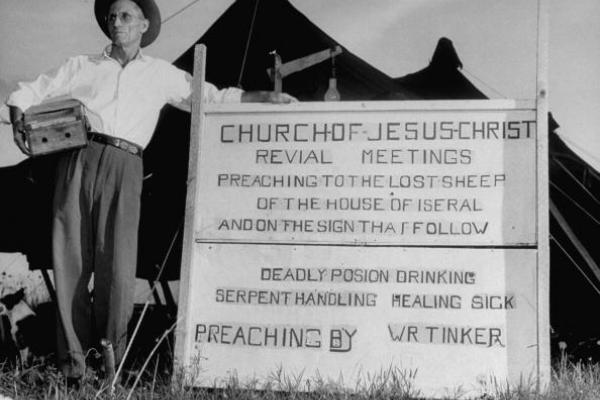
A recent piece on the Huffington Post's Religion page described the death of Pastor Mark Wolford, a Christian minister known for handling venomous snakes during his worship services to demonstrate the power of his faith. The stunt went south, however, after he was bitten on the thigh during worship and died at a hospital not long after.
The practice, though rare, is employed in a handful of Christian congregations in response to a literal interpretation of verses 17 and 18 in the 16th chapter of Mark:
And these signs will follow those who believe. In My name they will cast out demons; they will speak with new tongues; they will take up serpents; and if they drink anything deadly, it will by no means hurt them; they will lay their hands on the sick, and they will recover.
There are several dangers this story raises, not the least of which, of course, is death by venomous snake bite. Such communities require public displays of faith that are meant to test the resolve of the faithful. And such practices are not restricted to backwoods protestant churches; some Catholics (and others) are enamored with the phenomenon on stigmata, where people exhibit physical signs of crucifixion, such as wounds on their hands or feet.
There’s the more obvious danger of putting someone in harm’s way by expecting them to perform a dangerous act to prove their faith. But there’s also the undercurrent of religious one-upsmanship, wherein folks are forever striving to be more daring, graphic or otherwise attention-grabbing. In addition to the potential physical danger, there’s the risk of pressing people to be deceptive in their faith practices, simply to enjoy the validation or admiration they seek, and which is held in such high esteem in these particular circles.
Watching TV is bad for kids' self-esteem, except if they're white boys. (Seems likely that too much TV is bad for everyone's esteem for their fellow humans, made in the image of God ...)
"A new study suggests exposure to today’s electronic media often reduces a child’s self-worth.
Indiana University researchers say this is the case if you are a white girl, a black girl or a black boy.
However, researchers believe the media exposure can help the self-confidence of white boys.
... In the study, the researchers surveyed a group of about 400 black and white preadolescent students in communities in the Midwest over a yearlong period."
Read more here.
Social conservatives on Thursday reacted sharply to a federal appeals court ruling that declared the law barring federal recognition of same-sex marriage unconstitutional.
The First U.S. Circuit Court of Appeals judges are "intent on imposing their liberal, elitist views of marriage on the American people,” Brian Brown, president of the National Organization for Marriage.
In its unanimous ruling, the three-judge panel said the 1996 Defense of Marriage Act, or DOMA, deprives same-sex couples the same rights and privileges granted to heterosexual couples. The decision sets up a likely showdown in the Supreme Court and provides another culture war issue for the already contentious presidential campaign.
In the wake of President Obama's declaration of his personal support for the right of same-sex couples to marry under civil law, the nation is understandably focused on debating the merits of this position. Three related points from President Obama's announcement, however, deserve our attention as well.
First, President Obama noted that there is an important difference between civil marriage and religious marriage. The state defines civil marriage, which serves as the gateway for a wide variety of government benefits, rights and privileges. Religious marriage, on the other hand, is defined solely by religious communities.
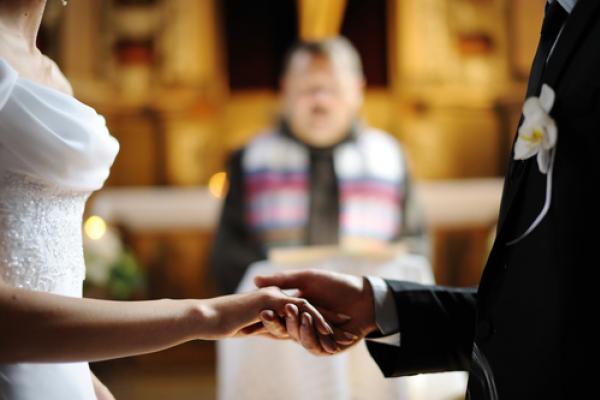
These categories may be fuzzy in our minds because current law not only respects the ability of clergy and religious communities to define and bless religious marriage, it also allows clergy to solemnize civil marriage. That's why one often hears a minister conclude a wedding by saying, "By the authority vested in me by the state of X, I now pronounce you husband and wife."
Setting aside the oddity of a minister claiming the authority of the state rather than a higher power, the fact that the state allows clergy to bring a civil marriage into being does not mean it can require clergy to bless or recognize any relationship the state defines as civil marriage.
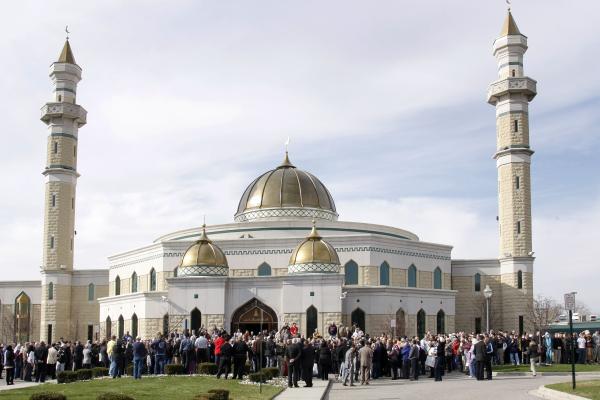
Mohammed Labadi had a lot at stake when the DeKalb City Council voted on May 29 on a request from the Islamic Society of Northern Illinois University to build a two-story mosque.
Labadi, a businessman and Islamic Society board member, said a bigger mosque is needed to replace the small house where local Muslims now worship. He also was hoping for affirmation that his neighbors and city officials have no fear of the Muslim community.
"Don't look at me just as a Muslim, look at me as an American," Labadi said. It's time, he says, "to take the unfortunate stereotypes about Muslims out of the picture." The City Council unanimously approved the plan.
In the decade since the 9/11 terrorist attacks, animosity toward Muslims sometimes has taken the form of opposition to construction of mosques and other Islamic facilities. National debate erupted over plans for an Islamic community center that became known as the "Ground Zero mosque" in Lower Manhattan.
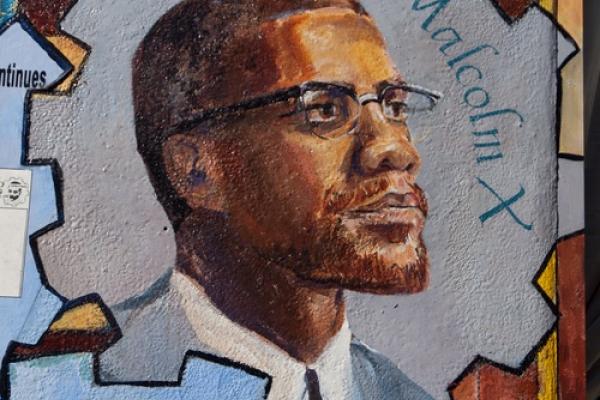
Sitting in his hotel room in Saudi Arabia in April 1964, civil rights activist Malcolm X penned a letter on hotel stationery to his friend and co-author, Alex Haley.
Malcolm X had just left the controversial Nation of Islam, a group whose leader denounced whites as “devils.” In Saudi Arabia, he completed the hajj pilgrimage to Mecca, where the experience of eating and drinking with “fellow Muslims whose skin was the whitest of white” had changed his mind on race, he told Haley.
“What I have seen and experienced on this pilgrimage has forced me to ‘rearrange’ much of my thought patterns and to toss aside some of my previous conclusions,” he wrote.
Ten months later, Malcolm X was assassinated in New York City.
The letter – considered by many historians to capture a watershed moment in Malcolm X’s life and philosophy, became part of “The Autobiography of Malcolm X,” which Haley co-wrote and Grove Press published in 1965. Four years later, Grove’s owner agreed to give his company’s files – including the letter from Saudi Arabia — to Syracuse University, where they sit today on the sixth floor of Bird Library.
Now, Haley’s son wants that letter back.