Former President Jimmy Carter writes in the New York Times this morning of how far the U.S. has gone in abandoning human rights:
"Despite an arbitrary rule that any man killed by drones is declared an enemy terrorist, the death of nearby innocent women and children is accepted as inevitable. After more than 30 airstrikes on civilian homes this year in Afghanistan, President Hamid Karzai has demanded that such attacks end, but the practice continues in areas of Pakistan, Somalia and Yemen that are not in any war zone. We don’t know how many hundreds of innocent civilians have been killed in these attacks, each one approved by the highest authorities in Washington. This would have been unthinkable in previous times."
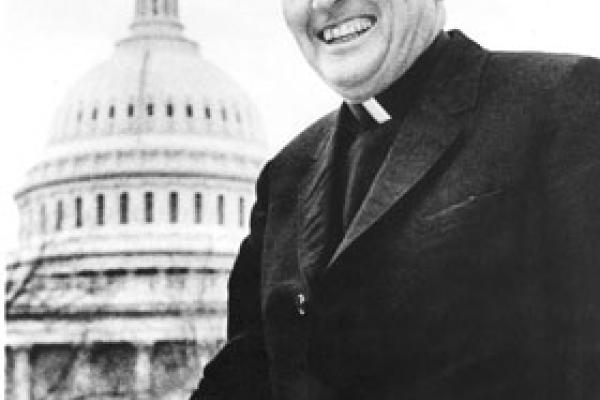
A popular online advice columnist has said that the late Rev. Robert Drinan, a famed Jesuit priest and onetime Democratic congressman from Massachusetts, tried to kiss and fondle her in the 1970s when she was 18 or 19 years old.
Emily Yoffe, who writes Slate’s “Dear Prudence” column, said she was prompted to write her first-person account after reading coverage of the trial of Jerry Sandusky, the former Penn State assistant football coach who is charged with raping and molesting 10 boys.
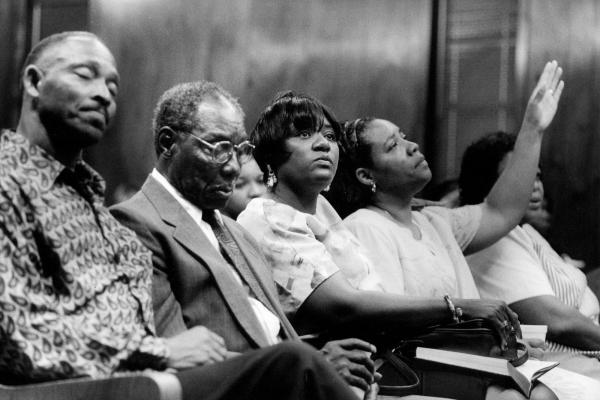
In June of 1998, three presumed white supremacists from Jasper, Texas severely beat and then murdered James Byrd, Jr. by tying him to a pick-up truck and dragging his body for miles. This incident has made the town infamous and, unfortunately, the racial divide continues to linger. According to a report in The New York Times, the city’s first African-American police chief has been fired by a predominantly white city council, prompting the former chief to take legal action and the NAACP to seek a federal investigation.
Even more shocking are the sentiments expressed by some of the town’s leaders.
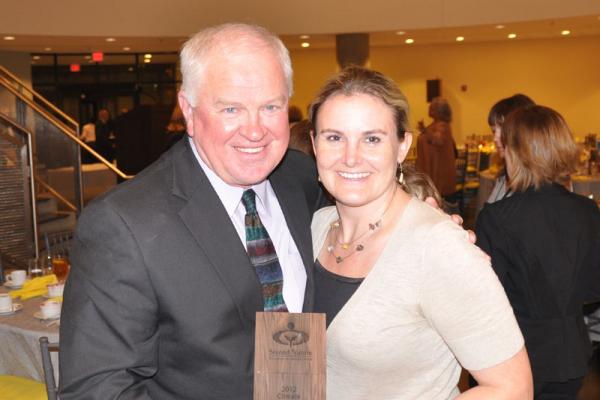
Last night I had the rare privilege of dining with the president of my alma mater, Luther College, as he accepted a well-deserved Climate Leadership Award from Second Nature on the college’s behalf.
While I’d met President Richard Torgerson a couple of times before at alumni gatherings, I hadn’t had the opportunity to talk with him about the extensive sustainability efforts that the college has undergone during his tenure. And there have been a lot of such efforts to discuss. Nor had I been able to ask him about his experience as an entomologist. I was keen to find out if his love for bugs was inspired by a great professor, as mine was by Dr. Kirk Larsen in the biology department at Luther. It takes a special person, after all, to get others excited about God’s creepy crawly little creatures and to use that excitement to launch a lifelong commitment to environmental stewardship.

Five of my female Facebook friends had posted the article in a span of about two hours. The headline, “Why Women Still Can’t Have It All,” stared at me, daring me to respond.
Read it, first. Then come back here. Go ahead, take the half-hour (it’s a long one). Read the WHOLE thing.
Back?
OK, so there are some good points in there, right? If you want to be a political power player in Washington, D.C., forcing you to live long-distance from your husband and children, maaaaybe you’re not going to be the happiest person ever. Maybe you can’t “have it all.”
But why is that the question to begin with? Why does this topic of conversation perennially rear it’s head to make women feel like they’re not doing it right? And why is the question never asked of men?
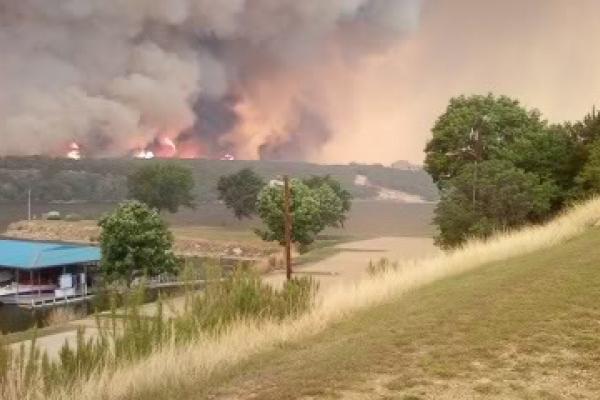
I spend most of my days studying the natural environment. From that perspective, the answer is clear: God has given us the freedom and the ability to make choices. These choices have consequences. And one of the consequences of building in fire-prone areas (and suppressing natural fire patterns in those same areas) is that when a fire comes, there is a lot to burn.
In most cases, these fires are the result of a perfect storm: lots of vegetation, low humidity, dry, hot and windy conditions, and a spark, usually from a human source. In a place where fire is common, like the western U.S., these conditions all come together naturally every few decades or so.
But fires are intimately related to temperature, humidity, and rainfall. So it makes sense to ask—is climate change making these fires worse? Do our energy choices, which include burning coal and gas and oil and increasing levels of heat-trapping gases in the atmosphere, affect the risk of wildfire?
The Obama administration filed its response to a Freedom of Information lawsuit brought by the ACLU and the New York Times seeking documents on the legal justification for the drone program. To no one’s great surprise, the administration refused, claiming a release of the documents would damage national security. In its refusal:
"The administration said the information requested is "highly classified," even though details of such operations have been leaked to the media.
"For example, whether or not the United States government conducted the particular operations that led to the deaths of Anwar al-Awlaki and the other individuals named in the FOIA requests remains classified," the government wrote. The U.S.-born al-Awlaki, an al-Qaida leader, was killed in a U.S. drone strike in Yemen in September.
"Likewise, whether or not the CIA has the authority to be, or is in fact, directly involved in targeted lethal operations remains classified."
President Obama has publicly spoken about the use of drones. Secretary of Defense Panetta has publicly spoken about the use of drones. Counter-terrorism adviser John Brennan delivered an entire speech about the use of drones. But whether or not the CIA is involved in “targeted lethal operations” is a secret? It’s not, the only secret is how the administration justifies it.