
Among my must reads are the Sunday New York Times Book Review and other book reviews I come across in various media outlets. There are too many books being published that I would love to read, but just don’t have the time. So, I rely on reading book reviews as one way of keeping in touch with what’s being written.
Here are my picks in this week’s books of interest.
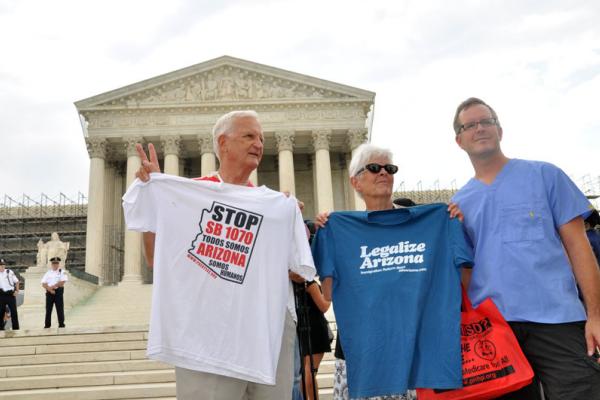
Today, as I stood on the steps of the U.S. Supreme Court eagerly following Arizona’s SB 1070 ruling, I had the opportunity to interview some advocates of the immigration reform movement.
The message that seemed to resonate among those present was that athough three of the four provisions were struck down, the fourth —the so called “show me your papers” clause — is very harmful to communities. It allows racial profiling on the basis of appearance. Even though there might be limits on how this last provision is implemented, those who feel they have the legal authority to enforce laws might feel compelled to use this piece as an excuse to discriminate.
In what appears to be a step in the right direction, Congress is paying more attention to drone strikes. From the LA Times:
"Once a month, a group of staff members from the House and Senate intelligence committees drives across the Potomac River to CIA headquarters in Virginia, assembles in a secure room and begins the grim task of watching videos of the latest drone strikes in Pakistan and Yemen. …
The regular review of some of the most closely held video in the CIA's possession is part of a marked increase in congressional attention paid to the agency's targeted killing program over the last three years. The oversight, which has not previously been detailed, began largely at the instigation of Sen. Dianne Feinstein (D-Calif.), chairwoman of the Senate Intelligence Committee, ...
In addition to watching video, the legislative aides review intelligence that was used to justify each drone strike. They also sometimes examine telephone intercepts and after-the-fact evidence, such as the CIA's assessment of who was hit."
One of the major criticisms of drone attacks is the lack of transparency and accountability. So, on the one hand, more Congressional oversight is good. On the other hand:
"Members of the oversight committees are limited in their ability to challenge the CIA's conclusions, a senior staff member cautioned. "I can watch video all day long — I'm not an imagery analyst," he said. "I can only look to see if the description reasonably concurs with what my untrained eyes are seeing."
Most Holy God, we pray for unity in Egypt after the latest election. Help Christians and Muslims work together to love their neighbors and take care of the hungry and thirsty, the sick and the broken. Amen
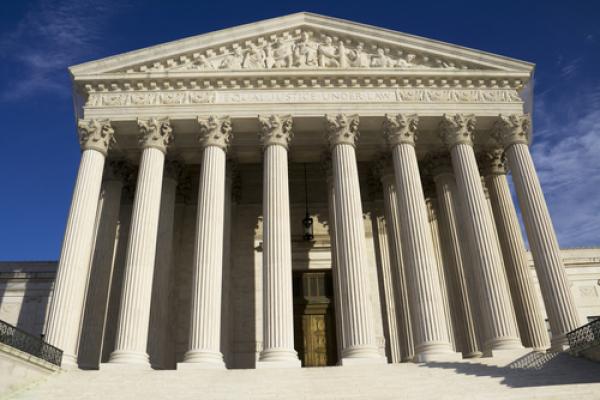
Today the Supreme Court struck down three central provisions of Arizona’s controversial anti-immigrant law, SB 1070. Attempts by Arizona to force immigrants to carry identification, create legal penalties for undocumented workers seeking employment, or detain individuals solely based on suspicions about their immigration status were ruled to interfere with the federal government’s right and responsibility to set immigration policy.
The Court let one section, known as 2(B), to stand, which allows law enforcement to check the immigration status of individuals apprehended for non-immigration offenses, if law enforcement has a “reasonable suspicion” that the person violated U.S. immigration laws in entering the country. (Read more on concerns about the racial profiling measure HERE.)
The Supreme Court on Monday struck down large portions of the controversial Arizona anti-immigrant law SB 1070.
In the decision—with Justice Sonia Sotomayor in favor—the Supreme Court struck down three major pieces of the legislation including provisions that made it illegal for immigrants to fail to carry immigration papers and a crime for undocumented immigrants to seek employment. The court also struck down the ability of police officers to arrest someone based solely on suspicion of legal status.
The most divisive provision of the law—requiring state and local police to inquire about a person's legal status when stopped in process of another offense—was upheld.
This is breaking news. Please check back for updates and analysis.
The Observer newspaper in the UK published extracts from Archbishop of Canterbury, Rowan Williams' new book:
The Los Angeles Times reports:
"After quietly testing Predator drones over the Bahamas for more than 18 months, the Department of Homeland Security plans to expand the unmanned surveillance flights into the Caribbean and the Gulf of Mexico to fight drug smuggling, according to U.S. officials.
The move would dramatically increase U.S. drone flights in the Western Hemisphere, more than doubling the number of square miles now covered by the department's fleet of nine surveillance drones, which are used primarily on the northern and southwestern U.S. borders."
Is the next step armed drones that will sink ships suspected of carrying drugs?