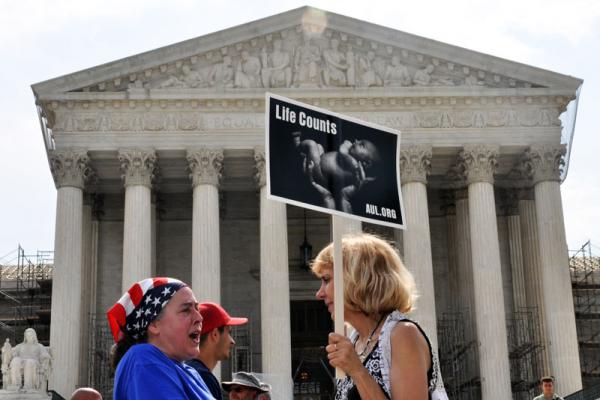
Religious groups and social conservatives are reacting to the Supreme's Court's historic ruling that largely upholds President Obama's health care law, the Affordable Care Act.
Sr. Carol Keehan, president and chief executive officer of the Catholic Health Association of the United States (CHA):
"We are pleased that, based on an initial read of the ruling, the ACA has been found constitutional and will remain in effect. CHA has long supported health reform that expands access and coverage to everyone. We signed onto amicus briefs encouraging the Court to find in favor of the ACA’s individual mandate and the Medicaid expansion. As the ruling is examined, Catholic-sponsored health care providers will continue to lead health care transformation — finding new and better ways to provide compassionate, high-quality care while strengthening the communities we serve."
The Catholic Bishops of the United States urged Congress and President Obama to repair, not replace, the health care law so that it covers immigrants, includes stronger conscience protections, and ensures that it will not fund abortions -- something the law specifically bars:
"Following enactment of ACA, the U.S. Conference of Catholic Bishops (USCCB) has not joined in efforts to repeal the law in its entirety, and we do not do so today.The decision of the Supreme Court neither diminishes the moral imperative to ensure decent health care for all, nor eliminates the need to correct the fundamental flaws described above.We therefore continue to urge Congress to pass, and the Administration to sign, legislation to fix those flaws."

It's a honking long list of insiders — 605 names long, give or take a few duplicates. What do all of them, mostly from corporate America, know about the secret playbook U.S. trade officials are using next week in San Diego to negotiate a potentially huge international agreement?
Five U.S. senators and 132 members of the House of Representatives wish they knew. They've been asking U.S. Trade Representative Ron Kirk, the official in charge of such negotiations, to pretty-please let all members of Congress see the working text, or at least chapter summaries, of the deceptively benign-sounding Trans-Pacific Partnership, now in the works.
So far, Kirk has said no. (In his defense, last month House Oversight Committee Chairman Darrell Issa, R-Calif., leaked a draft of the "intellectual property" chapter of TPP, just because it's a "secretive agreement" that could “undermine individual privacy rights and stifle innovation." Leaking, whistleblowing--potato, potahto).

Where there is no vision, the people perish. ~ Proverbs 29:18
Thursday’s Supreme Court ruling on the constitutionality of the Affordable Care Act was remarkable in a number of ways. The vast majority of articles, blogs, and analyses focus on the political ramifications of the decision.
Is this a win for the Obama administration or fuel for the Romney campaign? Pundits have looked at nearly every political angle, from the upcoming presidential election to its effects on local politics.
While I appreciate the political analysis and the importance of political processes to the wellbeing of the United States, I believe that a majority of coverage has missed one of the most remarkable points of the ACA: It changes the vision of our national community.

Brace yourselves. I’m about to step on a soapbox.*
Much as I’d like to go all armchair-Constitutional-scholar and argue that access to affordable health care SHOULD be in the same category as education, fire-fighting, and law enforcement, I’m not going to.
I’m just going to tell you what has happened in MY family.
February, 2005, California
Pregnant with first child. Am on crappy private insurance that costs like $500 a month in premiums but covers almost nothing. Calculate that cost of having child will be approximately half our yearly income.
Freak out.

At Wild Goose, I was humbled to be among justice-seeking Christians seeking to follow in the footsteps of Jesus.
I see a deep connection between the personal practice of simple living and activism for social change. While I struggle to live justly, particularly in my everyday purchasing decisions (as Julie Clawson advises!), I often don’t live as simply as I could. Sometimes I take shortcuts, going out for lunch, driving my car to work, or buying something to solve a problem that actually requires time I lack because of overcommitment.
As Mark Scandrette points out, for many of us, our slavery to time and money is a choice. We could cut much from our lives and live more simply. We are the global 1 percent.
It’s this voluntary reconsideration of wealth and rediscovery of our Christian justice tradition that made Wild Goose such an amazing experience.

The Supreme Court has upheld the constitutionality of the Affordable Care Act. Now, take a little time to celebrate by smiling along with the latest Internet meme craze, "affordable care cats." Currently it's a small collection, but after today's news, this site should be up and running soon.
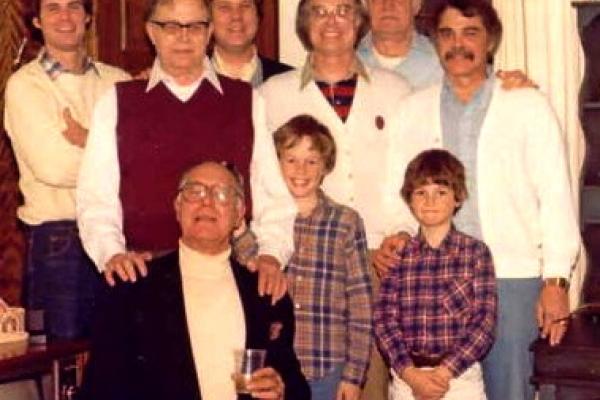
I have been thinking about the church of my youth. I have been remembering, if you will, as a guy who has read too much Updike (I'll never forgive him for the Rabbit books) might remember his youth.
There is a melding of nostalgia for what was as well as what might have been. It's a mess, to be honest, a kind of lie that draws me in no matter how often I tell myself it is a lie. Sometimes these lies of memory are the heart's truth.
Today the Interreligious Working Group on Domestic Human Needs (DHN) presented a forum for congressional representatives to talk about a more faithful response to the pending sequester this upcoming January.
Sequestration as we know it was meant to be a last resort – if Congress could not agree on a budget, then programs would be cut, or sequestered, across the board. The problem with the current sequestration agreement is that it does not protect programs that affect the poor, uninsured, and unemployed.
In 2009, during the debate over health care, I devoted a good deal of my time arguing in favor of President Obama’s efforts to provide some form of universal health care to the people of the United States. I argued that universal health care is a human right. I argued that providing a way for people to get medical care without the worry of going bankrupt or of having to be shackled to a job because they or someone in their family needs health care is a matter of establishing justice in our country. It is a matter of distributive justice.
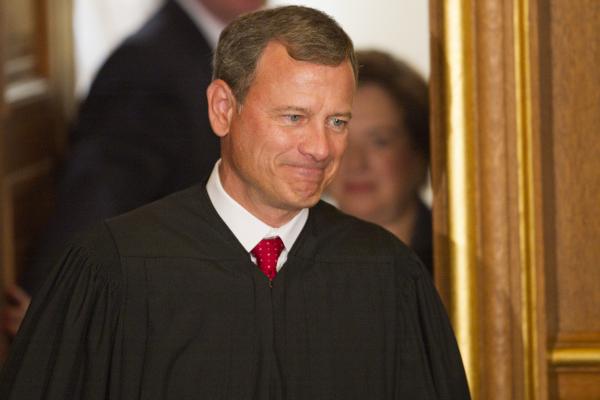
In the Supreme Court decision upheld the Affordable Care Act (ACA a.k.a. Obamacare) Chief Justice John Glover Roberts, Jr., writing for the majority of the court, in effect said that the act is constitutional because Congress has the power of taxation. He quotes Benjamin Franklin: “Our Constitution is now established . . .but in this world nothing can be said to be certain, except death and taxes.”
Opponents of the ACA argued that the individual mandate that requires people to buy health insurance was unconstitutional. They argued that it was an overreach of governmental power to require someone to buy something. Supporters of the ACA argued that the individual mandate was constitutional under the powers granted to Congress under the commerce clause and because Congress has the power of taxation. The penalty imposed on people who do not buy health insurance will be collected by the IRS when a person files h/er income taxes. The penalty or tax only applies to people who can afford to buy health insurance but who choose to not buy it.
The chief justice’s opinion does not judge the morality of the law. Roberts does not speak of the Universal Declaration of Human Rights and the goals it sets for the entire human community, including universal health care. He does not speak of the concepts of liberty and justice for all, that the government has an obligation to its citizens to make health care something that is available to all.

Today, as President Obama followed the monumental decision of the Supreme Court to uphold the Affordable Care Act, his wife, Michelle Obama addresses an assembly of 30,000 leaders and laity at the African Methodist Episcopal Church Conference in Nashville, Tennessee. We're still waiting for the video to come, but meanwhile, browse through the transcript of her speech on faith, families, and what's next.