
I know I am not the only one who is sick and tired of Washington’s manufactured crises around budget and deficit debates. Brinksmanship has replaced statesmanship in trying to find a sound path to fiscal responsibility. It is time to make the right moral choices that will defend the most vulnerable and pursue an opportunity agenda to reduce the highest poverty rate in 50 years.
Ideological debates over the role of government are the real battle in the nation’s capital — more than the debt crisis. Political calculations about the next election are more important to many of our political leaders than the common good of the country.
It’s just time to move on from the partisan politics that has polarized and paralyzed us for so long — by committing ourselves to moral issues that could and should bring us together. The first will be comprehensive immigration reform, which will change the lives of 12 million people in this country, lift many out of poverty, and help the economy at the same time. This is a clear example of how the faith community has changed, and now come together to become a political game changer in Washington, D.C., at both ends of Pennsylvania Avenue on both sides of the aisle.
And it’s time to make another moral commitment in the midst of our growing economic recovery — to include poor families and change poverty into opportunity. Fighting poverty must not be a partisan issue. When we look at both the causes and the solutions, this battle should bring both liberals and conservatives together. Overcoming poverty, by creating opportunity, happens because of three very basic things that most of us can agree on: family, education, and work. All three are crucial and necessary in moving people out of poverty and into opportunity.
Let’s break it down.
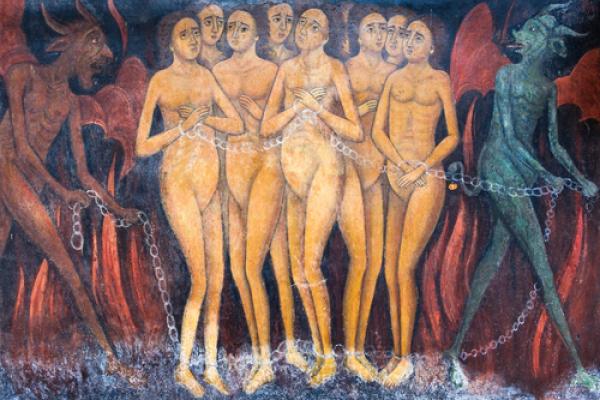
Yesterday, I discussed some of the historical bases for our contemporary understanding of Satan. Today, I’ll consider how hell evolved as part of the Christian faith.
In Old Testament scripture, the resting place for the dead is called Sheol. While some believe this is the same as hell, there are indications to the contrary. In the ancient Jewish tradition, Sheol is a place of rest for both righteous and wicked, with no distinction.
Not everyone is happy about it either.
In the third chapter of Malachi, the prophet recognizes the consternation of faithful Jews who are frustrated that the wicked share the same fate. In Ecclesiastes, the priest Koheleth claims that serving God is vanity. For him, the fact that the righteous are treated the same as the wicked and vice-versa should be a call to eat, drink and be merry.
With respect to any relationship between Satan in the Old Testament and Sheol, there is none.
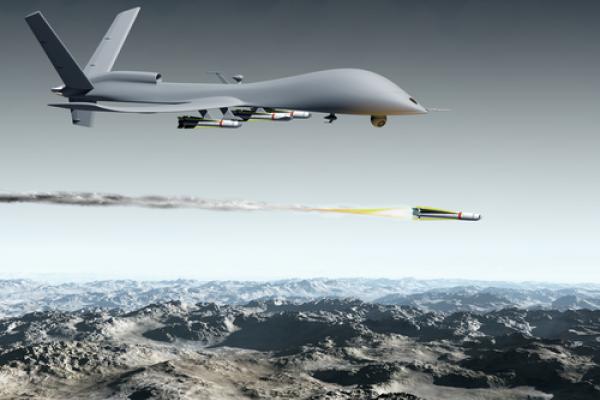
The drone operators sit at consoles on military bases around the U.S. They track their targets and when the moment is right, they send the command to fire. And then people die.
Drones have been in the news a lot over the past month as Congress has considered the nomination of John Brennan to head the Central Intelligence Agency (CIA). Brennan has been the chief architect of the drone policies of the Obama administration.
The constitutional questions have gotten quite a public airing, but drones raise deeper moral questions about what constraints there are on weapons of war.
Yes, drones are efficient, effective, and economical. But what do they do to the soul of this nation, to the psyches of those who push the buttons from half a world away? If they are moral for the U.S. to use at will in any nation of the world, are they moral for other nations to use against us?

Before Elvis and Chuck Berry and Johnny Cash. Before Aretha and Whitney and Beyonce. Before the blues met gospel and conceived rock ‘n’ roll, there was Sister Rosetta Tharpe.
The first gospel superstar, Tharpe was a guitar hero in a flower-print dress whose bluesy chops and strutting style would be mimicked by countless acolytes, both white and black.
“I mean, she’s singing religious music, but she is singing rock ‘n’ roll,” said one such devotee, Jerry Lee Lewis, of “Great Balls of Fire” fame. “She’s hitting that guitar, playing that guitar, and she is singing. I said, ‘Whoooo. Sister Rosetta Tharpe!’”
Though no longer a household name, Tharpe gets the star treatment in a new documentary for the PBS series American Masters. Sister Rosetta Tharpe: The Godmother of Rock & Roll will be broadcast Friday on PBS in honor of Black History Month.

Conan, Bonarroo, a 42-wheel BMW dream car, a 7-year-old's interpretations of the Best Picture nominees, Google glasses, and puppies. Yes, these are awesome.
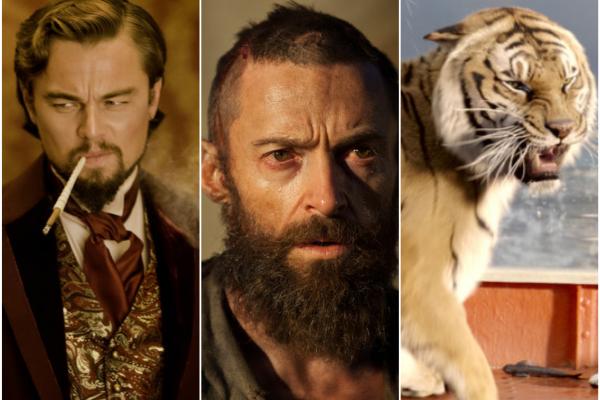
 The fragility of life. The servanthood of love. The (im)morality of war. The fundamentals of mercy and justice. The power of grace and forgiveness. The oneness of creation. The personal (and spiritual) toll of climate change. The nature of God and faith. These are some of the spiritual themes explored in the mostly august field of nine contenders for the 2013 Academy Award for Best Picture — Amour, Argo, Beasts of the Southern Wild, Django Unchained, Les Miserables, Life of Pi, Lincoln, Silver Linings Playbook, and Zero Dark Thirty.
This week, in the run-up to Sunday's Academy Awards ceremony, we're taking a look at each of the Best Picture nominees, the stories they tell, and the spiritual questions (and answers) they offer. Today we turn our attention to Django Unchained, Les Miserables, and Life of Pi.
The U.N. mission in Afghanistan released its annual report on civilian casualties in Afghanistan on Tuesday, finding a decrease from 2011. According to the Guardian, the U.N. also reported that 506 weapons were fired by drones in 2012, compared with 294 in 2011. Five cases resulted in civilian casualties, with 16 deaths and three wounded. Although drone attacks have become controversial in Pakistan, the Guardian writes:
“They have not been a prominent issue in Afghanistan, however. While drone attacks have occurred, they have largely been in support of ground troops during operations and have not been singled out by President Hamid Karzai's administration in its campaign against international air strikes.
“The steep rise in the number of weapons fired from unmanned aerial aircraft – the formal term for drones – raises the possibility that may change as US forces become more dependent on such attacks to fight al-Qaida and other insurgents as combat missions are due to end by the end of 2014.”