
Introduction from Lisa Sharon Harper: Every once in a great while you meet someone who carries in their very body the scars of injustice that we talk about so much at Sojourners. These scars leave permanent reminders of the profound need for every follower of Jesus to follow him in word and deed. It is my great pleasure to introduce you to my friend and colleague, Ivone Guillen. As Sojourners’ Immigration Campaigns and Communications Associate, Ivone has worked tirelessly for the passage of just immigration reform for two years. As a formerly undocumented immigrant, she bears the scars of our unjust immigration system and has experienced the healing that came from changes in immigration policy last year. Please read Ivone’s story. It reflects the stories of millions of people in church pews across the country; people made in the image of God, people waiting for that image to be fully recognized and set free inside our borders.
I remember clearly the day I heard the announcement on deferred action for childhood arrivals (DACA) as I felt an overwhelming surge of emotions in that one moment. A path to opportunity, however fragile and short-term, had finally been created for undocumented young people wanting to become full members of American society.
As I sat on the sofa on the morning of June 15 in front of the television and next to my computer, I felt anxious, excited, and dazed at the same time. There I was, listening to one of the biggest announcements ever made in my lifetime, and it directly impacted me. It was a surreal moment since I had been working with the advocacy community for almost two years and had seen difficult developments take place at the state level on the issue. Then and there, I felt that all of my work was paying off and that change could be achieved with enough persistence and pressure. It was a moment that most people wish to live and see, especially those who have worked in the movement for decades but seldom experience the ultimate triumphs of slow processes.
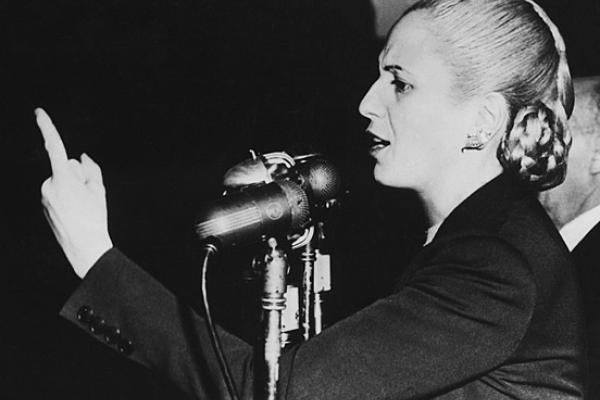
In 1974, when the Rev. Jorge Bergoglio was the top Jesuit in his native Argentina, a former nightclub dancer named Isabel Peron came to head the nation – an accidental and weak president.
Isabel Peron served less than two years in office before a right-wing military coup placed her under house arrest, and launched a seven-year campaign of torture and killings of tens of thousands of trade unionists and other leftists: Argentina’s Dirty War.
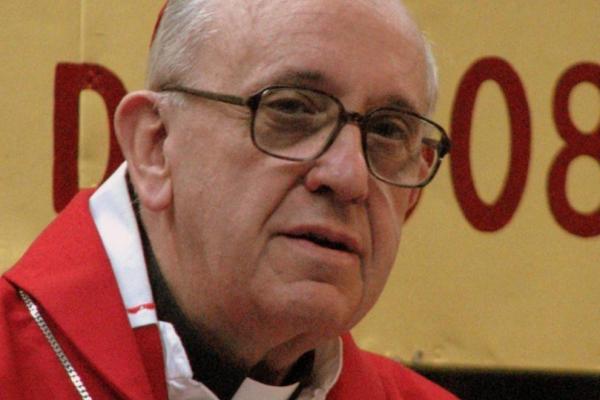
Jesuits are bound by oath not to seek higher office in the Roman Catholic Church, and now one of them has been elected to its highest office: Bishop of Rome, Vicar of Christ, Pontifex Maximus.
“On the one hand, Jesuits aren’t supposed to be in positions of authority,” said the Rev. Joseph Fessio, a Jesuit and founder of Ignatius Press. “On the other hand, they’re supposed to be obedient to the church.” Pope Francis, the first Jesuit to become pope, not only represents a paradox for the papacy, but also the larger history of the Society of Jesus, as the Jesuits are formally known.
The Jesuits have played a key role in the history of the church. For centuries, they have served as its leading missionaries, founded its most prestigious universities and committed themselves to alleviating the deepest poverty.
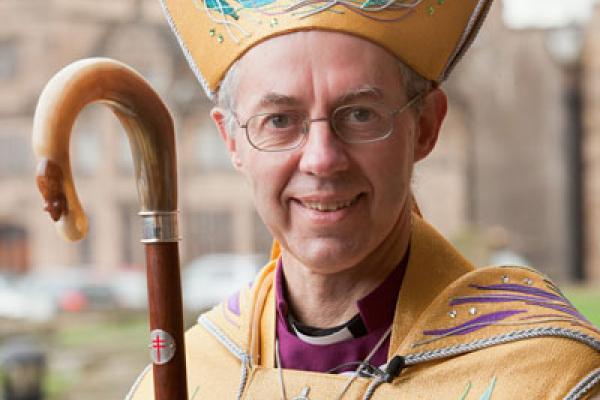
With the words “Habemus papam” — we have a pope — Roman Catholics had a new leader, and the wider world had a new ministry to watch.
The direction the new pope takes his flock is of great importance for committed Catholics, but the papacy is also closely watched by other faiths. The pope wields vast influence as the world’s most powerful moral leader and the public face of Christianity.
Leaders of other faiths appeared to embrace the selection cautiously, not unlike some Catholics themselves, offering prayers and congratulations, but also using the opportunity to lay out their own hopes for the new pontiff. Pope Francis of Buenos Aires, formerly Cardinal Jorge Bergoglio, emerged from the conclave as the first pope from outside Europe in modern times, the first Jesuit, the first from Latin America, and the first named Francis, in honor of St. Francis of Assisi, who dedicated his life to helping the poor.
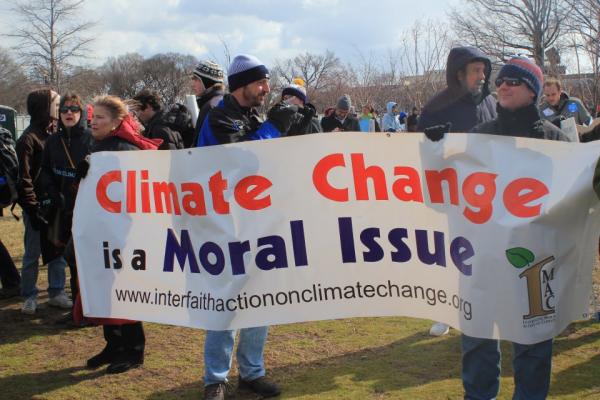
God’s creation is in danger; and to call upon the powers of the world to heal it, God’s people are prepared to go to jail.
Perhaps most famously in our recent history, the startling sight of a religious leader in jail was embodied in the willingness of Dr. Martin Luther King, Jr., to go to jail more than 20 times in order to embody his religious commitment to racial justice, peace, and nonviolence.
As we approach the Holy Week of Christianity and Passover, we should be aware that this tradition goes back thousands of years. The movement of ancient Israelites seeking freedom from a lethal Pharaoh began even before Moses, when two midwives – the Bible carefully records their names, Shifra and Puah – refused to murder the boy-babies of the Israelites as Pharaoh had commanded. The recollection of that moment is the first recorded instance of nonviolent civil disobedience.
When that cruel and arrogant Pharaoh, addicted to his own power, refused freedom to his nation’s slaves, his arrogance forced the Earth itself to arise in what we call the Plagues – ecological disasters like undrinkable water, swarms of frogs and locusts, the climate calamity of unprecedented hailstorms.
Passover has kept alive and lively the memory of that uprising. So it is not surprising that the Gospels record that just before the week of Passover, Jesus led a protest against the behavior of the Roman Empire, its local authorities, and a Temple he and his followers thought had become corrupted from its sacred purpose.
To protest against the Empire of his era, Jesus chose a time that was both appropriate and dangerous, since Passover celebrates the fall of Pharaoh. His challenge resulted in his arrest and imprisonment, and then his torture and execution.
Both Judaism and Christianity can trace their origins to acts of nonviolent civil disobedience. Indeed, for several centuries of Imperial Rome, the very persistence of Rabbinic Judaism and Christianity were collective acts of civil disobedience.
Today, religious folk face modern plagues imposed upon our countries and our planet by a new kind of Pharaoh.

I used to lead and organize inner-city mission trips. Churches, youth groups, non-profit organizations, and well-intentioned philanthropists would excitedly arrive within the diverse and fast-paced world of Chicago and enthusiastically dive into whatever tasks we gave them. The work they volunteered for made a huge difference in people’s lives, but more importantly, it dramatically challenged — and changed — their own way of thinking about urban ministry.
For years “The City” has been the pet project of Christians throughout America. Billions of mission trips have been made to homeless shelters, food pantries, and poor neighborhoods, all in an effort to “clean up,” “rehabilitate” and “evangelize” in Christ’s name. Unfortunately, the inner-city isn’t as stereotypical as we want it to be, and our missionary zeal can often cause more harm than good.
Here is the most common myth that Christians mistakenly apply to urban areas: The Inner-City is Morally Bankrupt.
Following a three-day visit to Pakistan, Ben Emmerson QC, the U.N.'s special rapporteur on counter-terrorism and human rights, warned that continuing U.S. drone strikes are a violation of that country’s sovereignty. According to the Guardian, Emmerson said,
"The position of the government of Pakistan is quite clear. It does not consent to the use of drones by the United States on its territory and it considers this to be a violation of Pakistan's sovereignty and territorial integrity.
"As a matter of international law the US drone campaign in Pakistan is therefore being conducted without the consent of the elected representatives of the people, or the legitimate government of the state. It involves the use of force on the territory of another state without its consent and is therefore a violation of Pakistan's sovereignty.
"Pakistan has also been quite clear that it considers the drone campaign to be counter-productive and to be radicalizing a whole new generation, and thereby perpetuating the problem of terrorism in the region.”