For the sake of the world, we should all be feminists. And given what we know about the role of independent, empowered women in the community of disciples, for the sake world, we might be “Christians.”
Raymond Brown, the late, great scholar of John, writes: “In this Gospel, where light and darkness play such a role, darkness lasts until someone believes in the risen Jesus.”
Therefore no darkness, no heartbreak, no grief, no injustice can long stand where the Risen Christ is proclaimed. Jesus Christ is the light of the world. The light shines in the darknessa and the darkness does not — cannot — will not overcome the light.
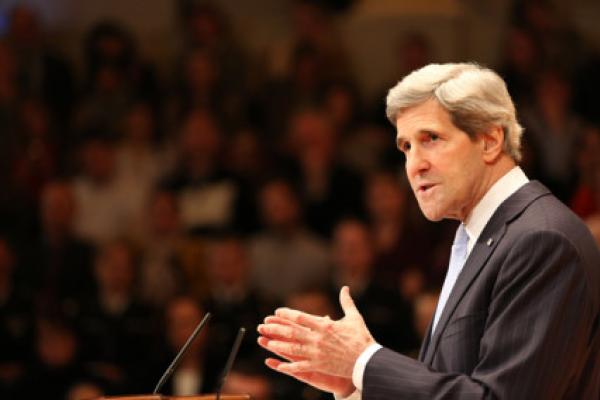
Secretary of State John Kerry is calling for the release of an Iranian-American minister from a Tehran prison, a welcome step for advocates who had accused the State Department of being “AWOL” on the case.
“I am deeply concerned about the fate of U.S citizen Saeed Abedini, who has been detained for nearly six months and was sentenced to eight years in prison in Iran on charges related to his religious beliefs,” Kerry said in a statement released on March 22.
“I am disturbed by reports that Mr. Abedini has suffered physical and psychological abuse in prison, and that his condition has become increasingly dire.”
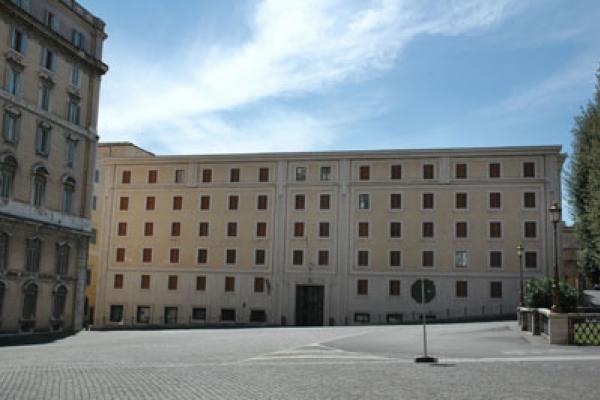
VATICAN CITY — Shunning the spacious papal apartment used by his predecessors, Pope Francis has chosen to continue living in the Vatican guesthouse where he has been staying since the beginning of the conclave.
The Vatican’s chief spokesman, the Rev. Federico Lombardi, explained on Tuesday that Francis will live “until further notice” in a suite in the Santa Martha Residence, a modern Vatican guesthouse for priests and bishops who work in the Roman Curia or who are visiting the Vatican for meetings and conferences.
Francis made his intentions clear on Tuesday morning, while celebrating Mass in the residence’s chapel for its permanent guests, who occupy about half of the residence’s 130 or so rooms.
The pontiff’s choice is a consequence of his desire to adopt a “simple” living arrangement that allows him “to live in community” with other priests and bishops, Lombardi explained.
(The Controversial figure Rob Bell has created another firestorm with his latest provocative book What We Talk About When We Talk About God. Raven Board Member Tripp Hudgins and I will share our thoughts on the book in this blogalogue. We invite you to join the discussion by leaving a comment below.)
Thank you, Tripp Hudgins, for your “Open Letter to Rob Bell.” As always, you are inspirational and thought provoking. The letter provides a great introduction to our blogalogue on Rob’s latest book What We Talk About When We Talk About God. I want to emphasize one point you make and relate it to the first chapter of the book, called “Hum.”
You claim that, “This book is not about a ‘new’ thing. It’s simply about God and how we come to know God in this world.” This is such a great point because Rob isn’t making up new ways to talk about God. Throughout the book, Rob explores what God has done in the past and how God continues to pull all humans into a global future that has “greater and greater peace, love, justice, connection, honesty, compassion, and joy” (19).
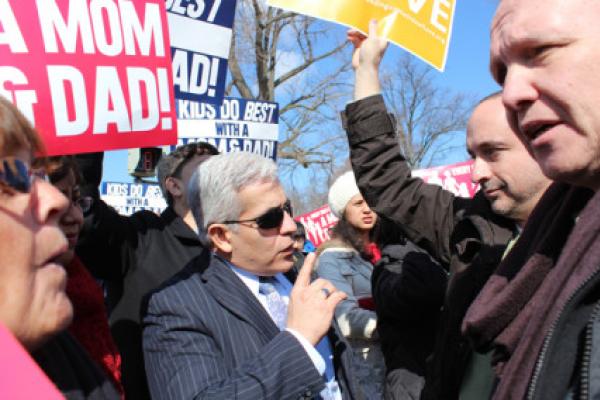
Isn’t it remarkable, attorney Ted Olson said after arguing for same-sex marriage before the Supreme Court on Tuesday, that the other side wasn’t really arguing against it?
“No one really offered a defense,” he said of his opponents’ bid to uphold Proposition 8, the 2008 California referendum that effectively ended gay marriage in the state by defining marriage as between a man and a woman.
The question inside the courtroom was not so much can there be gay marriage, but “how do you establish marriage equality?” said David Boies, another attorney for Prop 8 opponents.
Indeed, the lawyer trying to prop up Prop. 8, which was struck down by federal trial and appeals courts, spent barely any time talking about the virtues of traditional man-woman marriage or the hazards of same-sex marriage.
And that, for supporters of gay marriage, shows just how far this debate has come in the U.S.: It’s no longer “if” it will be accepted and legal, but “how” and “when.”

It’s a constant story line involving powerful men in politics, sports, business, and even religion: they behave with utter disregard for the dignity and humanity of women, using and abusing them at will, and somehow believe that — as men — they are entitled to do so. These men seem to think that the ordinary rules of decent behavior do not apply to them. We have a never-ending avalanche of disgusting stories about men cheating on their spouses and the mothers of their children, abandoning old wives for new ones, practicing serial philandering as a way of life, sexually harassing and assaulting women, physically abusing them, and even committing rape.
And now we have the boys, high school football players from Steubenville, Ohio. As a father of two boys, one now a high school athlete, and as a Little League baseball coach, I was especially fixed on this very sad and brutal story of a 16-year-old girl being sexually assaulted by two high school football players after she had passed out from drinking too much. When the girl woke up the next morning, she was horrified to see herself naked all over social media with Tweets everywhere about her and what had happened, from the boys who assaulted her and those who watched. The boys’ lawyers pleaded that she didn’t say no; but the judge concluded that when you assault a girl who is unconscious, and can’t say no; it’s called rape.
The judge made the right decision. Rape is rape.

We are offered a significant choice, namely between two ways of being human. The difference between logical necessities or physical necessities and vital necessities is made clear in that in the latter we have the possibility of refusing ‘to turn away from a disaster’ – we can in fact choose a lesser way of being human over a fuller way. What is at stake in the necessity of cry is one’s own humanity, the meaning of one’s own existence, and to turn away from crying is to turn away from decision and responsibility. This is to deny the very possibility of becoming genuinely human.

The Yale Project on Climate Change Communication has an updated version of its report, Global Warming’s Six Americas, out this month. The report, which identifies and explores six major attitudes towards climate change, shows that the number of Americans alarmed about climate change has risen from 10 to 16 percent of the population over the last two years.
At the same time, those dismissive towards the reality of climate change have decreased in size, from 16 percent in 2010 to 8 percent in 2012.
The “Six Americas” of the title refers to six predominant postures toward climate change in the United States, grouped by researchers along a spectrum of concern and engagement, from “Alarmed” to “Dismissive.” By focusing on attitude rather than demographics, these groupings represent cohesive yet widely diverse cross-sections of the public.
This Easter, Teresa MacBain will mark an anniversary that’s uncommon for an ordained minister — her first year as an atheist.
Last March, MacBain, now 45, stood at a podium before hundreds of people in a Maryland hotel ballroom at the national convention of American Atheists and told them that, after a lifetime as a Christian and 15 years as a pulpit pastor, she had lost her faith.
Her coming out was national news, and she expected it would cost her her position as pastor of a United Methodist church, and she expected she might lose some friends and family members. In the last year, she has lost all those things.
But there have been gains, too, including a new career, the embrace of a new community that she had been taught to distrust and a newfound sense of confidence.

In Christianity’s passage through Holy Week to Easter Day, a moment of truth will arrive.
Every detail is well known, thoroughly studied, and dramatized by Hollywood and homespun pageants — and the familiar story will reach across the divide and touch, or try to touch, every person who is listening and watching.
Many will get it, especially if they live in circumstances where people get falsely accused by the self-righteous; where the weak and vulnerable get mistreated by the powerful; where physical suffering is a daily occurrence; where death seems like the only next option.
That audience could well comprise the bulk of humanity — those who endure poverty, starvation, and violence of epic proportions, those who live in more prosperous lands and yet are the oppressed, the ignored, the expendable.
For that audience, the Gospel message is profoundly good news.