
Does violence rule our species? The barrage of international conflicts now in the headlines seems to suggest that violence may be the one language we have in common.
Though we all speak it fluently, very few of us learned it in school. We didn’t have to study its “vocabulary” and “grammar rules” – no, it was much easier than that. Humans pick violence up by immersion and so we are all native speakers. From Syria to Korea to Pakistan to Iraq to the U.S., the language of violence is so natural to us that we couldn’t recite one of its “grammar rules."
Sadly, ignorance of language rules does not diminish fluency. The odd thing is that if we stopped to learn the rules governing our fluency in violence, it would actually make us less fluent. Why? Because the rules of violence reveal an unpleasant reality: We don’t use violence; violence uses us.

As Christians around the world gathered for Good Friday and Resurrection Sunday celebrations last weekend, I have reflected a great deal about the connection between the suffering and passion of Christ and the plight of the undocumented in our nation.
This past year, an amazing surge of activity and concern has emerged among believers in general, and evangelicals in particular focused on passing a new immigration policy in our country. This development is quite a surprise and change. In fact, 10 years ago it was almost impossible to find a recognized evangelical leader who was knowledgeable about immigration, let alone one who was willing to speak out on this issue.
At the core of why evangelicals have made such a dramatic change of heart is the reading of Scripture. While it is impossible to ignore that there are 92 references in Scripture where the word, 'ger' is used, speaking about the stranger in our land and our treatment of these individuals, it is not one single verse but the entire revelation of Scripture that points us towards our responsibility to love the most vulnerable people in our society.

Jimmy Carter offered an open letter a few years ago explaining why he divorced himself from the Southern Baptist Convention after six decades as a deacon and Sunday School teacher. Basically, he contended that the SBC continued to legislate gender inequity from the top-down, cherry picking select verses to serve a desired patriarchal end, to which Carter responds:
It was, however, an unavoidable decision when the convention’s leaders, quoting a few carefully selected Bible verses and claiming that Eve was created second to Adam and was responsible for original sin, ordained that women must be “subservient” to their husbands and prohibited from serving as deacons, pastors or chaplains in the military service.
It’s easy, in the daily course of events, to forget how pervasive such judgments against the equality of women really are, especially as we have examples of powerful women in political office and business. But just as having a black President doesn’t solve racial inequities, neither do a handful of high-profile women indicate there isn’t an ongoing struggle for parity among millions of other women without such power.
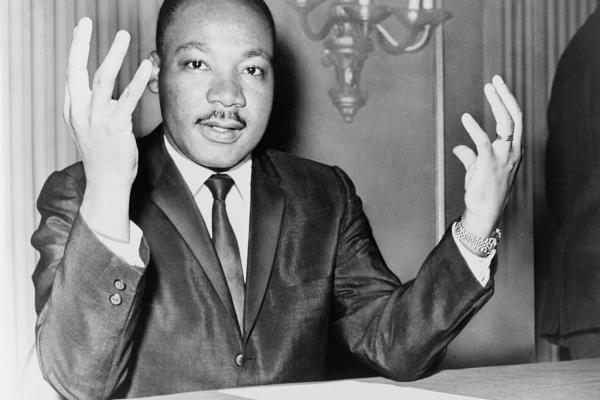
This August will mark the 50th anniversary of Martin Luther King’s “I Have a Dream” speech, and there will rightly be much remembrance and celebration of its place in American history. But there is another anniversary that our nation, and especially its Christians, would do well to acknowledge, investigate, and ruminate.
Forty-five years ago yesterday, Dr. King arrived in Memphis, Tenn., to support a sanitation workers’ strike seeking to unionize. He was assassinated the next day — the anniversary we today remember — and in a sad irony our nation began the sanitation of his legacy. Indeed, King’s decision to join the Memphis struggle was just one of many acts that clash with what David Sirota calls the “Santa Clausified” image of King that we pass to our youth.

The Church of the Brethren will consider a “Resolution Against Drone Warfare” at its annual conference this summer. Passed by the church’s Mission and Ministry Board, the resolution states
“We are troubled by the quickly expanding use of armed unmanned aerial vehicles, or drones. These drones are being used for surveillance and remote killing of people. In our opposition to all types of war, the Church of the Brethren has spoken out specifically against covert warfare.... Drone warfare embodies the fundamental problems that covert warfare entails.”
The resolution urges the church and its members to
“Call upon Congress to hold the President accountable for his administration’s past use of armed drones, and to control the future use of armed drones by instituting legitimate oversight of any deployment of drones by the military or the CIA. We will no longer tolerate secretive “kill lists,” and the decision-making process in the matter of armed drones must be made public so that the lethal actions of government may be properly understood and judged.”
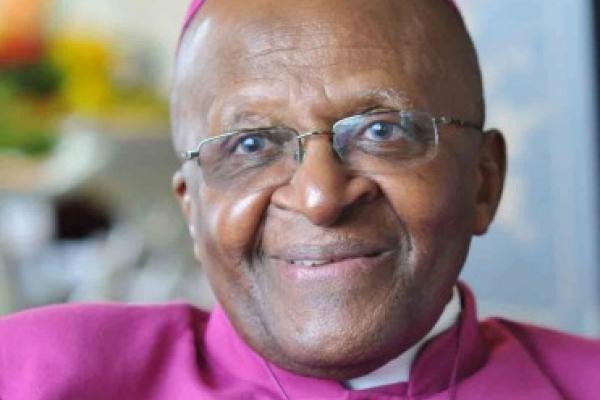
Desmond Tutu, the former Anglican archbishop of Cape Town, South Africa, who won a Nobel Peace Prize for his battle against apartheid, has won the 2013 Templeton Prize, which is billed as the most significant award in the field of spirituality and religion.
Tutu, who has not been afraid in recent years to criticize leaders in his country and across Africa for humanitarian and political shortfalls, was cited for his work in advancing the cause of peace and the spiritual principles of forgiveness.
“By embracing such universal concepts of the image of God within each person, Desmond Tutu also demonstrates how the innate humanity within each of us is intrinsically tied to the humanity between all peoples,” Dr. John M. Templeton, Jr., the president and chairman of the John Templeton Foundation, said in a video statement released Thursday announcing the $1.7 million award.
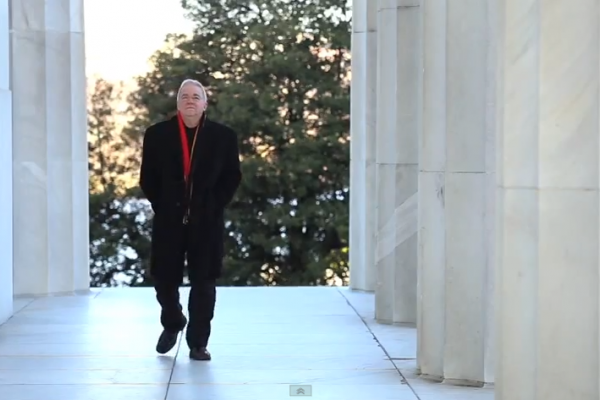
I recently went back to the Lincoln Memorial to tell the story of how and why I wrote my new book, On God’s Side: What Religion Forgets and Politics Hasn’t Learned About Serving the Common Good. And I reflected on my favorite Lincoln quote, displayed on the book’s cover:
“My concern is not whether God is on our side: my greatest concern is to be on God’s side.”
I invite you to watch this short video, and to engage in the discussion as we move forward toward our common good. Blessings.