
Wading into one of the most controversial fields of modern medicine, the Vatican is pushing adult stem cell research as ethical and scientifically more promising than embryonic stem cell research.
That’s despite assertions from many in the scientific community that that it’s important to pursue all types of stem cell research, including embryonic, to maximize chances of finding cures for diseases.
Harvesting embryonic stem cells requires the destruction of fertilized embryos — which are considered nascent human life in Catholic doctrine. Adult stem cells can be safely taken from adult human beings.
The Vatican started promoting adult stem cells in 2011, when its Pontifical Council for Culture launched a collaboration with U.S. bio-pharmaceutical company NeoStem.
After years of secrecy, the leaks of classified information on the drone killing program in Pakistan have turned into a torrent. Today, it was the McClatchy Newspapers, running two stories by national security and intelligence reporter Jonathan S. Landay.
The first examines in depth intelligence reports that covered most of the drone strikes in 2006-2008 and 2010-2011. Reviewing the killings covered in these reports, Landay concludes that:
“Contrary to assurances it has deployed U.S. drones only against known senior leaders of al Qaida and allied groups, the Obama administration has targeted and killed hundreds of suspected lower-level Afghan, Pakistani and unidentified “other” militants in scores of strikes in Pakistan’s rugged tribal area, classified U.S. intelligence reports show.”
The second, apparently using some of the same reports, reveals the history and extent of cooperation between the CIA and Pakistani intelligence. While Pakistan was aiding the U.S against al Qaida, CIA drones were aiding the Pakistani military against the Taliban.
“Even as its civilian leaders publicly decried U.S. drone attacks as breaches of sovereignty and international law, Pakistan’s premier intelligence agency secretly worked for years with the CIA on strikes that killed Pakistani insurgent leaders and scores of suspected lower-level fighters, according to classified U.S. intelligence reports. Dozens of civilians also reportedly died in the strikes in the semi-autonomous tribal region of Pakistan bordering Afghanistan that is a stronghold of al Qaida, Afghan militants, other foreign jihadists and a tangle of violent Pakistani Islamist groups.”
Both stories are long, both are well worth reading. Taken together, they reveal more secret details of the drone killing program.
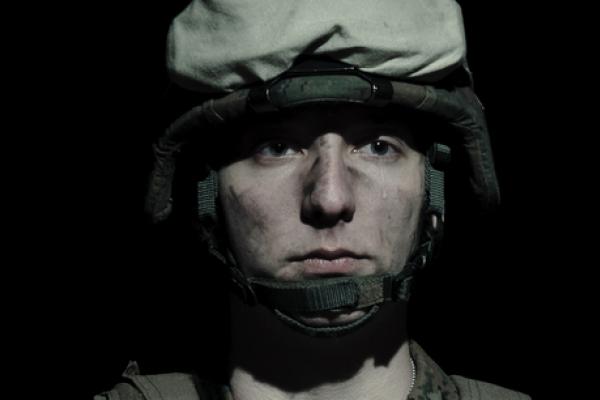
My Uncle Norman fought in Europe during World War II. An artillery observer, he didn’t return with many “heroic” stories to tell. When I was little, he would roll out some souvenirs from the war, and I’d be impressed: German military dress knives and lovely table linens. I don’t recall all of the stories or how these things became his, but I’m pleased to report the table linens were a gift. His war experience was hardly glamorous.
Uncle Norman did tell of one harrowing experience. He and his partner were identified by German artillery, and they experienced exactly the treatment they dished out. Out in front of their own unit, as they always were, they heard a shot go just overhead and explode behind them. Then one fell just short. Placing a shell a bit to the left and one to the right, the Germans had them zeroed in. Uncle Norman’s friend panicked, frozen, stuck to the ground. And in the last minute – as he remembered it – my uncle tackled his partner and carried him to safety. Pretty dramatic stuff for a kid to hear.
When Uncle Norman was much older, he came close to death after gall bladder surgery. That night he experienced profound nightmares, the Lady Macbeth experience of bloody hands he could not cleanse. The next day, he told me a very different story than the ones I’d heard before. I believe I was the first to hear of the time when he called in the coordinates for an intersection across which a significant body of Germans was crossing. For 30 minutes, he said, he watched the effects of the barrage he had targeted. And now, 40 years later, his hands wouldn’t come clean.
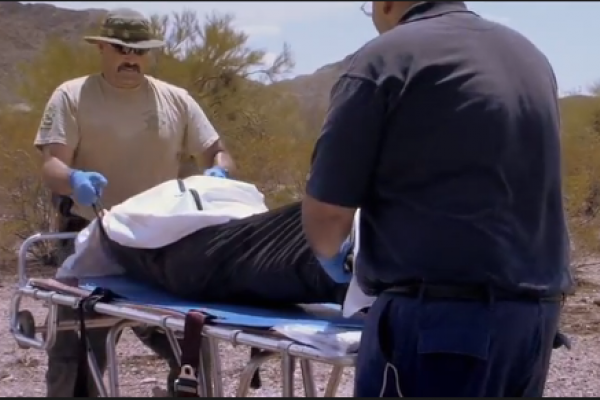
At the Full Frame Film Festival in Durham last week, I saw Marco Williams’ new documentary, The Undocumented, which tracks migrants as they hike into the United States across the border between Mexico and Arizona, trying to escape the detection of border patrol agents, and trying to survive the deadly heat of the Sonoran desert.
The documentary follows a young man, Marcos Hernandez, as he tries to find his father, Francisco, who was last seen in the desert walking for days in the 120-degree summer heat. Francisco left their home in Mexico with a coyote — man he paid $2,000 to lead him across the border — to make enough money to pay for his son’s expensive dialysis treatments. But he never called; he never returned. The coyote reported that he left Francisco in the desert because he was sick and couldn’t keep up with the other migrants in the group. Marcos fears the worst — that his father died of dehydration, of heat exhaustion. But to confirm the death he has to find the body.
The filmmaker focuses on the morgue in Tucson, Ariz., where the medical examiner investigates human remains, looking for clues that would help identify the dead in order to return whatever is left to family members and friends, to provide some kind of closure, to honor the dead with a burial.
In the film, Marcos won’t believe his dad is dead until he can see his dead body, or whatever is left of his body — a skull, teeth, his rib cage. He will not believe unless he can see.
“Unless I see the mark of the nails in his hands, and put my finger in the mark of the nails and my hand in his side, I will not believe” (John 20:25). That’s what Thomas says to the other disciples about the resurrected Jesus; and what Thomas says about needing to see the body reminds me of the story of Marcos, about the need to see in order to believe.

I just returned from a weeklong visit to Cuba. A team of seven people from First Baptist Church Greenville went to be with and learn from our partner church in Guanahay, Cuba — La Iglesia Bautista del Camino. After time in such a colorful country, here are some colorful thoughts of my own for three of our Cuban friends.
If Javier were a color, he would be blue. He is kind. "It is important to look each other in the eyes," he said on Easter morning. "So look into each others’ eyes, really, now, look into each others’ eyes, for at the end of the day you will be able to say that you have looked into the eyes of Christ."

March Madness ended with an exhilarating April flourish on Monday as the Louisville Cardinals defeated the Michigan Wolverines and became the new kings of college basketball after a tense 82-76 win in Atlanta.
But the euphoria that always accompanies the popular NCAA tournament may be short-lived this year, as media attention returns to an unprecedented spate of crises that have prompted grave concern about the ethics of college sports.
Chief among the outrages is the ongoing backlash over an abusive basketball coach at Rutgers University, but the sex abuse scandal in the Penn State football program also remains fresh in the public’s mind.
A litany of other alleged acts of malfeasance involving the NCAA, big-time schools, high-profile coaches and student athletes also continues to undermine the credibility of college programs, while concerns are growing about the pernicious influence of huge television contracts, especially for college football games.
Yet amid this tumult, a brand-new basketball conference composed almost entirely of Catholic schools is set to emerge this summer, which some say could point the way toward a new, or perhaps old-fashioned, model of college sports — and maybe even burnish the church’s image along the way.
Church is being reinvented. So are technology and education. And all for the same reasons.
Facebook just started moving Google’s cheese with its launch of Home. An army of upstarts in Silicon Valley is challenging the hegemony of Microsoft. Nothing is staying the same; disruption is the path to prosperity.
The reason: the marketplace is highly dynamic. New needs emerge. New products stimulate new needs. New entrants want to make a difference right away. Problems and opportunities multiply faster than bureaucratic pillars can respond.