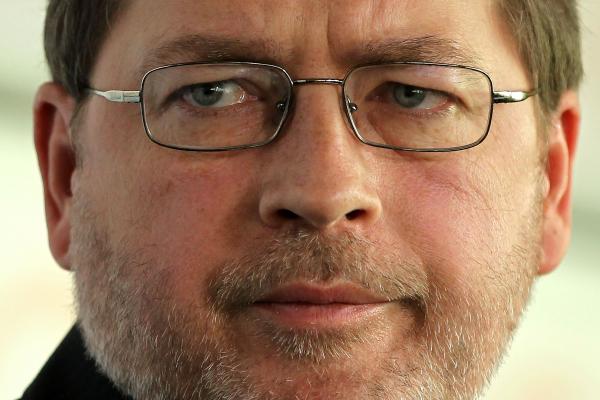
Soon after George W. Bush won his first presidential election, Washington lobbyist, Grover Norquist, helped craft the tax cut legislation that would go down in history as “the Bush-era tax cuts.” Among other things, the legislation dropped top marginal tax rates from 39.6 percent to 35 percent and was written to expire on Dec. 31, 2010.
In 2010, Democrats tried to put forward two separate packages of legislation that would extend the cuts, first for earnings up to $250,000, then for earnings up to $1 million. The Democratic-led House passed both bills, but Republican filibuster blocked both in the Senate. President Barack Obama resolved the stalemate by extending all the Bush tax cuts for two more years.
Here’s the irony: Republicans claim to hate deficits, but the facts are clear. If extended indefinitely, the Bush-era tax cuts will account for nearly half of America’s budget deficit by the year 2019.
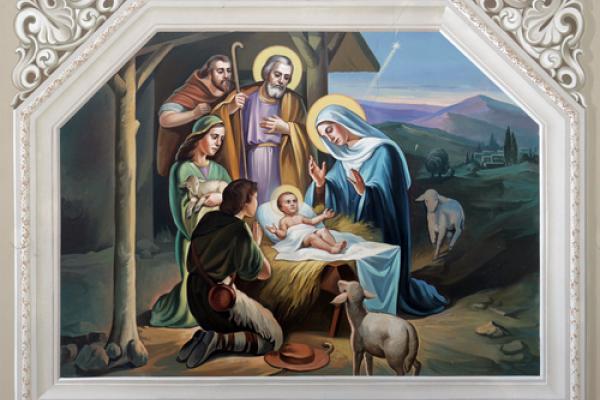
Ah — I LOVE this time of the year!
Some people wait with bated breath for duck season, some for deer season, but for me it is all about Christmas season. That's right, I'm one of those lefty liberals that have declared a War on Christmas. Yes! Sign me up for the War on Christmas!
But maybe not for the reasons you might imagine.
While I am signing up to help in a War on Christmas, I'm not on, what by default gets called, the “non-Christian” side. I’m also not signing up for the side that news pundits falsely purport as the “Christian” side. If anything, I’d make the argument that the dominant face of Christianity, as it is seen on television and promoted through news programming, is itself far from what Christianity is supposed to be. It is a sort-of white-washed, sanitized version of Christianity that every year presents an increasingly cleaned up version of the Christmas story to the viewing public.
WASHINGTON — As a coalition of mostly Christian groups gathered here Thursday to support church leaders who have publicly questioned U.S. aid to Israel, those same church leaders signaled that they want to reconcile with the Jewish groups who were upset by their action.
An Oct. 5 letter asking Congress to investigate U.S. aid to Israel led Jewish groups to cancel a long-planned meeting later that month of the Christian-Jewish Roundtable, a eight-year-old group dedicated to improving relations between the two faiths.
The Rev. Gradye Parsons, the top official of the Presbyterian Church (USA) and the first signatory on the letter, did not attend Thursday's Washington press conference that was convened to support its message. But Parsons said he stands by the letter, and acknowledged that it heightened tensions between Jews and Christians on the roundtable.
“We regret any distancing it put between us and our Jewish partners," he said, "and we hope we can close that gap."

After November’s presidential vote, Catholics could cite ample evidence for their renewed political relevance while dispirited evangelicals were left wondering if they are destined to be yesterday’s election news. Yet their roles in American spiritual life may be reversed.
New research shows that Catholics now report the lowest proportion of "strongly affiliated" followers among major American religious traditions, while the data indicates that evangelicals are increasingly devout and committed to their faith.
According to Philip Schwadel, a sociologist at the University of Nebraska-Lincoln, in the 1970s there was only a five-point difference between how strongly Catholics and evangelicals felt about their religion.
By 2010, he said, that “intensity gap” had grown to around 20 points, with some 56 percent of evangelicals describing themselves as “strongly affiliated” with their religion compared with 35 percent of Catholics. Even mainline Protestants reported a higher level of religious intensity than Catholics, at 39 percent.
Corruption has gone too far. The righteous must break away. Hope now rests with a holy remnant that will honor foundational texts.
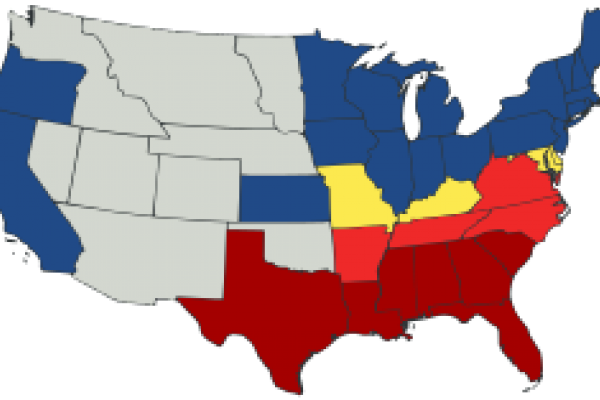
The message sounds familiar. A church schism? No, mounting calls for secession from the United States.
Since President Barack Obama won re-election, more than 750,000 Americans have petitioned the White House website to let their respective states secede, from Alaska to Iowa to Maryland and Vermont. Those leading the charge are framing it, observers say, in terms that suggest a deep-seated religious impulse for purity-through-separation is flaring up once again.
But this time, it’s playing out on a political stage.
“Today's secessionist movements are just the latest example of a long parade of breakaway groups [in American history] seeking to restore some lost ideal,” said Peter J. Thuesen, professor of religious studies at Indiana University-Purdue University Indianapolis. “The problem is that the ideal is invariably a mirage.”
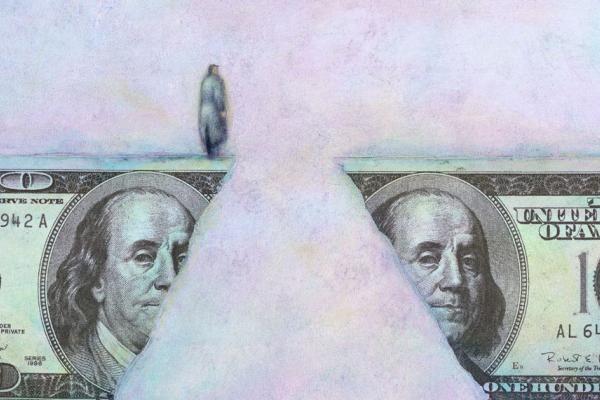
Now that the election is over, policymakers and the media have refocused their attention on the looming budget battles in Washington. In January, a variety of tax increases and spending cuts will go into effect unless Congress and President Barack Obama agree on a plan to avoid what has been deemed “the fiscal cliff.”
As the country braces for another fiscal showdown in the nation’s capitol, here are five things you need to know on the issue likely to dominate the news over the next several months.

I’ve been asked how I knew I was called to be a writer. For me, calling is fairly easy to recognize. If the thought of doing something fills you with equal parts joy and terror, it’s probably a calling.
There’s more to it than that, I suppose, since the idea of buying a new Tesla sports car fills me with both feelings too, mostly because my wife, Amy, would kill me. There are other elements, like the conviction that our calling should feel something of an identifiable need in the world, and that it should call on gifts we have in a way that is life-giving not just to others, but joyful and life-affirming for us as well.
But the joy and terror thing is a pretty good sign you’re on the right track.