
Editor's Note: The following is a statement by Jim Wallis given at the kickoff of the National Strategy Session — a gathering faith, law enforcement, and business leaders who are reaching consensus on common-sense immigration reform. Throughout the week, the group is calling on Congress to create a road to citizenship for immigrants contributing to our society. You can follow a live stream of the press conference and strategy sessions HERE.
It’s quite an accomplishment to get Bibles, Badges and Business together all in one room and agreeing on something this big. This reminds us all that Christmas and the holiday season really is a time for miracles. It’s enough to make you believe there is a God! The country is hungry to see our political leaders work together and find a bipartisan solution to an issue of this magnitude. I have faith that comprehensive immigration reform is that common ground. And if we do this, who knows what else it might lead to.

One of the great debates around Christmastime for Christians is whether to encourage or allow the belief in Santa Claus. I have friends and family on both sides of this debate, so I want to be careful here. I have a great deal of respect for the desire to keep the focus on Jesus and his birth at this time of year. I want to encourage that focus, too.
And, yet, I allow my children … I encourage them even … to believe in Santa.
We — my husband and I — don’t just stop there. We also have elves that visit our house every year during this season. Some would say that at best I am distracting from the message of Christ. At worst I am lying to my children.
The line between fantasy and falsehood is delightfully fuzzy during childhood. God created it to be this way and it is so important for a child to be able to play in this grey area.

Most Americans say that employers — even religious ones — should provide birth control coverage to their employees, according to a survey released on Monday.
The poll by LifeWay Research also showed that almost two-thirds of Americans (63 percent) believe businesses should be required to provide the coverage for free, even if contraception conflicts with the owner’s religious ethics.
As part of the Affordable Care Act, the 2010 health care reform law, President Barack Obama issued regulations that require most employers, including some religious ones like Catholic colleges and hospitals, to provide birth control coverage. The administration has said it may expand the policy to accommodate additional religious organizations.
More than 600 representatives from the United We Dream network, the largest young adult immigrant movement in the country, have signed on to a new platform calling for an “inclusive pathway to citizenship” that includes DREAMers, their parents, and their communities. The group is pledging to hold both parties accountable and pressure them to create a roadmap toward citizenship for the 11 million undocumented immigrants in the country.
On my desk, next to my laptop, is a can of seltzer water. My grapefruit-flavored, bubbly water sits about four inches away from my left hand as I write. When the can is empty, I might take another from the fridge or fill up a water bottle at the kitchen sink.
Water drives my day, but I rarely think about it. I cook pasta in it. I heat water to make tea. I fill a bucket to mop the floor and a draw a bath with hot water and soak in it. At the moment, my dishwasher is growling away, and I’m waiting to hear the pleasant beep that alerts me that the clothes in the washer downstairs are clean.
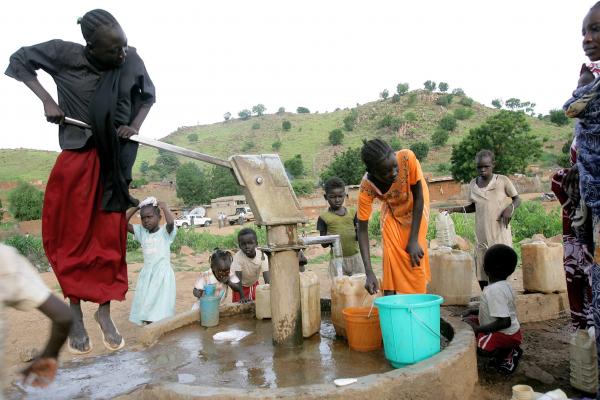
I’ve never considered water a women’s issue. Not until this past week, that is. On Friday, the day before World AIDS Day 2012, I had the privilege of attending World Vision’s Strong Women, Strong World luncheon in New York City. Strong Women, Strong World is a new initiative “supporting sustainable change in some of the difficult places in the world to be a girl or a woman.” The focus of the day was water.
The Honorable Melanne Verveer, U.S. Ambassador at-large for Global Women’s Issues, spoke at the event. She celebrated the progress humanitarian organizations such as World Vision have made in the effort to eradicate HIV/AIDS, but reminded us that the number of people living with HIV is at an all-time high. In 2010, HIV/AIDS killed 1.8 million people. Sixty percent of those living with HIV are girls and women, and AIDS is the leading cause of death of women of reproductive age (15-44 years old) globally.
“HIV,” Ambassador Verveer said, “has the face of a woman.”

Delegates from around the world are meeting in Doha, Qatar this month to discuss United Nations’ climate policy. In the past, these meetings were a source of hope for the environmental movement, as governments came together and committed to reducing emissions to collectively try to halt climate change.
Unfortunately, that is no longer the case.
Remember the Kyoto Protocol? Even though the reductions it mandated were nowhere near what’s required for us to reverse the trend we’ve started, we haven’t even come close to achieving those reductions. Oh yeah, and the United States didn’t even sign it.
The Protocol is expiring this year, and the U.N. Framework Commission on Climate Change (the body that created the Protocol — stick with me here) is trying in Doha to extend it for a couple years until they can reach an agreement on how to move forward.
So what’s holding the discussions back?
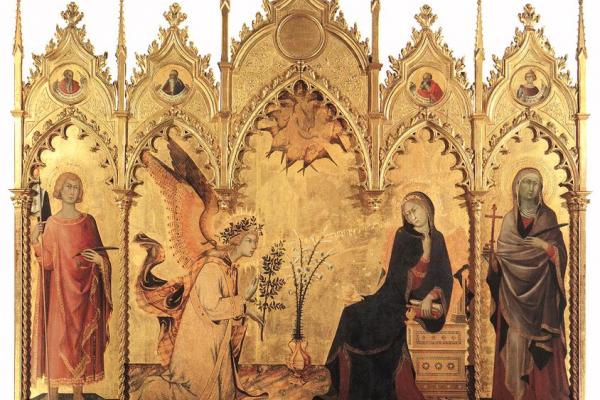
In the sixth month of Elizabeth’s pregnancy, God sent the angel Gabriel to Nazareth, a town in Galilee, to a virgin pledged to be married to a man named Joseph, a descendant of David. The virgin’s name was Mary.
The beautiful anonymity and soft innocence of a young girl in Nazareth would be stripped by an angelic visitation. Who could ever envision the global veneration soon to commence? This Holy Virgin of Martini's masterpiece cannot be Mary's vision. The gilded, enthroned Mother of God, Blessed Virgin, Theotokos, Panagia. Millenia of adoration blurs the humanity of such a terrifying moment in the life of a child.
The angel went to her and said, “Greetings, you who are highly favored! The Lord is with you.”
Gabriel's praise for her resounds the Earth this Advent Season. Martini paints the words spouting from Gabriel's mouth, invading Mary's space. Her shoulder shrug speaks to Luke's revelations of her humanity. The Gospel record exposes her vulnerability and reluctance to embrace such a startling event.

As President Barack Obama comes off of a substantial second victory, many pundits have pointed to the youth vote and a significant factor in his most recent success. Reports show that 60 percent of young voters cast ballots for Obama, while only 36 percent voted for Gov. Mitt Romney's more conservative policies. While many older voters believe this suggests young voters are unaware or uninterested in the nation's economic concerns, a major platform in the 2012 election, a number of polls suggest the economy is actually a top priority for most young voters. As it happens, though, young people seem to have very different ideas on how best to handle economic instability than their older counterparts.