
Congress is due to recess soon, but members are trying to pass a bill attempting to increase the availability of high-skilled visas for the tech industry before adjourning at the end of this week. While different versions of the legislation exist, the fundamental goal is to allocate more visas to foreign-born graduates of U.S. universities who have obtained a master’s or doctorate degrees in science, math, technology or engineering (STEM) fields.

“Sticks and stones can break my bones, but words can never hurt me.”
How many of us grew up with this old adage ringing in our ears? How many of us believe it’s true?
I’ve gone back and forth over the years. I understand that the saying is an invitation to turn our backs on harsh, mean-spirited words thus robbing them of their power, but how many of us are really capable of simply doing that? The truth is words do hurt and sometimes they do more than hurt. Sometimes they are downright destructive and on a large scale.
I think this is what the writer of James is getting at in this morning’s text. Words, the works of our tongues, can be used for good and evil. It is not always easy for us to shape our words and move our tongues in a fashion that serves our faith, our calling as Christians, our work for the reign of God on earth.
One important spiritual discipline, one vital element to our faith formation, then, is learning to tame the tongue. That is, we are challenged to develop custody of our speech in such a way that good news is proclaimed and people are lifted up toward the fulfillment of their creation in the image and likeness of God. Remember, James is especially concerned that we align our words and our work so we both “talk the walk” and “walk the talk.”
If we are offspring of the heavenly parent, if we are made in the likeness of God, how should that shape our speech and control the way we wag our tongues?
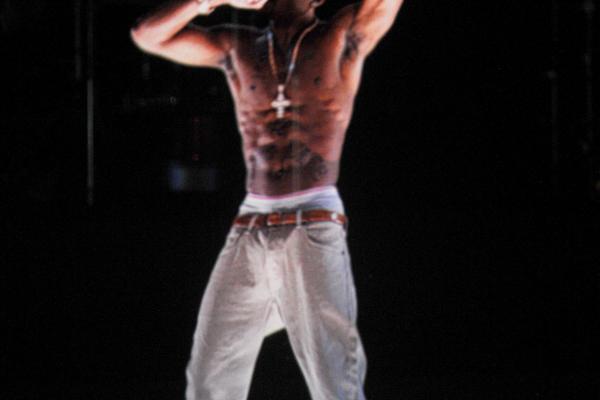
PORTLAND, Ore. — Hip-hop's all the rage at universities and seminaries these days.
Scholars parse its angry and often violent language. They sift out refrains of religious redemption or clever critiques of modern culture. In some traditionally African-American divinity schools, the rise and fall of response and call, old-school black preaching, is giving way to intricately rhyming rap.
Dozens of pop culture books have been written about using hip-hop to evangelize young people, to relate to their lives and bring them into the organized church. But Monica R. Miller, a visiting professor of religion and popular culture at Lewis & Clark College, warns that looking for religion in hip-hop is a risky proposition.
"Seeing isn't believing," she says. Listeners who point to religious words in lyrics and assume their meaning, or those who spend hours trying to discern some artist's systematic theology, may be wasting their time and effort.
Her new book, Religion and Hip Hop, argues that shared vocabulary doesn't equal shared meaning, and religious language sometimes sells rather than saves. In an interview, Miller talks about religion, hip-hop, and whether and how they overlap.
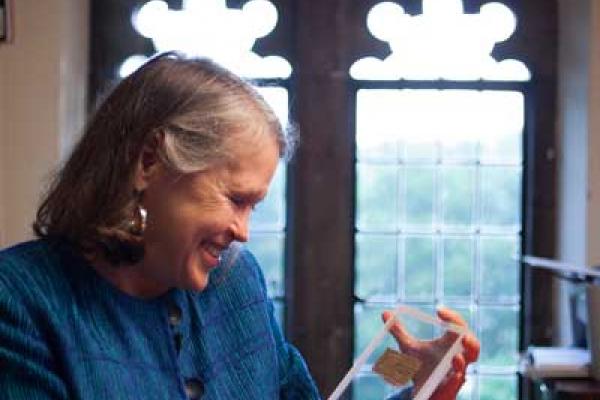
In a surprise announcement that seemed scripted by the novelist Dan Brown, a Harvard professor revealed an ancient scrap of papyrus on Tuesday (Sept. 18) that purports to refer to Jesus' wife.
The so-called "Gospel of Jesus' Wife" presents a dialogue between Jesus and his disciples, said Karen King, a well-respected historian of early Christianity at Harvard Divinity School.
The fourth-century fragment says, "Jesus said to them, 'My wife ...,'" according to King. The rest of the sentence is cut off. The fragment also says "she will be able to be my disciple," according to King.
The discovery that some ancient Christians thought Jesus had a wife could shake up centuries-old Christian traditions, King suggested.
But even King acknowledged that questions remain about the receipt-sized scrap, which contains just 33 words and incomplete sentences. Here are five of the biggest questions.

My heart is heavy.
Every day for the last week, media outlet have told their version of the current uprising stretching across the Middle East (Egypt, Libya, Yemen). Whether it’s pictures of embassies burned to the ground, rioting citizens, or highly politicized comics, the surge of content has been anything but “feel-good” and hopeful.
And that’s because the events and corresponding responses have been anything but “feel-good” and hopeful.
My heart breaks because I know the events that are unfolding do not represent the majority of those who inhabit the Middle East. I spend a significant amount of time in there and have built deep, life-long friendships.
Just two weeks ago I sat around a table and shared a meal with Christians, Jews and Muslims in the home of a devout Muslim family in the region. A day after that, I served alongside Muslim youth workers who are promoting non-violence and reconciliation in the face of oppression and poverty.
On the same day, I sat with an Arab Christian who embodied Jesus’ teaching in the Sermon on the Mount in dealing with daily injustice by saying, “We refuse to be enemies.” Lastly — and what keeps playing over and over in my head — are the words spoken to me by a Muslim friend named Omar who said,
“Please give this message to all of your American friends. We (Arab Muslims and Christians) desire peace. The violence you see in the news does not represent us. It is not the majority, it is the smallest minority of extremism. Please listen to our story and accept our friendship.”
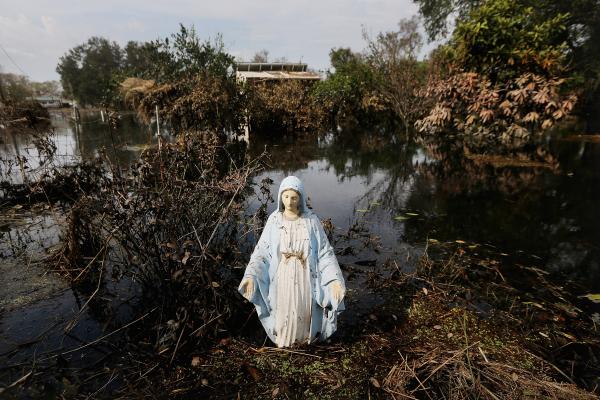
NEW ORLEANS — Faith-based ministries and local charities that are ramping up relief efforts after Hurricane Isaac say it's already clear that recovery will proceed without the national outpouring of money and volunteers triggered by Hurricane Katrina.
"From our point of view, the biggest challenge with this disaster will be getting attention and money," said Gordon Wadge, president of the New Orleans chapter of Catholic Charities.
"This is going to be on the local community — with a few national folks who follow us closely and who will rally to us."
That's a stark contrast to the conditions relief directors saw in 2005, after nationally televised images of human misery from Katrina burned themselves into the national psyche. Within weeks, faith-based ministries and secular relief groups promised to funnel millions of dollars into New Orleans over five years.
Muslim and Coptic Christian leaders in the U.S. are pledging not to let a spate of violent protests in some 20 Islamic countries derail recent efforts to improve the sometimes troubled relations between the two communities.
On Sept. 18, the Egyptian government ordered the arrest of seven Egyptian-born Copts now living in the United States who were allegedly involved in an anti-Muslim film that portrayed Islam's Prophet Muhammad as a bumbling sexual pervert.
“We cannot allow the actions of a few deceived fanatical individuals to define our communities,” said Bishop Serapion, head of the Los Angeles Diocese of the Coptic Orthodox Church, speaking during a press conference on Sep. 17 with Muslim leaders in Los Angeles.
“We call on members of both religions to lean on our faiths to counter the hate and the violence with good speech and positive work,” added the Egyptian-born bishop.
The show of solidarity comes almost a week after protesters in Egypt, where about 10 percent of the 90 million Egyptians are Coptic, attacked the U.S. embassy, setting off protests in other Muslim countries, including neighboring Libya, where American ambassador Christopher Stevens and three other Americans were killed.