The Hungry Spirit

THURSDAY NIGHT is baking night at Panadería El Latino on 11th Street. Early Friday morning, the bakers pull their weekend supply of pan dulce from the ovens. Racks and racks of conchas, cuernos, and galletas—in eye-popping yellows and pinks—are set out to cool. The entire street is redolent with yeast, cinnamon, and sugar.
From the outside this bakery looks like any another boarded-up building. “The only indication this isn’t a crack den,” one local points out, “is the overwhelmingly delicious smell of baked goods.” El Latino distributes to corner bodegas across the metro D.C. area. But, if you brave the exterior, you can get three sweet rolls for a buck. Bread of heaven!
Extending our tables to feed the multitudes is a practice Jesus asks us to imitate (Matthew 14:16). When Jesus hosted that feast for “more than 5,000” with “only five loaves and two fish,” it was called a miracle. But the mystery wasn’t in magic math. Rather this is a tale of two parties. In Matthew 14:13-21, the dilemma was that there was too little food and too many people. But in the preceding verses, there was too much food and too little humanity.
Matthew 14:1-12 tells the story of Herod’s birthday party. Here, only the upper 1 percent, the elite and powerful, are gathered in a setting overflowing with the rarest wines, mountains of meat, and the finest breads. But Herodias’ daughter demands a different dish. The main course is served to her on a platter: It is the head of John the Baptist.
OFFICER MARIO normally worked for Homeland Security. On this Friday night he’d been seconded to the Washington, D.C. Metro police, who had their hands full. Not only did they have the usual “drunk and disorderlies,” but now 54 people who looked like card-carrying members of the AARP were filling up their holding cells. Officer Mario, of retirement age himself, was feeling fortunate. He’d been assigned to the women’s side.
“Ladies, ladies, ladies!” Mario said, sauntering in with a mischievous smile. “This must be my lucky night.”
The evening before, we’d all been at St. Stephen and the Incarnation Episcopal Church running role plays on how to “flash mob” the corporate headquarters of Environmental Resources Management (ERM), the firm hired by the U.S. State Department to provide an environmental impact statement on the Keystone XL pipeline. To the disbelief and concern of climate scientists, ERM claimed that TransCanada’s Keystone pipeline would not significantly contribute to climate change. ERM was suspected of “misleading disclosures” regarding conflict of interest and material gain from the pipeline’s completion.
Our white-haired mob of mostly grandparents converged on ERM headquarters at noon to shine a light on such shady dealings. While six silver foxes blocked the elevators by chaining their arms together inside a PVC pipe, I watched two D.C. police lift Steve, age 70, and toss him into the crowd behind me. I knew this nonviolent civil disobedience wasn’t going as planned.

THE METRO IS crowded today, and the 20-something, well-dressed white man has to stand, one hand holding the bar and the other his smartphone. It’s the end of the day. All the commuters—but one—are turned toward home. The young man’s face, like most of the others, is dulled with exhaustion. No one makes eye contact.
In a seat near the door, one woman sits facing everyone, looking backward. She studies the young man’s face intently, uncomfortably. He shifts. She rearranges the bags at her feet. Her reflection in the window shows an ashy neck above her oversized T-shirt collar. The train hums and clicks through a tunnel. As if in preparation, she takes another sip from the beat-up plastic cup she’s holding.
At last, she raises her voice and asks: “Why are white people so mean?” Boom! The electricity of America’s third rail crackles through the train. Faces fold in like origami or turn blank like a screensaver.
But this was no rhetorical question. When no one answers, she asks again, this time aiming her question at the young man with his phone. A flush creeps up his neck. “You look like you could be a sheriff,” she says to him. “Good and mean. I can see it in your eyes. You got mean eyes.” When he realizes her attention is stuck on him, he replies, “I hope I’m not mean. I try to be good.”
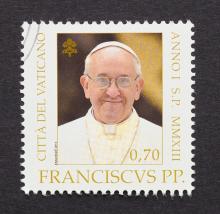
I WAS 15 when Pope Paul VI died in 1978. He’d been pope my whole life. Elated at the election of John Paul, I followed his papacy with all the obsessive focus of a teenager. When he died 33 days later, I simply didn’t know what to think. (His book Illustrissimi, a collection of letters written to saints, novelists, and artists, is one I return to for insight on Catholic imagination.)
During John Paul II’s 27 years as pope (the second longest reign in papal history), a dangerous nostalgia for a pre-Vatican II church was encouraged to flourish.
Under Pope Benedict XVI, that nostalgia came to fruition. The Latin Mass was re-established in many parishes. Amid a worldwide sex abuse scandal, liturgical correctness and “fancy dress” were too often elevated over children’s protection, victims’ needs, and institutional transparency. Women and girls were pushed further off the altar. To be gay, female, divorced, or a single mother—all these pushed one further from the table of the Lord, rather than drawing one nearer.
And now we have Pope Francis. When Jorge Mario Bergoglio announced he would take the name Francis, after Francis of Assisi, I wept. To have the Poverello (the “poor one”) at the center of our Catholic faith is right and just—whether that poor one is a 13th century itinerant preacher or a child in the villas miseria around Buenos Aires.

FROM THE RIVER to the rope. From the creek to the cross. From the dove and a "voice from above" to death by state execution and profound silence.
This is Lent. This is the Jesus Road, the Christian way. O Lord, how can we follow you?
Lent is time of remembering ourselves. In the ancient church, those preparing for baptism were publicly challenged: Do you renounce your bondage to Master Satan? Do you reject the slave-mind and all its glamour and subtle temptations? Will you allow Christ to buy your freedom?
The catechumen turned to face the east and the dawn, answering: "I give myself up to thee, O Christ, to be ruled by thy precepts."
It is Lent. We go down to the river to pray. We step into the waters of repentance. We surface as a new creature in Christ. From that moment onward, we imprint on Jesus. This is our survival strategy as newborn disciples. We follow him, like ducklings behind their mother.
After his baptism in the Jordan River, Jesus is driven straight out—into the unloved places, into the wilderness. There he is pricked by demons to toughen him up. He is being prepared. He must look into his own despair. Satan is the supreme surgeon for separating us from our hope.
DURING THE unseasonably warm autumn of 1951, 22-year-old Martin King Jr. began his doctoral work in systematic theology at Boston University. Wearing his good suit in a stifling classroom, he was first introduced to the work of philosopher and ethicist Josiah Royce. King read Royce's well-regarded 1913 book The Problem of Christianity and wrestled with Royce's metaphysical values of loyalty, communitarian ideals, and the role of the individual within a group.
But don't let the high academic or philosophical language fool you. Royce was interested in only one thing: Love. It was the hidden heart of all his endeavors. And King began to study—and embrace—Royce's most important philosophical concept: the Beloved Community.
Though Royce had first written about the Beloved Community nearly 40 years earlier, King heard it in the context of his own time and place. He heard it in the context of the insidious Jim Crow laws of the South. In 1951 he also heard it in the context of the bitter race realities of the North. The July before King started classes at Harvard, a race riot had erupted in Cicero, Illinois, outside Chicago. A mob of whites attacked an apartment building that housed one black family, that of Harvey Clark Jr., a WW II veteran and bus driver who had moved into the all-white neighborhood.

HILDEGARD BLEW in on a late summer storm. Sleek and ebony, eyes a bright chatoyant gold. Between the Supercans and downed tree limbs, she was scratching up worms, plucking at bugs. In this nation’s capital of a little more than 600,000 souls, a loose hen was highly unusual—but there she was, in all her Gallus gallus domesticus glory.
Of course, she didn’t arrive with the name Hildegard. And certainly not Hildegard von Chicken, after a favorite Rhineland mystic. That came later. After she’d been interviewed and photographed for the DCist news blog; after she’d become a destination point for recently migrated hipsters; and after a woman running for local office asked if she could take Hildegard on the campaign stump to make her candidacy “more memorable.”
Hildegard received her name after a chance encounter with La Señora at the 11th street bus stop. “I rescued a chicken,” I told her. “What color?” she shot back.
La Señora is in her 70s and from Paraguay. She is knowledgeable about many things. “Black ... with a green undersheen,” I said. “This is very good. You have most likely rescued it from a religious ritual where it would be sacrificed for evil intentions.” “Wow!” I replied. “What should I do?” La Señora stared at me a moment: “You must pray the rosary with the chicken. Hold her and pray the rosary.”
THIS WAS THE series of curious events that led to my being perched on porch steps on a hill in the imperial city of Washington, D.C., holding my grandmother’s rosary and praying with a chicken, whose name I decided should be Hildegard, “Sybil of 11th Street,” because she was consulted by so many of high and low estate.
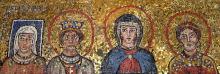
EVER SINCE THE apostles positioned Mary Magdalene as an “unreliable narrator” telling an “idle tale” in Jesus’ resurrection story, some men in the church have claimed maleness as normative and orthodox and femaleness as, well, not.
In the recent case of the Vatican vs. the Leadership Conference of Women Religious (LCWR), the integrity of women’s witness is, once again, called into question by male hierarchs.
These Catholic sisters represent an unbroken, cohesive expression of faith in the history of American Catholicism and in women’s presumption of equality, completeness, and active moral agency both under law and under God—a presumption that is a shining light for women around the world. The sisters might have once shared accolades for faithful servant leadership with their brother priests, bishops, and cardinals, but over the course of nearly 30 years of unfolding pedophilia scandal and blasphemous mob-like cover-up, the laity has learned to look to the sisters alone for examples of Catholic gospel witness and Christian maturity, strength, and just plain grit.
But let’s not sideline this issue as “a Catholic thing.” We don’t get off that easy. The struggle over women’s authority runs right through the denominational diaspora of the body of Christ.
Ada María Isasi-Díaz often quipped that she “was born a feminist on Thanksgiving weekend in 1975,” when she attended the first Women’s Ordination Conference in Detroit. At the time of her unexpected death in May at age 69, after fighting an aggressive cancer, she was acknowledged as the full-fledged mother of mujerista theology and recognized around the world for her critical contribution in shaping a feminist liberation theology for Latinas in the United States.
Ada was “a pioneer,” Catholic theologian Rosemary Radford Ruether told Sojourners. “She gave us a vision of justice and integrity for Latina women in the U.S. and the world that was inspiring”; her work is “an integral part of feminist theological thought.”
Ada María Isasi-Díaz was born in Cuba in 1943, the third of six sisters and two brothers. Her father worked in the sugar cane mills, and her mother nourished in Ada a love of Catholic religious practices and the importance of staying in the struggle (la lucha) for what one believes. Her family fled Cuba after years of civil war, and in 1960, at age 17, Ada arrived in the U.S. as a political refugee. Soon she joined the Ursuline sisters and, in 1967, was sent to Lima, Peru, as a missionary.
“I lived there for three years,” Ada wrote. “This experience marked me for life ... It was there that the poor taught me the gospel message of justice. It was there that I learned to respect and admire the religious understandings and practices of the poor and the oppressed and the importance of their everyday struggles, of lo cotidiano.”
During Lent I occasionally choose a gospel companion to guide me through the season. I slip in behind one character or another in the Passion narrative and walk with them on the road to Jerusalem. One year it was Mary of Magdala. Another, Claudia, wife of Pontius Pilate.
This year I was drawn to Mark’s “certain young man”—the one who flees naked from the violence in the Garden of Gethsemane on the Mount of Olives (14:51-52), leaving behind his linen cloth.
Scholars vehemently disagree about who this young man was. Many deduce that it’s the writer of Mark’s gospel inserting himself into the story. Others say he is reminiscent of King David fleeing from Absalom on the the Mount of Olives. Or that he foreshadows the “young man” in a white robe who will meet the women at Jesus’ tomb.
Whoever he was, in the midst of an encounter with violence, this “certain young man” lost what thin protection he had and fled into the night, into the selva oscura, as Dante calls it, those “dark woods.” Toward what, we do not know.
AS THE HUMAN soul matures, we are confronted with moments that force us to let go of yet another thin veil of self-delusion. The “right road,” the moral high ground, sinks into a thicket of gray.
The bigger the financial corporation, the quicker your dollar exits your community.
When, as is true today, the richest 10 percent own 85 percent of the world’s wealth and the poorest 50 percent live off the crumbs of 1 percent of the total global wealth, you’ve created a market where slavery will thrive.
No one could stop Troy Davis' execution -- despite his apparent innocence.
My "life plan" -- at age 23 -- was to own little and to move where the Spirit led.
Last week the body of a young woman was found near my house. She was 17 years old. She'd been murdered. The garbage men reported finding her in a supercan in the alley.
It's often good to have a donkey with you when you pray. They provide a natural antidote to excessive piety. Take my recent retreat day at the Jonah House Catholic Worker community in Baltimore. Since 1992, the members of Jonah House have served as caretakers for a 20-acre Catholic cemetery that had been abandoned since the 1980s. Bit by bit the community is reclaiming the graveyard from the underbrush and overgrowth. It’s bordered by the Emanuel Tire Co. reclamation plant, a Section-8 housing complex, and the Maryland National Guard.
On All Saints Day I visited Jonah House to quietly pray the litany of the saints while surrounded by that "great cloud of witnesses"—both living and dead. It was a stunning autumn morning. Sunlight filtered through the red oaks. However, while walking the quarter-mile track around the graves and headstones, I was unceremoniously shoved from behind—hard.
This was my introduction to Vinnie the 3-year-old donkey. Despite the name, Vinnie actually is female. (The president of the St. Peter's Cemetery Foundation demanded that the next animal adopted into the community be named after him. What can you do?) And she's very strong. After I completed a few more circuits of the prayer walk—with Vinnie doing heavy prodding and me jabbing back hard between "amens"—we reached a rapprochement. I walked with a handful of grass in my left hand and Vinnie sauntered easily beside me, nibbling as we went. I felt like St. Francis. A victorious achievement in sacred cross-species communion.
"For God so loved the world ..." Lately John 3:16 won't leave me alone. It hovers above my shoulder as I read The Washington Post. Really, God? You love this world?