
José Humphreys III is an ordained minister, author of Seeing Jesus in East Harlem: What Happens When Churches Show Up and Stay Put, and co-author of Ecosystems of Jubilee: Economic Ethics for the Neighborhood (Zondervan, 2023).
Posts By This Author
Preparing Our Spirits for Midterm Elections
What is “crisis contemplation” and why do we need it now?
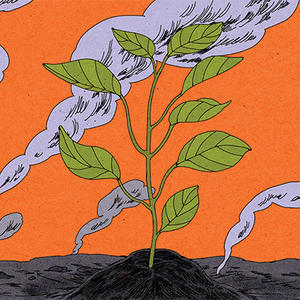
IN SOME WAYS, this November will be an ordinary national election in the United States. As is true in every “even” year, all 435 seats in the U.S. House of Representatives are up for reelection. In the U.S. Senate, 35 seats are up for reelection. In 2024, it was 34 seats; in 2022, it was 35. Incumbents tend to have an advantage in elections. All very normal.
A Letter to My Fellow Faith Activists
Weaving a tapestry of belonging in the United States will demand something different from each of us.

DEAR FELLOW FAITH ACTIVIST,
Over the years, I have seen how our country’s anniversary remains a source of pride for many, told as it is through the lens of cultural purity and exceptionalism. I regularly witness the country’s birthday celebration as if from a church overflow room, through a shiny screen—a flattened dream, as it were.
I Won’t Let Resentment Determine Who I Become
What Nelson Mandela’s life can teach us about healing and liberation.
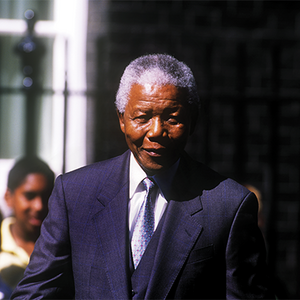
IN APRIL 1994, Nelson Mandela was elected as the first Black president of South Africa in the country’s first multiracial election. Before becoming president, Mandela was imprisoned for 27 years for his role in the African National Congress’ fight against apartheid. Mandela’s life was reminiscent of the biblical story of Joseph; it was a story of someone ascending from the prison to the palace, or in Mandela’s case, from Robben Island to Pretoria.
Bad Bunny’s Holy Halftime
Why it’s fitting that Bad Bunny’s Super Bowl show takes place during the Christian season of Epiphany.
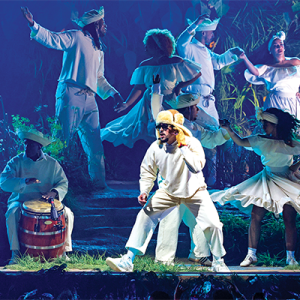
PUERTO RICAN MUSIC star Bad Bunny had quite the run this past year. In September, he was announced as the headliner of the Super Bowl LX halftime show. In October, Billboard recognized him as the top Latin artist of the 21st century. All of this was on the heels of his 31-concert residency on the island of Puerto Rico. The residency infused close to $400 million into the Puerto Rican economy, centering, and, for many, revealing the music and culture of Puerto Rico.
The act of revealing the beauty of humanity and culture is very much tied to the Christian season of Epiphany. Many Christians consider this season to mark the revelation of God enfleshed, encultured, and embedded in time and place. God chose to participate in human life in a little-known territory occupied by the Roman Empire. In choosing the obscure village of Nazareth, the Divine presence signified that Love, in the world, begins at the margins.
Learning How To Love From James Baldwin
Our public discourse and policy agendas would look very different if we truly believed every human being bears and reflects the image of God.

SOCIAL PSYCHOLOGISTS USE the term “infrahumanization” to describe the subtle belief that some people are slightly less human than others. This belief is particularly insidious because it goes beyond the scope of individual prejudice and affects how we see entire people groups.
We see this “less human” bias shown in the news cycles focused on the trauma in Gaza. While many of us are dismayed by news reports, we might also subconsciously believe that Palestinians grieve the loss of children and loved ones a little less than we do.
Here in the United States, some medical professionals falsely believe that Black women have a higher pain tolerance. This bias can lead to devastating medical neglect, as Black women die giving birth at a rate two to three times higher than that of white women.
The United States Has Failed to Honor Its Blackness
On cultural preservation, Arturo Schomburg, and “vindicating evidences.”
<p>
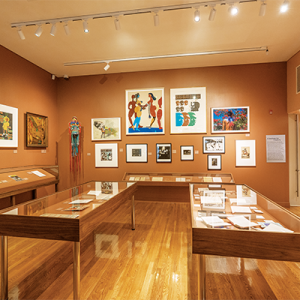
Centennial Exhibition / Jonathan Blanc / New York Public Library
</p>
IN MAY, THE Schomburg Center for Research in Black Culture, located in Harlem, N.Y., celebrated its 100th anniversary. Originally known as the 135th Street Branch Library Division of Negro Literature, History and Prints, it is named after Arturo Schomburg, a Black Puerto Rican from Santurce, Puerto Rico. He moved to New York City when he was 17 and is widely considered one of the great luminaries of the Harlem Renaissance.
Schomburg recalled an encounter with his fifth grade teacher, who told him, “Black people have no history, no heroes, no great moments.” That moment left an indelible mark. He would go on to dedicate his life to collecting artifacts, papers, and works of art from Africa and across the African diaspora. In his seminal essay, “The Negro Digs Up His Past,” Schomburg referred to his 10,000-item collection as “vindicating evidences.”
Since learning about Schomburg, I have reflected on how, as a Latino, Schomburg could have chosen to suppress the story of his own Blackness. Instead, he embraced his full Puerto Rican identity, Blackness and all.
Are You Also Feeling Overwhelmed These Days?
Discernment may help us cultivate resilience.

BsWei / iStock
These days, I’m finding it increasingly challenging to make it to Wordle or the mini puzzle without being emotionally activated by at least five headlines along the way. I know I am not alone.
Our country is in a precarious political moment. Every headline seems to be filled with the threat of President Donald Trump’s impact and intentions: This acknowledges the far-reaching, ominous, and almost omnipresent force that is our current administration.
I haven’t felt this overwhelmed since I had to shelter in place during the covid-19 pandemic. Yet somehow, it feels different this time. Back then, the foundations of our democratic republic were not threatened with such clear intent — except, of course, for that insurrection on Jan. 6, 2021. But now, the future seems even more perilous and uncertain. And that’s a valid reason to feel overwhelmed.
Making people feel overwhelmed is part of the authoritarian playbook. At its core, it is about exercising control over bodies; monitoring movement and expression; and fostering restlessness, worry, and numbness. In these times, prayerful discernment can be one of our tools for tuning in and identifying these powers and systems that theologian Walter Wink described as creating the “suffocating atmosphere of the present.”
Unlearning Machismo, Learning Love
Learning to be emotionally available will be some of the deepest and most spiritual work I will do.

stellalevi / iStock
AS A BLACK Puerto Rican, I grew up in a household that was as complex as a telenovela plotline. We lived within the intricate dance of traditional values. Mom ran the household with the precision of a general and the grace of a loving host, while Dad had veto power that he exercised sparingly. Like many women of her time, Mom was constrained by cultural narratives that persist today. Yet her wisdom taught me how the presence of power can move in the world in a way that signifies the divine. It was powerful — not in a forceful manner, but powerful like that dark invisible matter that holds the universe together.
Being curious and conversant with this divine love has helped me situate myself daily to decenter my machismo. Machismo, a close relative of patriarchy — but with a Spanish accent — is something I confront daily. Thankfully, I am married to someone who reminds me that her presence will not be a mere vapor in the world. Without this built-in community at home and church, I find, like many, that I can continue to externalize the work of justice: That is, I can be critical of systems and name what is wrong but unintentionally perpetuate the same injustices in my marriage or in my parenting.
The writer bell hooks has been instructive to me. She was a scholar and womanist who never wrote about the household as separate from a new vision of the world. In The Will to Change, she wrote, “The crisis facing men ... is the crisis of patriarchal masculinity. ... Our sons learn the code early and well, don’t cry, don’t be vulnerable; don’t show weakness — ultimately, don’t show that you care.” This book, with its invitation to dismantle toxic masculinity, is indispensable to the work of justice.
Why Faith Activists Need Embodied Joy
The surprising power of a two-step and a twirl.

Jiri Studnicky / iStock
IN HIS BOOK God’s Politics, Jim Wallis tells the story of his trip to South Africa during the apartheid era. During his trip, Wallis attended an ecumenical service at St. George’s Cathedral in Cape Town. While Archbishop Desmond Tutu was preaching, South African police entered the church — carrying recording devices to monitor for any anti-government sentiment — to intimidate the congregation and the anti-apartheid activists. Undeterred, Tutu reportedly continued to preach joyfully, becoming even more passionate in his truth-telling against apartheid. Moments later, the crowd spontaneously erupted in dancing and celebration.
Joy, in the form of dance, may have seemed inappropriate for the moment, but it was really a coded form of resistance and revolution. Even if dancing is not our forte, there is something we can learn from the way the congregation used this subversive, embodied art form.
A Time Traveler’s Guide To Resisting Extremism
Remembering “truth-fully” is vital for our politics.
Pandagolik / iStock
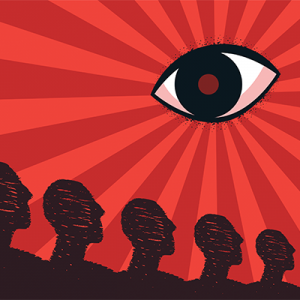
NOSTALGIA IS THE LEVERAGE of the powerful. When weaponized, it serves as a deft political tool. It plays on the sentiments of the disgruntled and disenfranchised. It creates a one-dimensional patriotism that never tells the full story. It preserves the story of privilege.
One white comedian reflected, “Here’s how great it is to be white: I could get in a time machine and go to any time, and it would be ... awesome when I get there,” he says. “That is exclusively a white privilege. ... A Black guy in a time machine is like, ‘Hey, if it’s before 1980, no thank you. I don’t wanna go.’” While this made for good comedic insight, many of my siblings of European ancestry who know the history of their ancestors — religious persecution and violence motivated some of their journeys to the shores of North America — also might not want to escape too far back in time.
Liberation Needs a Soundtrack
With our music and liturgy, the church can help create a sense of unity and healing.
master1305 / Shutterstock
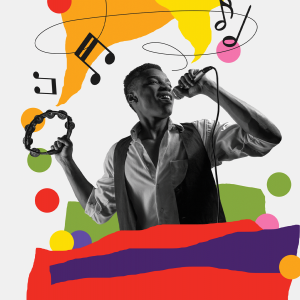
ABOUT 12 YEARS AGO, I was a part of a group of clergy arrested for civil disobedience. After we were placed in a police van, we began to sing freedom songs like “Ain’t Gonna Let Nobody Turn Me Around.” I remember that any lingering anxiety I had dissipated as we sang. The experience of music interlaced with our march for justice filled our senses and left an imprint among all those who were arrested.
This points to a larger truth: Music wields undeniable power in human experience. Though I’ve met many people who dislike a particular genre of music, I have never met a person who disliked music itself. When experienced collectively, music unifies. The church knows this and has historically emphasized its importance. Whether songs are led by a single person on a pipe organ, an elaborate rock band with blazing stage lights, or a thunderous, brightly robed choir clapping on the two and four, the sonically healing nature of music can draw a church assembly together into a state of unified resonance.
Poverty Is the First Trauma
But if trauma can be passed down generationally, so too can healing.

Annika McFarlane / iStock
EVER SINCE THE release of Bessel van der Kolk’s 2014 best-selling book The Body Keeps the Score, trauma education has proliferated. I have seen training in everything from trauma-informed lawyering to trauma-informed care in emergency rooms. Trauma-informed practices have even started making their way into some correctional facilities and corporate boardrooms. Yet much of the popular writing tends to focus deeply on the more personal elements of trauma, rather than systemic elements, such as poverty.
My colleague Derrick Stroud, who survived 27 years in prison and now is a clinician, once described poverty as the “first trauma” in communities of color. The impact of poverty increases the chances of both low educational attainment among children and placement in foster care; this, combined with the challenges faced by under-resourced schools, can become a pipeline to prison. Neighborhoods impacted by poverty can reinforce traumatic conditions, since residents are more likely to witness or experience violence or be profiled by the police. These ecosystemic conditions impact human bodies and produce negative health outcomes that can have detrimental generational effects — all of which can be traced back to under-resourced systems.
The Alchemy of Grief and Hope
Our personal formation depends on how we hold grief and journey with it.

Shanina / iStock
I RECENTLY HAD a conversation where I found myself feebly describing the pain of caring for an ill and aging parent. My wife, who is an exceptional curator of the emotional landscape, aptly identified my experience, my grief, as an “ache of the soul.” I find no better words for an experience so enveloping, so permeating through my body, my being, down to a cellular level — like a wave of loss that dredges the depths of the soul.
Grief can be complex and does not always begin with a terminal event. Surveyors of the human experience know well the “little” griefs that happen: the waning connection with the living; the loss of memory; the loss of energy and vitality. A once-doting parent who often inquired “Why haven’t you called?” no longer has the energy to do so. Meanwhile, whether relationships with our lost loved ones were good, complicated, or even nonexistent, the ache of the soul can be overwhelming.
Liberation Begins With a Decentered Self
Moving past capitalist aspirations to a collective imagination for flourishing.

undrey / iStock
WHEN I WAS 17, I attended a New York City business school with aspirations of becoming a rich accountant. I had it all planned out: I envisioned a corner office on Wall Street, towering high over the city with views of the Brooklyn Bridge. Each morning I was going to power-walk amid the Wall Street crowd. I never really knew what business people did for a living. My knowledge of Wall Street was limited to what I gleaned from movies and a story my father told me about my cousin the insurance broker, who “made good” for a while, but it didn’t work out for him, so he moved to Florida.
About three semesters in, I uncovered that I wasn’t wired for accounting, nor did I have the social networks that could reinforce such an endeavor. No one told me that accounting would be mostly about accounting for money that didn’t belong to me.
I had inherited a dream with little substance. I was infatuated with a vision that was like an elaborate Hollywood set. While my dream process was somewhat typical of teenage development, it nevertheless demonstrates how imaginations can be shaped by the far-reaching stories we receive. And our identities can become shaped by our service to capitalist aspirations.
Everyone Can Be An Action Hero
Paying attention to the “superpowers” among us.

cosmaa/iStock
TWO YEARS AGO I was introduced to De’Amon Harges, an expert in asset-based community development, by a mutual friend in Kansas City, who arranged to connect us due to our common pursuit of neighborhood flourishing. Harges described himself in his bio as a “roving listener.” When I later met him via Zoom, our conversation began with Harges saying: “José, tell me a story about yourself and your gifts.” I felt like I was being recruited into an ensemble of action heroes.
I responded by sharing my passion for being a collaborator and connector who supports people and neighborhood institutions around personal and collective flourishing. Our conversation was imbued with a cosmic energy as we swapped stories about our purpose in the world, as manifested through our purpose in the ’hood. Harges’ sacred curiosity made me feel buoyant, even seen and heard. In Harges, I connected with someone who bore witness to my gift in the world, and I was blessed to be awake to his gift when presented to me.
Ultimately, we live in a society that makes visible those gifts it deems most valuable. One only needs to search through the cultural happenings in New York City this fall. For instance, the New York Philharmonic hosts a stellar lineup of some of the best symphony orchestras in the world. In corporate America, CEOs will work to ensure their companies finish the last quarter well, to receive bonuses that average 74 percent of their annual salary. And paparazzi will chase Hollywood stars to produce tabloid fodder, showing how gifted people can be center stage even at our checkout counters.
Good News About Money
How the church can embrace an ecosystem of ‘enough for all.’

Illustration by Alberto Miranda
EVERY MONTH, TERRY KELLY sends a “rent” check to the Duwamish Tribe on behalf of Quest Church in Seattle, where Kelly serves as senior director of finance.
The church owns the property where it holds services. But the congregation’s monthly payment acknowledges and honors the Duwamish people and other original inhabitants of the land the church occupies, people who have never been “justly compensated for their land, resources, and livelihood,” as the Duwamish “real rent” program puts it.
Members of Quest Church are among the many people of faith who are reimagining the narrative of money in our world today.
The early Christian church was clear in its teachings that money was intended to be used for the benefit of the broader community, not for individual enrichment. But for centuries, and particularly since the Protestant Reformation, the institutional church has more often contributed to ideologies and illusions that reinforce the American form of hypercapitalism. And while money remains a highly visible reality in our everyday existence, our lived stories around money often go uninterrogated.
In America, our views about money tend to be very individualized. We ask questions such as: How is my money going to work for me? Will I have enough to pay bills or retire comfortably? What is my purchasing power? Even the story churches tell is often limited in scope, reduced to teaching about tithes, offerings, building funds, and missions giving. In some instances, we might see positive moves around personal budgeting and reducing debt. But church conversations about money are often left in the realm of personal finance.
A Just Economy Prompts Us to Normalize Jubilee
"How can we invite the church into seeing the economy beyond just a conversation on tithes and offerings?"

Nadia Bormotova / iStock
FOR SOME REASON, conversations about economics and the church are rare these days — even though scripture includes more than 2,000 verses on poverty, such as laws in the Hebrew Bible on debt, labor, and land ownership. In the gospels, Jesus had many conversations with people about their relationship to money.
Our daily lives wade in the waters of economics, even in the most ordinary ways. When I brushed my teeth this morning, for instance, I used a brand-name electric toothbrush and a brand-name toothpaste, one that claims to be gentle on tooth enamel. After leaving my apartment, I gazed ahead to the street corner, where a man with a familiar face extended his hand in need to passersby. On the streets of New York City, the human cost of economic insecurity is painfully evident. I made my way eastbound toward Park Avenue; the potholes had me pondering how my hood is often overlooked in the city’s infrastructure budget. Yet, somehow, new “affordable” luxury apartments pop up, seemingly out of nowhere; I sometimes wonder if these buildings just appear overnight, ready-made. I’m also reminded that our local community board, through its land use committee, had some say in these new developments.
Western Christianity Is Partly a Story of Unconfessed Conquest
It remains vital for clergy and congregants to foster church spaces that practice a form of healing justice.

Muharrem Huner / iStock
SOON I WILL be stepping away from the church I co-founded 15 years ago. After the beautiful struggle of seeing it get rooted, Metro Hope Church remains a small but vibrant, justice-minded, multicultural community in the heart of East Harlem. Our reach continues to extend beyond our neighborhood throughout the city and to other parts of the country.
My reason for stepping away isn’t, thankfully, some scandal or health concern. Nor is it burnout (I’ve been there) from the pressures of keeping a church sustainable. Nor is it managing the diversity of cultures and personalities, nor even the heartbreak of seeing people leave. Nor is it even how pastors must, at the same time, draw from the resources of theology; management and leadership thought; and diversity, equity, and inclusion — all while navigating a dicey political climate.
Pastoral expectations can be flat-out overwhelming. But my reason for stepping aside is simply because the time feels right. Today, I’m able to pass the baton with much hope through a community that will continue to live out and pursue the good news of liberation and wholeness.
Black to the Future
‘On earth as it is in Wakanda’ can be made flesh in our world today.

As Good As Possible / Shutterstock
DNA RESEARCH HAS been a sacred journey of mine for the last 10 years. What started as an exercise in building my family tree evolved into a global adventure unearthing my West African roots. Little did I know that more than 50 percent of my ethnic heritage traces back to West Africa through Nigeria, Benin, and Cameroon (connected to the Bamileke people).
The African roots of the Puerto Rican story often remain obscure. Like many Puerto Ricans, I was taught a one-dimensional story of my heritage. Puerto Ricans often, with beaming pride, share their connection to the cultural heritage of Spain or their Indigenous roots, namely the Taino Indigenous peoples. But, for many, the African strands of identity are held at a distance, even suppressed like a muted djembe beat.
Giving Thanks for the Sacred Supply Chain
Entering into the holiday season with an Indigenous approach to gratitude.

Jorm Sangsorn / iStock
AT THANKSGIVING, MILLIONS of us across the country gather around tables. Gratitude will be expressed for blessings both great and small, which indeed is an opportunity to trace the goodness that enfolds our daily lives. Gratitude is one of the more ancient practices of our human society. It has long been observed across different religions, researched in the field of psychology, and mused over by philosophers. Orator and philosopher Marcus Tullius Cicero wrote, “Gratitude is not only the greatest of virtues, but the parent of all others.”
One of my most formative perspectives on gratitude comes from Indigenous practice. Indigenous cultures in the Americas have observed collective practices of gratitude that have long preceded our legislated day of thanks. The Haudenosaunee Confederacy, also known as the Iroquois or the Six Nations, have a daily Thanksgiving Address recited by school children just before classes begins. This is a practice author Robin Wall Kimmerer calls “an allegiance to gratitude.” The address uses gratitude to trace life-sustaining provision to the Creator, to the community, and to every food and water source, through every plant, every creature, and even the land itself. Gratitude is essentially ecological this way.