food supply
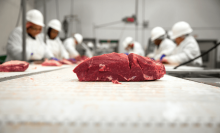
Yet history repeats itself – leaders are sacrificing lives to ensure an "uninterrupted food supply." These meat and poultry plants, just like cotton fields once were, have been deemed "critical infrastructure" to the nation's economy.
Is there anything more important to us than the air we take into our lungs every few seconds? The water that keeps us and all living things going? The soil that roots our food and our communities? Or the weather patterns that knit these elements all together?
What happens when these things begin to deteriorate — or rapidly change their behavior?
That is why I’m in Kenya with Cal DeWitt — well known Christian environmental scientist and teacher — and a group of eight others from the US and Canada: scientists, teachers, activists, and a film-maker.
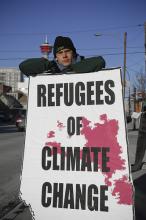
Climate change affects the poorest the hardest. Most things do. In the parts of the world where climate change is most prevalent, it is those who have done the least to cause it that are bearing the brunt of its effects.
It is the Malawian farmer whose crops have failed because the seasonal rains didn’t start at the usual time. It’s a Bangladeshi who can see the sea-levels rising around her town year after year, and has nowhere to go. It’s even an American family whose food bill grows ever larger because of the stresses that a changing climate is having on food security worldwide.
These are neither the people nor the organizations that have spent decades turning a blind eye to their responsibility as good stewards of our environment. They are not the people who, in the face of more and more extreme weather patterns, turn an issue of human survival into an ideological war.
It is for them that we must adapt.