totalitarian government
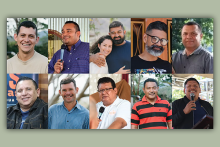
ON SEPT. 5, the U.S. Department of State announced that it had secured the release of 135 political prisoners in Nicaragua. Among those released were 11 pastors of the Mountain Gateway ministry and a number of Catholic laypeople. These victims of the Ortega-Murillo regime’s sweeping persecution of religion will join hundreds of now stateless priests, women religious, bishops, and other believers exiled to Guatemala, Costa Rica, the United States, and even Vatican City.
Despite this negotiated release, the U.S. Commission on International Religious Freedom still lists 36 Nicaraguans imprisoned because of their faith. That number does not include the thousands of Nicaraguans who have fled because of their beliefs or the more than 1,600 religious organizations and facilities that have been closed by the regime. Dozens of priests and ministers have been arrested. Religious charities, schools, universities, radio stations, churches, and clinics have been shuttered. Religious orders have been banned. Traditional religious processions for Holy Week have been outlawed. Secret police systematically monitor religious services. Even Mother Teresa’s Missionaries of Charity were escorted from the country by armed police.
President Daniel Ortega’s authoritarian-trending-toward-totalitarian regime is powerfully repressing the Catholic faith and is rapidly expanding its persecution to Protestant and Indigenous faith communities. However, it was not always so.
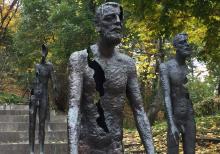
THE BROKEN MEN of Prague lurch down Petřín hill toward Malá Strana, their hunger as clear as the hollow iron torsos where their bellies used to be. The man leading the march looks whole, more or less, but visitors can see his followers slowly dissolve behind him ... a gash here, a missing arm there, until, at the top of the stairs, only a foot where a whole man used to be.
To capture a human in the process of breaking apart requires attention. It’s immediately clear that the sculptor of these Broken Men, Olbram Zoubek, was intimately familiar with the process. Prague’s Soviet occupiers also knew something about decay, which the monument commemorates with grim precision—at the feet of the statues is a thin bronze line marking the numbers of Czechs affected by Soviet-era communism: 170,938 forced into exile ... 327 shot trying to escape ... 4,500 dead in prison. But the numbers are but a footnote to the decaying bodies on the hill. The long, grinding erosion of civil society is a personal trauma all its own.