Kenya

A government plan to regulate religious groups is shaping into a bitter fight, with Christian and Muslim leaders protesting that it tramples over religious freedom. The government published a set of rules this month that require religious leaders to have theological degrees and religious groups to submit a statement of faith.

Christian leaders have hailed as an act of bravery and selflessness the shielding of some Christians by Muslims after suspected al-Shabab gunmen in Mandera County ambushed a passenger bus.

A Vatican envoy urged the World Trade Organization to keep promises made to the poor, amid concerns that its tariff-cutting efforts are disproportionately benefiting rich countries. The appeal came as the WTO, a Geneva-based organization that regulates international trade, was holding a four-day meeting ending Dec. 18 in the Kenyan capital.

The work of transformation — of land, or of legacy — is never complete. And for Western Christians, inheritors of a religion built and carried by ethnocentrism and economic exploitation, the work to detangle faith from the structures that continue to support it is an extra challenge. When survival of the church demands profit, what do you monetize? When community requires boundaries, whom do you leave out?

Pope Francis’ visit to the Kenyan capital of Nairobi Nov. 25–27 will bring healing and reconciliation to the East African nation that has suffered key setbacks in the recent past, senior bishops here say.
Kenya, a country with 14 million Catholics, recently announced the theme of the papal visit: “Stand firm and be strong.” Organizers expect nearly 1.5 million people to attend the papal Mass on Nov. 26 in Nairobi; there are nearly 4 million Catholics in the Archdiocese of Nairobi.
The pope’s Nov. 25-30 pilgrimage to Africa, also includes travel to Uganda and the Central African Republic. But in remarks Sunday to a crowd of faithful in St. Peter’s Square, Francis raised the possibility that security risks could cause the Central African Republic leg of his trip to change or even be scrapped.
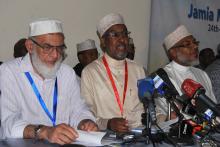
Kenya has welcomed the return of 700 citizens who had joined Somalia’s al-Shabab militant group that has attacked churches, malls, and government institutions, most notably Garissa University College where nearly 150 people — mostly Christian students — were killed last spring.
The return of the Kenya nationals was reported by the Kenyan government, the Supreme Council of Kenya Muslims, and the International Organization for Migration.
“They will undergo rehabilitation, before being re-integrated into the community,” said Hassan Ole Naado, deputy general of the Supreme Council of Kenya Muslims.

NAIROBI, KENYA — In a small side hall inside a ministry building, a group of young developers and artists huddled over their laptops. Half-filled Fanta and Coke bottles sat forgotten in the center of the table as the group worked in studied concentration while gospel music played in the background. With crumpled candy wrappers lying nearby, the scene was reminiscent of a college dorm hall or cafeteria. But but rather than cramming for exams, these young Kenyans were trying to hack government corruption.
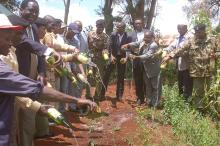
Clerics in Kenya are backing a presidential decree banning homemade brews, largely blamed for a recent spate of deaths in the East African nation.
The homemade alcoholic drinks, popularly dubbed chang’aa (“kill me quick”) or Kumi Kumi (ten-ten shillings), are popular with the poor, who cannot afford commercially brewed bottled beer, which is heavily taxed.
Until recently, most Kenyan homemade brews were safe and were consumed at traditional parties, but unscrupulous brewers in the last few years have been introducing industrial chemicals such as methanol to make the drinks stronger and to quicken the brewing process, turning the drinks into poisons.
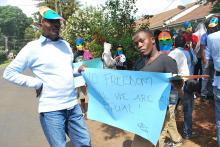
Kenyan law bans homosexuality, and many clergy regularly preach against it as sin before God. But the ruling means that LGBT Kenyans will have an official platform from which to fight for their rights and freedoms.
“This is what we have been crying for,” said the Rev. Michael Kimindu, a former Anglican priest and now president of Other Sheep-Africa, a gay rights organization.
“It is the beginning of the journey towards freedom. We will now start asking: What happens when two people who are gay want to have a baby or want to go to church to marry?”
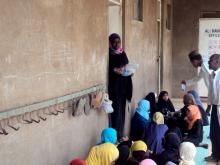
Sitting under a veranda at the former headquarters of Somali Airlines, Ali Bashir sipped coffee and chewed khat, an African herb, as he recounted 15 years of anarchy fomented by al-Shabab Islamic terrorists.
“Life is very hard here,” he lamented.
“There’s nothing to eat and nowhere to work. But the rebels will come and still ask you for money.”
Since Somalia’s central government collapsed in the early 1990s, al-Shabab has emerged as the greatest threat to international efforts to rebuild the east African nation. The al-Qaida-linked militants extort, kidnap, stage terror attacks, and control remote areas of the countryside.
Al-Shabab gained renewed global attention last week, when a small band of militants massacred 148 people at Garissa University College in neighboring Kenya, where they singled out Christians for execution. In 2013, al-Shabab terrorists attacked the Westgate Mall in Nairobi, Kenya, murdering nearly 70.
In the wake of this month’s attack, Somalia President Hassan Sheikh Mohamud called for more cooperation between Kenya and Somalia to eliminate al-Shabab, and Kenyan jets pounded two al-Shabab camps in Somalia.
Bashir, 28, who sold clothing before fleeing here, doubted the Somali government could do much about the terrorist group. He fled to the capital here a few years ago after al-Shabab seized control of a region in the south. He now lives in the old airlines headquarters with 1,000 other families.
“I have grown up in this country without knowing peace or stability,” said Bashir, a father of six.
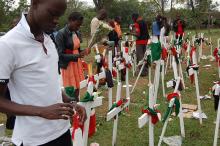
Faced with a fierce enemy driven by Muslim extremist ideology, the government has cracked down on funding for al-Shabab, the Somali group that claimed responsibility for killing 148 mostly Christian students at Garissa University College a week ago.
This week, Kenya froze the accounts of 85 groups and individuals, including bus companies and Muslim rights organizations, allegedly linked to the group. It has closed down one hotel in Eastleigh, a neighborhood in the Nairobi commonly known as Little Mogadishu because of its large concentration of ethnic Somalis.
But the freeze on Muslims for Human Rights and Haki Africa, two nongovernmental organizations, raised questions, since they are known for their work on improving the lives of Kenyans and fighting for human rights of all citizens.
“I am amazed that these human rights organizations are believed to have been supporting terror,” said Sheikh Juma Ngao, the national chairman of the Kenya Muslim National Advisory Council.
“I think the government needs to provide some evidence.”
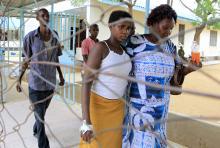
Last week, al-Shabab militants, aligned with al-Qaida, stormed the campus of Garissa University College in Kenya, asking students about their religion. They spared the lives of Muslims and killed the Christians. By the time the mayhem was over, almost 150 students lay dead.
A spokesmen for the terrorists boasted: “There are many dead bodies of Christians inside the building. We are also holding many Christians alive.”
This is not the first time that this has happened in Kenya. In 2013, at the Westgate shopping mall in Nairobi, 67 people were killed in cold blood. Muslims were allowed to go free.
The dead were all Christians.
In Libya in February, Islamic State militants beheaded 21 men on the beach. Their blood freely flowed into the Mediterranean Sea.
The victims were all Coptic Christians.
The Middle East contains proud remnants of the oldest Christian communities in the world. Their churches have been in flames. ISIS has demanded that the Christians convert to Islam, pay extra taxes or be killed. In Syria in February, ISIS militants abducted scores of Assyrian Christians.
Just because they are Christian.
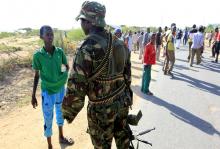
Somalia’s al-Shabab militants shot and killed more than 147 people, wounded dozens of others and held hundreds hostage April 2 at Garissa University College in northeastern Kenya.
Five hundred of the hostages were reportedly rescued as the day went on, but it was unclear immediately whether the standoff had ended and exactly what the death and injury toll was.
The gunmen reportedly arrived at the university at 5:30 a.m., killed the guards at the gate and began shooting indiscriminately before taking hundreds of students hostage. The Kenyan military tried to end the siege and rescued hundreds of the hostages during a shootout.
Most of the hostages are believed to be Christians.
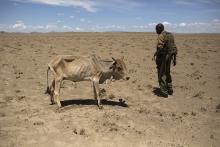
Drying livestock carcasses and anguished faces of hungry women and children have become a common feature here as droughts increase due to climate change.
But now, in an effort to fight hunger, the Roman Catholic Church is making 3,000 acres of church-owned land available for commercial farming.
“We want to produce food, create employment, and improve quality of life for the people,” said the Rev. Celestino Bundi, Kenya’s national director of the Pontifical Mission Societies.
This is the first time the church has entered into large-scale farming, though it owns massive tracts of land across the country, most of which is idle and in the hands of dioceses, parishes, missionaries, and congregations.
“We have the will and the support of the community and government,” said Bundi.
“I think time has come for Kenya to feed herself.”
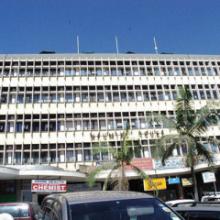
The Kenya Conference of Catholic Bishops is facing a lawsuit over the cancellation of a rental contract for a restaurant operated by a Somali Muslim.
Al-Yusra Restaurant Ltd. had signed a six-year lease starting in 2013 to operate a restaurant in a section of Waumini House where the bishops’ conference is based. Baakai Maalim, a Somali Muslim, is a director for the company.
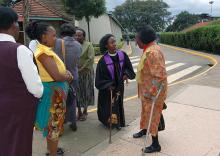
On a Sunday at the Presbyterian church in the Bahati neighborhood, a young woman haltingly approaches the pulpit with a walking cane in one hand and a Bible in the other. Somewhere in her pocket is a mobile phone, which she uses to send out at least 400 Bible quotes a day to Christians across the city.
The Rev. Dawn Gikandi, 31, is a rarity here — a pastor who is a woman, a theologian, a social media devotee, and a disabled person in a country that stigmatizes people who are physically impaired.
In April, the Presbyterian Church of East Africa ordained Gikandi and sent her to her first post, Bahati Martyrs’ Church, where she and another pastor care for more than 4,000 congregants.
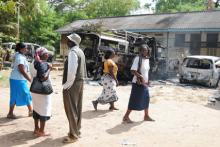
Christian and Muslim leaders united Tuesday to demand government action after a deadly terror attack in Kenya’s coastal region.
The gunmen held the town hostage for more than four hours, burning houses, hotels, and banks, and even attacking the local police station.
The Islamic militant group al-Shabaab said it executed the attack as revenge for the Kenyan army’s presence in Somalia, the killing of Muslim scholars in the coastal region and the oppression of Muslims.
The government has since said this was not an al-Shabaab attack but was carried out by a gang paid by politicians.
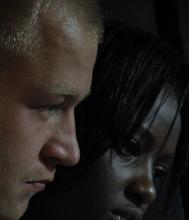
CNN reports on Usoni , a futuristic television drama produced in Kenya that is about reversed immigration. The show depicts Europe in 2063, where life has turned unlivable after a deadly series of natural and economic disasters.
Europeans are desperately seeking a way to get to a livable continent south of them: Africa. The hardships in making the trip are unfathomable, and once the immigrants arrive, they are unwelcome, harassed, and rejected. The story follows a young couple, Ophelia and Ulysse, who are seeking to make their way with their unborn child to the land of promise.
Yes, the comparisons today to those seeking to immigrate to Europe (with obvious parallels to America) are intentional. Marc Rigaudis, the Kenya-based French filmmaker who created the program, is making a point to help us walk in the shoes of those whom we know the Bible calls “aliens and strangers.”
The chilling trailer depicting people like me being treated as illegal immigrants is enough to make one’s hair stand on end.
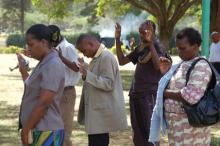
At prayer healing services in some Pentecostal churches, pastors invite people infected with HIV to come forward for a public healing, after which they burn the person’s anti-retroviral medications and declare the person cured.
The “cure” is not free, and some people say they shell out their life savings to receive a miracle blessing and quit taking the drugs.
“I believe people can be healed of all kinds of sickness, including HIV, through prayers,” said Pastor Joseph Maina of Agmo Prayer Mountain, a Pentecostal church on the outskirts of Nairobi. “We usually guide them. We don’t ask for money, but we ask them to leave some seed money that they please.”
But the controversial ceremonies are raising red flags as believers’ conditions worsen, and a debate has opened over whether science or religion should take the lead in the fight against the AIDS epidemic.

The deadly mall attack in Kenya on Saturday is a sign that the al-Qaida-affiliated group that carried it out has been dealt a blow in Somalia and they are looking to generate headlines with more high-profile attacks in the region, a regional expert says.
The militant group that carried out the attack, al-Shabab, wants to establish an Islamist government in Somalia.
In recent years, however, African Union troops in Somalia have driven the militants out of most parts of the capital city of Mogadishu as a U.S.-supported government there has attempted to establish control over the country. At one time, al-Shabab controlled parts of Mogadishu.
The attack in Nairobi underscores al-Shabab’s organizational skills and their commitment to die for a cause, said David Shinn, a former U.S. ambassador to Ethiopia and a professor at George Washington University.
But it also highlights that the group has to rely on high-profile terrorist attacks that generate headlines because they lack popular support and have failed in any direct fights with African Union forces in Somalia.
“Increasingly, al-Shabab has alienated the average Somali,” Shinn said.