human sexuality

Standing hand in hand with my fellow classmates at St. Lawrence Catholic Church and School in North Miami Beach, Fla., I couldn’t help but notice how sweaty my hands were. It was 2006, and another 98-degree, humid day in my hometown was upon us. The old church’s air conditioner wasn’t very effective, and I remember I had a feeling I just couldn’t shake — even at the young age of 9: I felt as though something was deeply wrong with me.
I was raised in a primarily Caribbean Catholic tradition, where my family and community emphasized that adhering to the strict rules of the church was what made you a good person. Every morning, my dad would rush me and my sister out the door to school. We would line up with our classes and recite prayers before entering the building, no matter how hot it was outside. During the day, I took religion classes and memorized scriptures my teachers required me to recite at church twice a week. I hated it all.
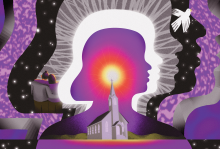
GROWING UP, I didn’t understand why boys obsessed over girls. “Oh, you will when you’re older,” my dad kept telling me into my early 20s. Only then did I confront what I should’ve known long ago: I’m gay — but not just gay. I am romantically, but not sexually, attracted to men. My father promised that (hetero)sexual desire came with manhood, so am I less of a man?
Many conservative Christian marital counselors and sex manualists have implied that the answer is “yes.” John Eldredge, author of Wild at Heart, wrote that men “come alive” when they have a “a beauty to rescue.” In The Act of Marriage, Tim and Beverly LaHaye wrote that men’s “need for romantic love is either nonexistent or minimal.” Willard F. Harley Jr., in His Needs, Her Needs, wrote that sex is the “first thing [men] can’t do without.” Stephen Arterburn and Fred Stoeker, in Every Man’s Battle, wrote that “maleness” is heterosexual desire. Their message is clear: Sex is essential to God’s vision for manhood.
But every person can live a full, godly life without sex and romance, whether one has desires for both, either, or neither. For many asexual believers, both secular and so-called Christian understandings of sexuality have been insufficient and harmful to them — and to everyone. Perhaps understanding asexuality can lead Christians toward a more inclusive, beautiful, and faithful set of sexual ethics.

On Tuesday, a group of 150 Evangelical leaders representing the Council of Biblical Manhood and Womanhood released a document called the “Nashville Statement,” which delineates their conservative theological position on human sexuality and gender. The statement not only condemns those who are bisexual, lesbian, gay, and transgender, but also anyone who supports them — claiming that agreeing to disagree on human sexuality is sinful in itself.
Though little in the document is new, the response from countless other Christians — ranging from evangelicals to progressives — has been swift and emphatic.

The binaries simply don’t work, and when we try to cling to them we feel like the universe is crumbling around us when we see evidence to the contrary, and especially when we sense it within ourselves.
Welcome to the world, Caitlyn. You are beautiful.
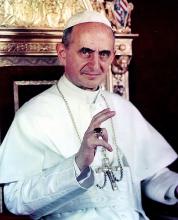
Editor's Note: The following aritcle was written in 2008, around the 40th anniversary of Humanae Vitae, the papal document that reinforced the Catholic Church's ban on artificial birth control.
Some say Pope Paul VI predicted the dangers of loosening sexual morals: widespread divorce, disease and promiscuity. Others say he cracked open a culture of dissent that has seeped into every corner of the church.
Either way, more than 40 years after Paul VI released ``Humanae Vitae'' on July 25, 1968, the papal encylical banning most forms of birth control continues to be a flashpoint in the Catholic Church.
Earlier this year, Cardinal Francis George of Chicago said Humanae Vitae set up ``a direct conflict between many people's experience ... and the authority of the church.''