birth of jesus

THERE IS MUCH anticipation in the air. During Advent, we eagerly await the Christ child among us and all the blessings and transformations this infant brings. Our readings during this season remind us of the Christ child’s vision for our world — and of God’s power to upend existing political orders. This is the child whose mother proclaims that he will “cast down the mighty,” “lift up the lowly,” and change the course of history for God’s people. We welcome the arrival of new life in Christ, imbued with hope and reminders that life is never fully defeated by empire’s death-dealing designs.
But this Christ child comes in many guises. This child appears as an unhoused person, a racial other, an incarcerated person, a foreigner. Will we receive every child of God as we receive the Christ child and honor their hopes and full potential? Will we give to all of God’s children the gifts of our time, energy, joy, and relationship so that our communities become hospitable places for the Christ child and every child?
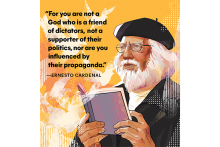
POET MARY OLIVER describes the world calling us “like the wild geese, harsh and exciting.” As we approach Advent, Christians ponder words like annunciation, waiting, and hope. Midwife Julie Dotterweich Gunby plumbs the theological depths of expectation and asks if we are truly “ready for Christmas.” Before we celebrate Christ’s birth, we must wade through the consequences of a U.S. election. (This issue went to print before November.) If we zoom too far out, our vision becomes binary — red/blue, us/them, win/lose. If we look more closely, we see active civic engagement, and a robust obligation to protect the democratic process. We also glimpse ties that bind us around the world. Stephen Schneck chronicles Nicaragua’s fall into autocracy, a cautionary tale. Chris Hedges and Mae Elise Cannon take readers to Palestine and Jerusalem’s Armenian Quarter, respectively. Liuan Huska travels to Ann Arbor, Mich., to report on a “farm-to-altar” Communion bread project reminding us that we are what we eat. “Whoever you are, no matter how lonely,” concludes Oliver, the world is “announcing your place in the family of things.” Welcome. You belong.

CHRISTMAS OFFERS AN opportunity to reflect on how well we know Jesus as he would want to be known. Can we be the kind of Jesus followers we should be without an adequate understanding of who Jesus really is? Only a good grasp of who Jesus is offers a solid foundation for our worship and service in the new year.
For many, this Christmas Jesus is a beautiful baby boy wrapped in swaddling clothes, sleeping in a trough on a bed of straw, as farm animals and shepherds look on pensively. Another common scene of tranquility is one of the baby Jesus in the arms of his mother Mary—the Madonna and child portrait so prominent throughout church history. In many ways, these depictions are appropriate for the Christmas season, but there is a potential problem. For many, these are the defining images of Jesus: helpless, dependent, silent.
This is not at all the person of the Messiah who is announced in the Old Testament. What was the expectation that gripped the Jewish people for centuries? What was the Coming One to do? How would he change the world as they knew it? How can he change the world as we know it?
These readings explore prophetic passages that describe the One who was to come. How does the New Testament celebrate Jesus as that long-expected Messiah? How can his coming help us to live out our faith well?
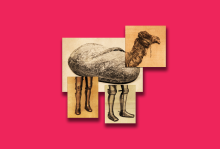
IMAGINE YOURSELF IN a darkened theater. At center stage sits a woman, child on her lap, both wrapped in tonal greys. A tiny stream of light falls from above. Off left, large animals shift their weight on floorboards, chuff-chuffing their breath; foreign tongues murmur them calm. Off right, the only sound is of metal rasps running repeatedly down the length of blades; random sparks flare off the cutting teeth. This is Epiphany. Everything is waiting to happen. We know the narrative detail: Mary and Jesus, a manger, the Magi’s star-trekking journey with camels and gifts to honor a “newborn king” (while Herod, like Pharaoh, plots a bloody offense). But Epiphany is a season for paradigm shifts. What if we scramble the details? Imagine this. Off left, the chuff-chuffing of foreign tongues come not from men calming beasts, but camels praying as they approach the child, the spiritual waterhole for the world. The camels have not brought kings or astrologers, but a guild of bakers, who extend platters of fresh bread toward the child. At center, the woman wrapped in a cloak of ultraviolet leans back on her stool: She has given birth to a star, filling them both with light. At her side stands a human child. He gazes off right. The sound of rasps and swords, boots and shouted commands fascinate him. Slowly, the child lets go his mother’s hand, relaxes his throat muscles, measures his breath. In a world of bread and circuses, he has made brothers of soldiers. He is a sword-swallower and eats their pain.

WE ARE LIVING in a moment of ruptured imagination brought on by the growing specter of deadly violence, which has triggered in many a crisis of faith. But these lectionary readings say to Christians, “Wait a minute, not so fast!” A promise-bearing deliverer has come to topple competing kingdoms and bring distress to wielders of death. Matthew’s message is, “Keep awake.” And the prayerful petitions of the psalms outline the marks of righteous governance: defending the poor, giving deliverance to the needy, and crushing the oppressor (Psalm 72:4).
Salvation comes in the form of a child and angels act as divine emissaries—quieting fear in one instance and stirring up disquiet in the hearts of others (Matthew 2). Were it not for an angel allaying Joseph’s fear about Jesus’ atypical paternity, life as a teenage single parent would have been Mary’s lot. Had an angel not appeared to Joseph in a dream urging him to flee to Egypt, or had a dream not disrupted the course of the Magi warning them to not return to Herod, the scriptural record would have unfolded very differently.
The promise of coming joy and peace reveals much more than incarnational presence. Jesus’ coming brings to our expectant minds the essential nature of a God who wields love and salvation. God always provides a way to secure such provisions. Angelic envoys, as Matthew narrates, stand ready to do God’s bidding.
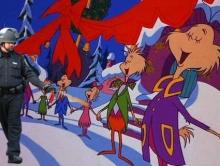
Pepper spray.
Those two words bring to mind two very contrasting images from recent headline news: One is the shocking image of University of California at Davis students seated on a pathway, arms linked in peaceful protest, as they are repeatedly doused with pepper spray by a zealous campus police officer. The other is of the equally zealous shopper on Black Friday who sprayed her fellow Walmart customers so she could buy a discounted X-Box.
On the one hand we have an image of the power of nonviolent protest to expose injustice, and on the other an appalling image of consumer greed.
These are the signs of our times.