alcohol
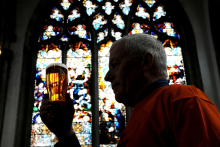
Last week, the University of Michigan announced that it would begin selling alcohol at its football games.
For decades, alcohol sales had been largely limited at college football events, but in 2019 the Southeastern Conference began allowing its schools to sell alcohol at games. Now, more than 80 percent of the top football schools sell alcohol on game day.
In the U.S. church, opinions on alcohol seem more polarized than politics. On the one hand, many conservative and fundamentalist faith traditions treat all alcohol consumption as a sin, some going so far as to suggest that Jesus turned water into nonalcoholic wine. On the other, progressive and moderate faith traditions incorporate alcohol into church with events like beer-and-hymns, theology-on-tap, and “pub churches.”

SOBER SPIRITUALITY by Erin Jean Warde is ultimately an invitation for readers to ask themselves, “How do I want to be in a relationship with alcohol?” Warde, an ordained Episcopal priest, spiritual director, and sobriety coach, asked this question of herself years ago. She ultimately chose sobriety but realizes that won’t be where everyone lands. And Warde also wants the whole church, not just individuals, to engage this question.
Because, according to Warde, the church’s current relationship with alcohol is pretty toxic — especially in progressive churches. Progressive denominations often work to distinguish themselves from fundamentalism and much of white evangelicalism, communicating, “Yes, we’re Christian, but not that type of Christian” — not the type that is hostile to immigrants and bars women and LGBTQ people from the pulpit.
But one of the ways progressive churches have signaled this distinction, Warde argues, is harmful: “by illustrating how much they drink or that they drink at church.” Events like “Beer & Hymns” or “Theology on Tap” come to mind. This type of laid-back programming quickly communicates to newcomers that the host church isn’t dogmatic or old-fashioned. But it sends a different message to people who are sober or sober curious. “The common refrain of ‘all are welcome’ must ring true when a person changes their relationship with alcohol,” Warde writes.
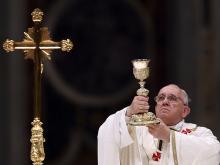
Pope Francis has upended many traditions during his extraordinary pontificate, to the point that some have wondered whether he is really Catholic.
But the pope has now made one thing clear: He’s sure not a Baptist.

One of the most famous miracles in the Bible was when Jesus turned water into wine at a wedding in Cana. When the wine at the party ran dry, at his mother’s request young Jesus made a lot of wine (and he made the good stuff). From the teetotling temperance movement to the sacramental nature of communion wine, alcohol and faith have an interesting relationship. But after a couple-month celebration of thanks, the birth of Christ, and the arrival of a new year, many observe this month as Sober January.

A Muslim flight attendant said the Atlanta-based airline ExpressJet suspended her for refusing to serve alcohol, a practice that is against her religious beliefs.
Charee Stanley filed a discrimination complaint with the Equal Employment Opportunity Commission last week, saying she wants to do her job without serving alcohol, as she was doing before her suspension, her lawyer said.
Lena Masri, an attorney with the Michigan chapter of the Council on American-Islamic Relations, said no one “should have to choose between their career and religion.”
Employers, she told CNN, must “provide a safe environment where employees can feel they can practice their religion freely.”
Here’s a sampling from some of the nation's denominations:
1. SOUTHERN BAPTISTS
The Southern Baptist Convention has passed more than 50 resolutions about the “deleterious effects of consuming alcohol,” said Roger S. Oldham, spokesman for the convention’s Executive Committee. The most recent resolution, passed in 2006, urged that “no one be elected to serve as a trustee or member of any entity or committee of the Southern Baptist Convention that is a user of alcoholic beverages.”
“In instances where a pastor may need treatment for substance abuse, he or his church would seek services in the same way other members of their communities would,” Oldham said.
2. ROMAN CATHOLICS
Sunday’s Super Bowl was dubbed by some as the “pot bowl,” as the Denver Broncos and Seattle Seahawks hail from the two states where fans can soon get marijuana as easily as they can get pizza. As public opinion has shifted in support of legalized marijuana, religious leaders are wrestling over competing interests, including high prison rates and legislating morality.
According to a 2013 survey from the Public Religion Research Institute, 58 percent of white mainline Protestants and 54 percent of black Protestants favor legalizing the use of marijuana. On the other side, nearly seven-in-10 (69 percent) white evangelical Protestants oppose it.
Catholics appear to be the most divided Christian group, with 48 percent favoring legalization and 50 percent opposing it. Opinions on how states should handle those who possess or sell marijuana varies among Christian leaders.
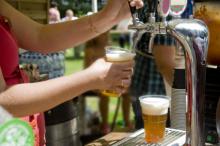
The Archdiocese of St. Louis is putting an end to alcohol sales at youth-related events.
Under a new policy that goes into effect Friday, drinking will not be allowed at any event that is directed primarily toward minors.
That means parents will no longer be allowed to throw back a few beers during their kids’ soccer, volleyball, and softball games. And athletic associations will no longer rake in revenue from beer sales at their concession stands.
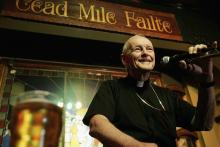
Benjamin Franklin, pointing to the story of Jesus turning water into wine, acknowledges the miracle of the processes of nature itself, taking natural sugars and recombining them into an (ahem) intoxicating elixir that has been a staple of global culture for millennia.
And then the religious folks came along and tried to ruin the fun for everyone. Having grown up Baptist, I heard some of my fellow faithful proclaim the evils of demon alcohol, though their warnings seemed to do little to stem folks’ drinking, aside from pushing them to do it more privately. Then I met some Anglican and Jewish friends who appreciated the fruit of the vine around the dinner table. I was shocked – and more than a little intrigued – when I saw kids under the age of 21 taking part in the ritual wine drinking as part of a Jewish Seder meal, and I was in awe when I realized some churches used real wine in their worship services.
So which is it? Is alcohol the lynchpin of the decline of civilization, or is it a sacrament, not only to be enjoyed, but to be held up as a gift from the Almighty?
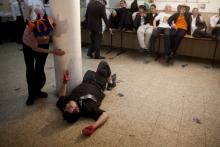
It's almost Purim, and Rabbi Tzvi Hersh Weinreb is feeling a mix of joy and dread.
Joy because the Jewish holiday commemorates the survival of ancient Jews against the threat of extinction and children dress in costumes and exchange gifts and candy. Purim, on Wednesday (March 7), is also Weinreb's birthday.
Dread because too many times, Weinreb has seen the high cost of Purim's darker side, the "ugly and despicable behavior" of young yeshiva students who drink to excess on a day that is equal parts Halloween and Fat Tuesday.