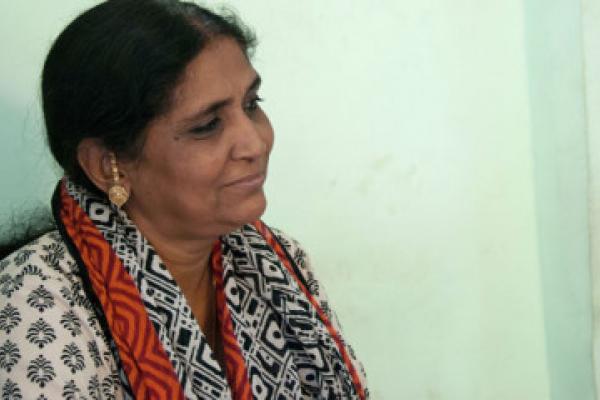
Khatoon Shaikh had no formal education, never worked outside the home, and lived in the kind of neighborhood that many people might call a slum.
But when Shaikh witnessed her sister-in-law victimized, first at the hands of a violent husband, and again by a patriarchal justice system, she took charge.
Shaikh started her own Shariah adalat, a court based on Islamic law, just for women.
“We needed a place where women’s voices could be heard,” the mother of seven said.
That was 20 years ago. Since then, the court has moved from Shaikh’s home to a two-room office in the north Mumbai neighborhood of Bandra. And it now operates within a broader organization called BMMA, or Indian Muslim Women’s Movement, which Shaikh helped form in 2007.
“Innovation” is a warm and fuzzy word — until you dig inside it.
It’s like “community,” a warm and fuzzy term when taken to mean friendships, sharing, common interests, common values, perhaps working together.
But from a gospel perspective, “community” means much more. As Jesus modeled community, it means mercy — turning away from our instinct to judge and to punish. It means compassion — giving to the least, even when our instinct is to disdain.

Anti-Muslim hate speech on the Internet is commonplace and can motivate some people to commit acts of violence against Muslims, according to a report released Tuesday by Muslim Advocates, a legal and advocacy group in San Francisco.
The report contains examples of hate speech and how it can lead to violence, as well as how victims of online hate speech can report it and counter it. The report aims to help educate parents, students, youth, community leaders, Internet companies, and policymakers on how to counter online hate speech.
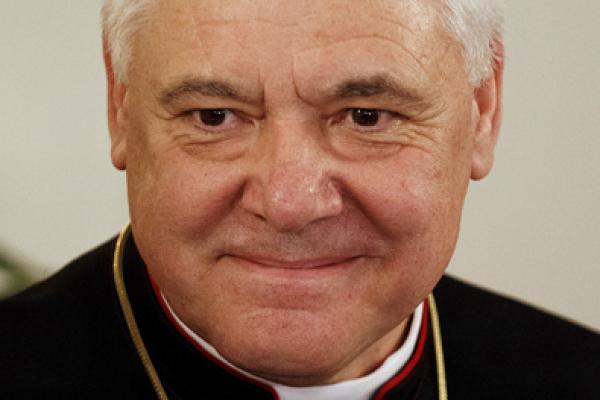
Catholic nuns in the U.S. have been thumbing their nose at Rome’s demands to toe the doctrinal line and they need to obey or face serious consequences, the Vatican’s enforcer of orthodoxy said in a surprisingly tough talk to women representing most American sisters.
Mueller said the LCWR — which represents about 80 percent of the more than 50,000 Catholic nuns in the U.S. – is dependent on the Vatican for its bona fides as a church body. He indicated that the group’s status, and the Catholic faith of the sisters, was at risk if they did not heed Rome’s directives.
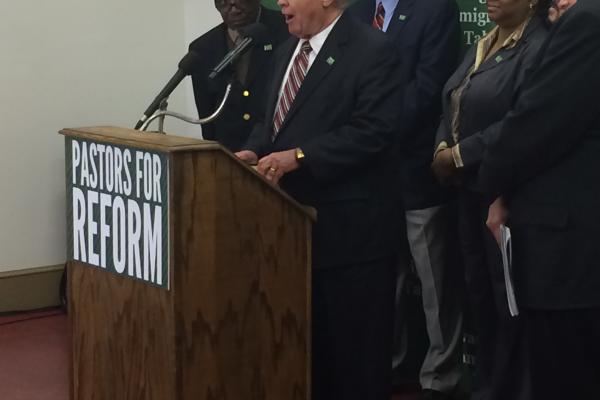
A little over a week after Easter, more than 250 pastors descended upon Washington, D.C., to worship, pray, and meet with their members of Congress. After preaching about the resurrection of Christ, these pastors asked God to resurrect immigration reform.
A theologically and ethnically diverse group of pastors spoke at a press conference and a worship service before heading to the Capitol Building to meet with their representatives. The pastors told the heartbreaking stories of families in their congregations that had been separated because of the broken immigration system, God’s command to welcome the strangers in our midst, and prayed for God to change the hearts of the legislators who are stopping immigration reform from becoming law.
The event made one message abundantly clear: if immigration reform is going to happen, God is going to be the one who is going to get it done.
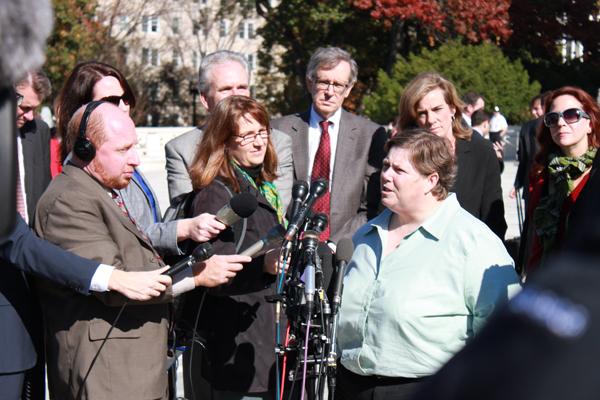
The Supreme Court Monday declared that the Constitution not only allows for prayer at government meetings, but religious prayer.
“To hold that invocations must be non-sectarian would force the legislatures sponsoring prayers and the courts deciding these cases to act as supervisors and censors of religious speech,” Kennedy wrote for himself and the conservatives on the court.
Lawmakers and judges would otherwise have to police prayer, he wrote, involving “government in religious matters to a far greater degree than is the case under the town’s current practice of neither editing nor approving prayers in advance nor criticizing their contact after the fact.”
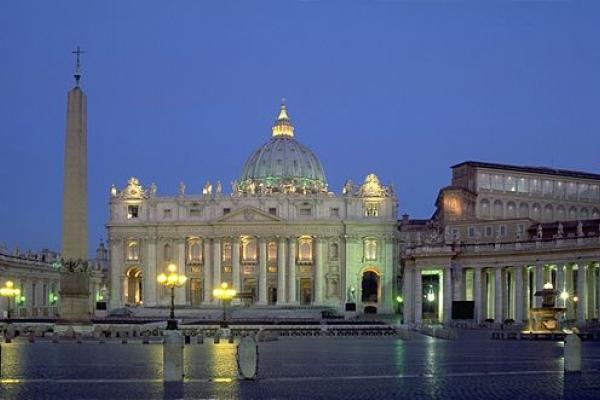
The Vatican could face a wave of new sexual abuse claims dating back decades if a United Nations inquiry finds that the Roman Catholic Church has violated an international treaty against torture and inhuman treatment.
“For too long, sexual violence and acts of rape by the Catholic Church have been minimized,” said Katherine Gallagher, senior staff attorney at the New York-based CCR, after the U.N. panel that enforces the torture convention held hearings in Geneva.

Reading the Bible from the comfort of my couch, I find myself pointing fingers at individuals like Elijah. I can throw them under the bus for missing the point. It's easy for me to see how they got it all wrong. I'm amazed how apparent the presence of God can be one minute and the very next minute they sink deep into despair with this "woe is me" attitude — all the while thinking God has abandoned them.
But, as an onlooker, I have the privilege of seeing the whole story. I'm not living in the moment waiting for things to unfold. The Bible has extended to me the privilege of seeing the big picture, which makes it easy to see that while God is sometimes found on the mountain, or in those big cinematic experiences — conquering prophets, healing the sick, reviving the dead, conquering death — other times he is found in the valley, or in that still, small voice.
But then again, I have to wonder if I'm really any different? Don't I have the same struggles today? How often do I get caught up in the circumstances and lose sight of the big picture? I have some big mountain top experience — the money comes through, the deal works out, I got the job, my fear and anxiety dissipate, the mission trip is life changing, the sermon was exactly what I needed to hear — and, it never fails, the next minute I feel as though God has abandoned me. Doubts surface about whether or not God really has my best interest at heart. I wonder if he can even use someone as broken as me.
What causes such a drastic change?
After wrestling with this a little more, I came to a disheartening conclusion — I have a tendency to seek an experience instead of God.

Sometimes it's hard to blame people for rejecting God, because many Christians present a God that is ugly, cruel, unfair, and utterly horrific. Thus, when people avoid Christianity, they're actually shunning their ugly perception of it.
When you hear people talk about God, what type of God are you imagining? When you speak of God, what type of God are you communicating?
Unfortunately, society's obsession with success, politics, business, security, wealth, and comfort has hijacked the way we see and interpret God — even Christians are guilty of this.
It's easy to manipulate God to fit our own agendas, to use religion to rationalize our actions, to wield spirituality as a weapon, and manipulate theology to rationalize our sins.

In my Santa Barbara, California neighborhood, which we sometimes call “Leave it to Beaver Land” for its seeming serenity and peace, a new practice has become evident: Children no longer walk alone to our neighborhood elementary school. Every morning, a parade of mothers and fathers accompany their children the short distance to school, dogs in tow and cellphones in hand. It looks like the practice of safety, but it’s also the practice of fear. You just never know. It could happen anywhere. It could happen here.
These parents know about something we call “school incidents.” They know the statistics about the number of American children that are shot, stabbed, and killed in our schools each year. Like the rest of us, they know about the big ones, from Columbine to Newtown to Chicago to Pittsburgh, and they know there are so many more stories that never make it to CNN.
The soundtrack for the story of childhood in America reverberates with gunfire and the sobs of stunned classmates and grieving parents. It’s the soundtrack of fear.
Fear is our newest neighbor, even in sunny “Leave it to Beaver Land.”