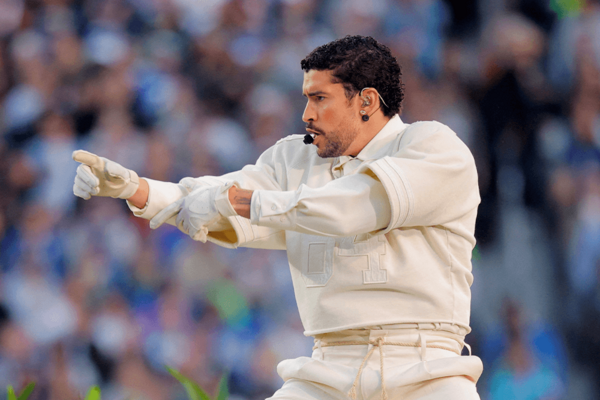
Pope Leo had a brief private meeting with Puerto Rican singer Bad Bunny at Madrid’s Bernabeu stadium on Monday evening as both were touring Spain, the Vatican said on Tuesday, adding that it did not expect to release any photos of the meeting.
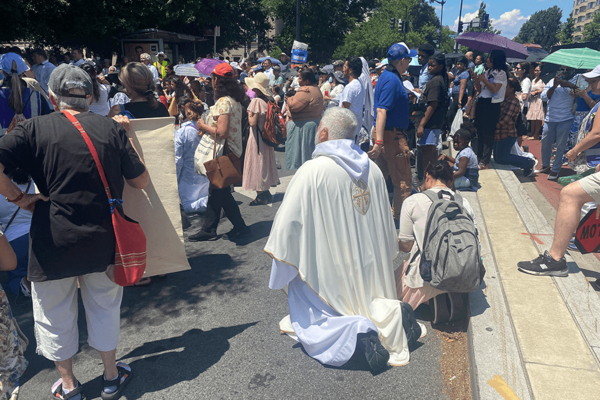
As Catholics from all over the world observed Corpus Christi by processing through the streets to celebrate the Eucharist, about 300 parishioners in Washington, D.C., did the same—with a specific focus on honoring the dignity of immigrants.
Going back to the 13th century, Corpus Christi is the Catholic Church’s celebration of Jesus Christ’s real presence in the Eucharist. For Bishop Evelio Menjivar-Ayala, who led the immigrant-focused procession in Washington and serves as bishop of the Diocese of Wheeling-Charleston in West Virginia, the day is a reminder to stand in solidarity with those who are suffering, especially immigrants who live in fear of deportation.
“The mystery we celebrate today is a mystery of unity,” he told Sojourners on Sunday. “We share one bread, one cup, and then we become the body of Christ … But the Eucharist has to go beyond just receiving Jesus at Mass or adoring Jesus in the blessed sacrament.”

The prediction market is booming. In April alone, it was estimated that Polymarket and Kalshi recorded nearly $24 billion in trades.

Across Latin America, faith-based organizations have a long history of accompanying and serving migrants traveling northward. But as the U.S. grows increasingly aggressive in its immigration enforcement, these ministries find themselves serving migrants flowing south, away from the U.S.
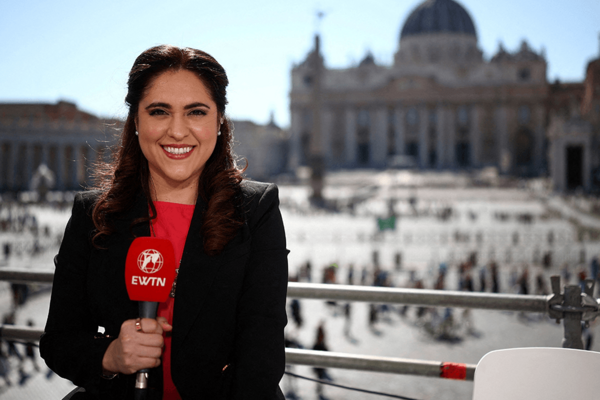
Pope Leo XIV named an executive with U.S. Catholic media conglomerate EWTN as the new head of the Vatican’s communications department on Tuesday, in the first appointment of a woman to the senior Church role.
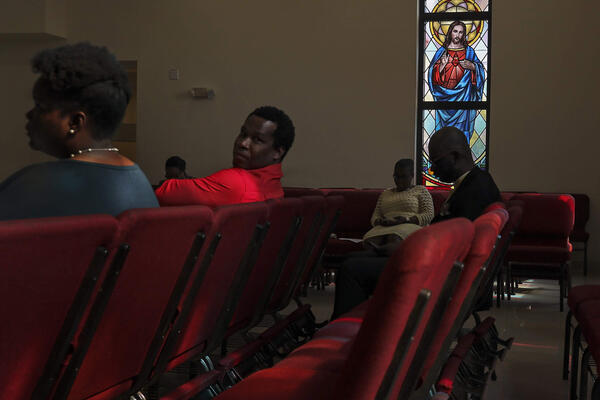
The latest report from the Exploring the Pandemic Impact on Congregations initiative was published in April, and what it revealed was striking. Exploring the Pandemic Impact on Congregations is a “multi-faceted and longitudinal research project” dedicated to examining how churches in the U.S. responded to the COVID-19 pandemic, the long-term consequences of the pandemic on congregational life, and what congregational life looks like post-pandemic. For the first time since 2022, congregations saw a rebound in in-person attendance. Median in-person attendance jumped to 70 people, showing an increase from pre-pandemic levels, and the first increase for congregations in 25 years.
The study, backed by the Hartford Institute for Religion Research, echoes other reports that have pointed to modest increases in religious participation. As a pastor who also participated in the study, I can say that I have noticed this modest increase in religious participation in my own congregation. Congregational life seems to be on a modest upswing, but that does not erase decades of decline.

Ken Paxton and James Talarico are making headlines in unexpected ways in Texas as part of the two political opponents’ campaigns. The political direction of the state is on the line, but a millennia-old theological debate has taken center stage: What is God’s gender?

In 1954, the French Christian philosopher Jacques Ellul published a warning that the world was not ready to hear. In The Technological Society, he argued that the modern obsession with technique—efficiency, optimization, and the relentless pursuit of the one best way to do anything—was quietly fragmenting the human person from the inside.

When I was coming out of the closet, I was looking for someone—anyone—to share about their experience of coming out as a queer woman raised Catholic.

On May 18, two teenagers shot and killed three people in a coordinated attack on the Islamic Center of San Diego, which also houses a school. At the time of the shooting, there were 140 schoolchildren inside the center. Community members said that the three men who were killed—Amin Abdullah, Mansour Kaziha, and Nadir Awad—sacrificed their lives to protect the children. Subsequent investigations have found that the two gunmen left behind anti-Muslim, anti-Black, anti-women, and antisemitic writings.
In the wake of the shooting, it can feel easy to give in to despair as we witness yet another shocking act of violence against marginalized religious communities in the United States. But this is not a time for despair. Instead, it is a time for action. For Christians wondering what to do, here are five things you can do now to support Muslim communities and fight Islamophobia in your community.