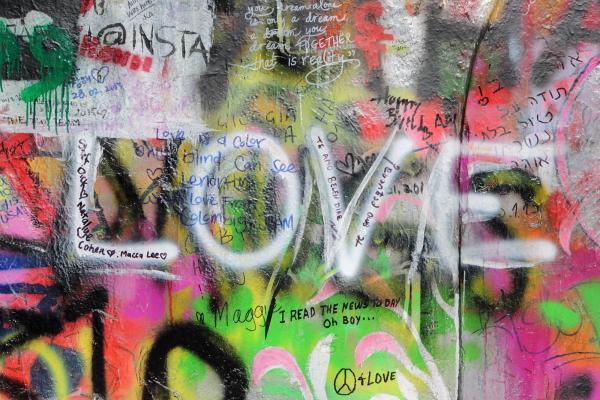
St. Valentine came from a long Jewish and Christian tradition of national resistance based on love. Following Jesus, it resists unjust and unloving national policies. But it’s also a love that refuses to demonize those who enact those policies. Rather, like Jesus teaches, it’s a love that embraces all people, including those we call our enemies.

According to two extensive recent opinion polls, majorities across Europe are deeply concerned about Muslim immigration and support an immediate end to it, even as Europeans vastly overestimate the actual Muslim populations of their countries.
Voters in several countries back a complete immigration ban at levels notably higher than those in the United States. Anti-immigration politicians in Poland, Hungary, and elsewhere are gaining ground in Western Europe.

On Feb. 11, more than 80,000 people gathered in Raleigh, N.C., for the largest Moral Monday march yet — challenging Trumpism in Washington, D.C., and legislative overreach in our state. More important than the numbers, though, are people’s convictions: Principle, not party, is the reason why we march. We march because our deepest religious traditions have trained our bodies to stand up in the face of injustice.
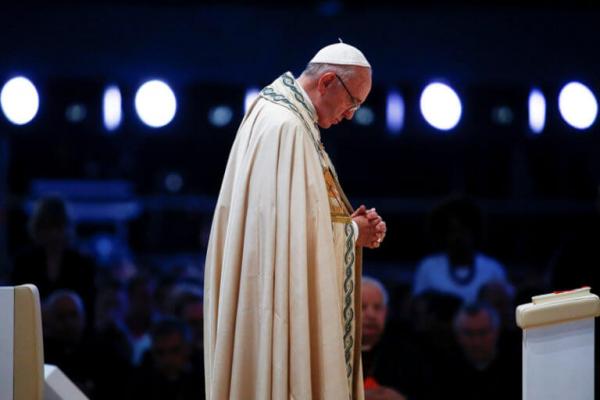
Pope Francis has condemned clerical sex abuse as an “absolute monstrosity,” and asked victims and their families for forgiveness on behalf of the Catholic Church.
In an unusual move, the pontiff’s comments were published as a preface to a new book by Daniel Pittet, a Swiss victim who was sexually abused for four years by a priest when he was a child.
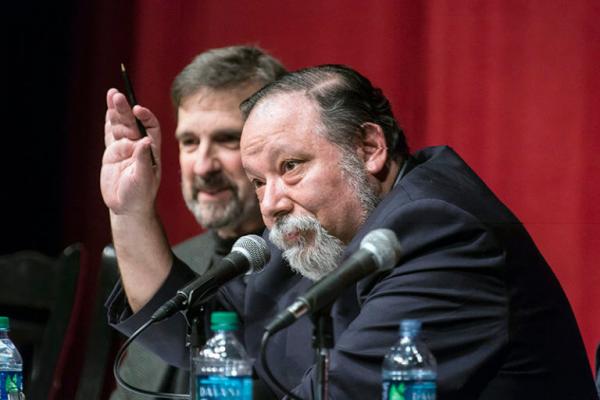
For Catholics, the key to working collaboratively with Pope Francis, on issues from mass migration to climate change to Hispanic evangelization, may be found in a controversial movement that many left for dead long ago: liberation theology.
That message reverberated, from Feb. 6 to Feb. 10, through the halls of Boston College and a nearby retreat center, as nearly 40 theologians gathered from across the Spanish-speaking world to discuss the movement’s future with its founding figures.

As Christian witnesses, we should use the feast of Saint Valentine to care deeply for one another and especially for those who are persecuted by those in power. Flowers and candies and candles are nice — but this year, I’d much rather be smashing patriarchy, overturning the “refugee ban,” creating pathways to citizenship, and supporting high quality education for all children. And my valentine can join me in my ventures.
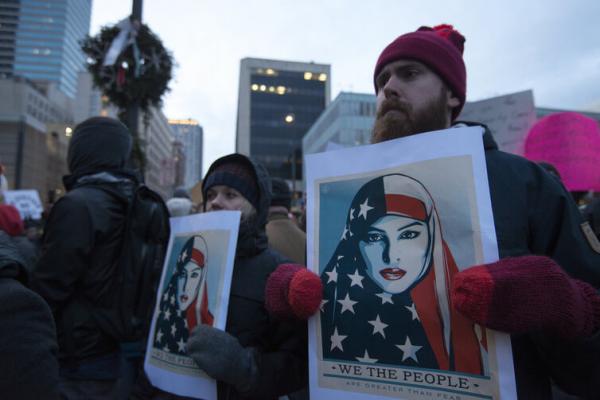
The world seems to be witnessing increasing levels of violence, fear, and hatred that challenge us each day. There are ongoing debates about how or whether to welcome immigrants and refugees to the United States; news headlines remind us about the plight of Syria and about the horrors of the Islamic State.
In such times, talk about mercy may seem more like wishful thinking. But mercy matters – now more than ever.

The point is, we’re less than a month in to the Trump presidency and I can be forgiven if I was distracted. It’s hard to think of what’s trending at the flower shop when I’m hunkered down, binge-watching West Wing, trying to believe it’s real.
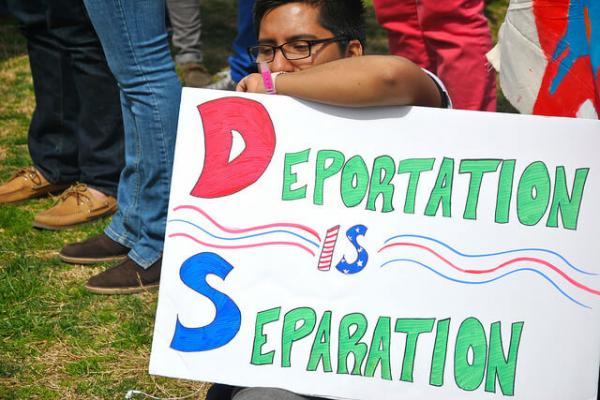
A recent study by the Public Religion Research Institute reveals there aren’t any states in the U.S. in which 50 percent or more of its residents support deportation as adequate reform of the immigration system. Even in California, Texas, and Florida, states that respectively have the highest, second-highest, and third-highest number of undocumented immigrants in the country, this holds true.

A Catholic priest who fled to the U.S. from war-torn Vietnam as a youth has written to President Trump, offering to surrender his American citizenship so that the president could confer it on a Syrian refugee, who would be barred under Trump’s controversial order banning travelers from Syria and six other Muslim-majority countries.
The Rev. Chuong Hoai Nguyen, a member of the Salesian order, also told Trump he would ask his religious superiors for permission to go live and work in one of the seven countries on the banned list.